Jodhpur rises from the edge of the Thar Desert as a city defined by strength, endurance, and royal authority. Known as the Blue City, it is dominated by the imposing silhouette of Mehrangarh Fort, one of the most formidable fortresses ever built in India. For travelers interested in royal history, Jodhpur represents a very different narrative from Jaipur or Udaipur. This is a story shaped by desert warfare, strategic dominance, and an uncompromising warrior ethos.
The royal family of Jodhpur belongs to the Rathore clan, a Rajput lineage known for resilience and military prowess. Their legacy is not defined by diplomacy or alliance-building, but by survival in one of India’s harshest environments. Understanding this context transforms Jodhpur from a scenic stop into a powerful historical experience.
Travelers drawn to royal heritage tours in Rajasthan often find Jodhpur especially compelling. Many choose to explore this legacy through Luxury Private Tours of India, where history is interpreted with depth, comfort, and curated access rather than rushed sightseeing.
The Rathores trace their ancestry to the ancient rulers of Kannauj, from where they migrated westward after losing their original kingdom. This migration was not a retreat but a reinvention. Establishing themselves in the arid lands of Marwar, the Rathores forged a new identity rooted in martial discipline and territorial control.
The harsh desert landscape demanded self-reliance and adaptability. Unlike regions blessed with rivers and fertile plains, Marwar offered little forgiveness. Survival required strategic fortification, control over trade routes, and unwavering authority.
For travelers, this explains why Jodhpur’s royal architecture emphasizes defense and dominance rather than ornamentation alone.
Jodhpur was founded by Rao Jodha, a visionary ruler who recognized the need for a strong capital in the desert. Choosing a rocky hill as the site for Mehrangarh Fort, he established a city that could withstand both invasion and climate.
Mehrangarh was designed as an impregnable stronghold. Its sheer walls, narrow entrances, and commanding height were intended to deter even the most determined attackers. The city below grew organically around the fort, protected by its presence.
This relationship between fort and city defines Jodhpur’s character. Travelers exploring the old city streets beneath Mehrangarh experience history layered vertically—life continuing under the watchful gaze of royal power.
Mehrangarh Fort is not simply a monument; it is a statement. Rising dramatically above the city, it reflects centuries of expansion, adaptation, and rule. Each ruler added to the fort, reinforcing its defenses while introducing new courtyards, palaces, and ceremonial spaces.
Inside, visitors encounter richly decorated halls, weapon collections, royal artifacts, and panoramic views that reveal why this location was chosen. The fort’s architecture balances austerity with refinement, reflecting a dynasty that valued strength as much as prestige.
Private guided visits arranged through Luxury Private Tours of India allow travelers to understand Mehrangarh as a living narrative—one that explains how desert kingdoms maintained control through strategy rather than numbers.
Jodhpur’s blue-painted houses are among its most recognizable features. While popular imagery often attributes the color to climate or tradition, the reality is intertwined with social and historical context.
Originally associated with Brahmin quarters, the blue aesthetic gradually spread across the old city, creating visual harmony beneath the fort. The color also helps reflect heat, offering practical relief in desert conditions.
Royal influence shaped the city’s layout, markets, and defensive structures. Gates, walls, and watch points were positioned to protect the capital while enabling trade. For travelers, walking through the old city reveals how royal priorities shaped everyday life.
The Rathore rulers of Jodhpur were known for their uncompromising warrior code. Loyalty, courage, and territorial integrity were central values. Battles were fought not just for expansion, but for survival in a region where resources were scarce.
This martial identity influenced royal rituals, training, and governance. Weapons were not symbolic—they were practical necessities. Today, the fort’s armories and galleries provide insight into this warrior culture.
Travelers interested in heritage and military history tours in India often find Jodhpur particularly engaging due to this authenticity.
Unlike lake palaces or garden retreats, Jodhpur’s royal residences emphasize thick walls, shaded courtyards, and controlled airflow. These features were responses to extreme temperatures rather than decorative choices.
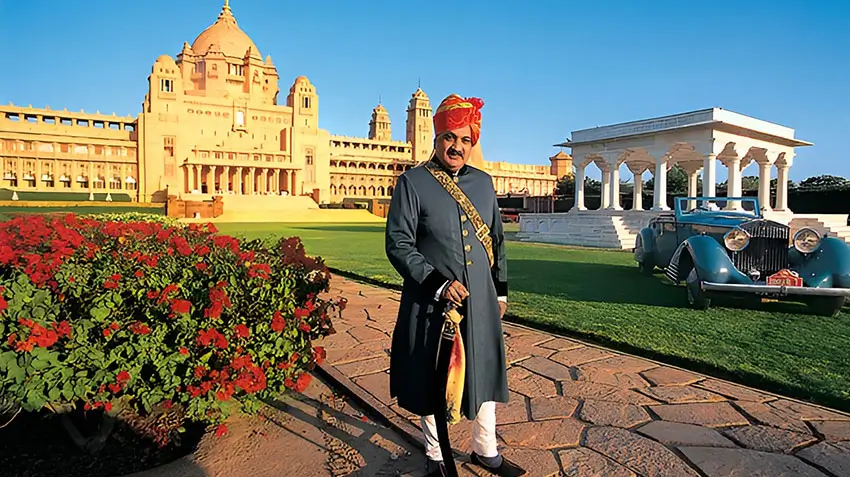
The Umaid Bhawan Palace, built much later, reflects a transition toward modern luxury while retaining royal authority. It stands as one of the last grand palaces built in India, blending Art Deco influences with Rajput sensibilities.
Staying in or visiting such palaces allows travelers to understand how royalty adapted architecture to environment—an insight best appreciated through private heritage tours of Jodhpur.
Royal women of Jodhpur played significant roles behind palace walls. They were custodians of tradition, patrons of temples, and educators within the household.
Zenana areas were designed for comfort and privacy, incorporating ventilation and aesthetic detail suited to desert life. Understanding these spaces adds emotional depth to palace visits, moving beyond male-centric narratives of warfare.
With the end of princely rule, Jodhpur underwent a transition similar to other royal states. However, the Rathore family retained cultural influence through heritage conservation and public engagement.
Palaces were repurposed into museums and luxury hotels, ensuring preservation through adaptive use. This transformation allowed Jodhpur’s heritage to remain accessible without becoming obsolete.
For travelers, this means engaging with living history rather than static ruins.
The present-day royal family of Jodhpur continues to be associated with Mehrangarh Fort Trust, heritage conservation, and cultural initiatives. Their focus lies in preserving Marwar’s history and architecture for future generations.
This stewardship enhances authenticity for visitors. Jodhpur’s heritage feels curated with respect rather than commercialized.
Experiencing Jodhpur fully requires more than a fort visit. It involves understanding desert routes, village connections, trade histories, and royal influence across the region.
This depth is best achieved through custom heritage itineraries in Rajasthan, where Jodhpur is positioned within a broader Marwar narrative rather than treated as an isolated stop.
Luxury Private Tours of India designs Jodhpur experiences that integrate Mehrangarh Fort, old city walks, countryside excursions, and heritage stays into a cohesive journey.
Luxury travelers often seek authenticity paired with comfort. Jodhpur delivers both through its raw landscape and refined hospitality.
Private tours allow travelers to explore forts, palaces, and desert routes without haste, ensuring space for reflection and understanding.
The Rathore legacy is not romanticized—it is respected. Jodhpur stands as a testament to endurance, strategy, and adaptation in an unforgiving landscape.
For travelers, engaging with this legacy transforms Jodhpur into one of India’s most compelling heritage destinations.
Those wishing to explore the Rathore story with insight and ease often choose to plan with Luxury Private Tours of India, where history is presented with depth, discretion, and refined comfort.
Jodhpur was ruled by the Rathore Rajputs.
Jodhpur was founded by Rao Jodha.
It symbolized military strength and strategic dominance.
Yes, it is preserved through dedicated heritage trusts.
The blue houses reflect tradition, climate adaptation, and social history.
Many were former royal residences adapted for hospitality.
Yes, resistance and autonomy were central to Rathore identity.
Jodhpur is among Rajasthan’s most authentic heritage destinations.
Yes, surrounding villages and forts reveal deeper context.
Travelers seeking depth and comfort often rely on Luxury Private Tours of India.