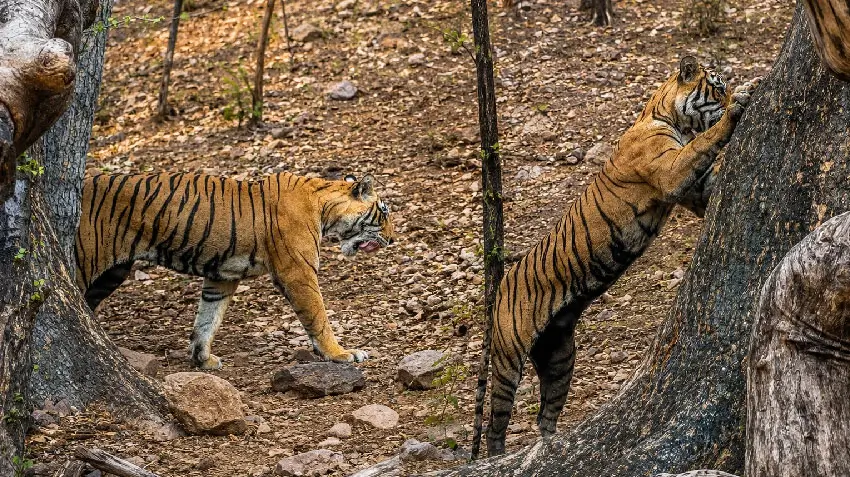
Many travellers plan Ranthambore in the wrong order. They choose a beautiful lodge, book the room, arrange the drive from Jaipur and only then ask about the safari. By that point, the jeeps they wanted may already be gone. The hotel and the safari permit are two separate things, and the lodge cannot create a seat in the park once the official quota is full.
That is why Ranthambore safari advance booking deserves attention early in your planning. Ranthambore National Park limits the number of vehicles that can enter each zone in each shift, and demand is high throughout the main season. Foreign visitors, who often fix their India dates months ahead, are in a good position to secure the best combinations, but only if they act while those combinations are still available.This guide explains why permit inventory is the real constraint, how to handle passport details correctly, how vehicle type, zone and shift affect availability, and why peak winter dates should be secured before the rest of your itinerary is fully polished. The goal is to make sure your safari is confirmed before you commit to everything else.
Experience the thrill of spotting Bengal tigers in their natural habitat. Let us help you plan your Ranthambore visit with safari booking guidance, park zone information, and a personalized travel itinerary.
Ranthambore is managed by the Rajasthan Forest Department, which runs the official online permit system for the park. Each safari needs a permit tied to a specific date, shift, zone and vehicle type. The department sets limits on how many vehicles can enter at a time, both to protect wildlife and to keep the experience manageable. When those limits are reached, no more permits are issued for that slot.
Two vehicle types are used. The Gypsy is a small open jeep that carries up to six visitors. The Canter is a larger open vehicle that carries up to twenty. Rajasthan Tourism advises visitors to book in advance, and experienced travellers know that Gypsy permits, especially for popular zones and shifts, tend to sell out first.
This creates a simple reality. Your hotel room can be changed, upgraded or moved, but a full safari quota cannot be expanded. If you arrive in Ranthambore without a confirmed permit, you may find that the only options left are a Canter, a less popular zone or no safari at all on your preferred dates.
Hotels and lodges in Ranthambore can help arrange safaris, and many do so well. But they are working within the same official system as everyone else. A lodge that promises a safari without having a confirmed permit is making a promise that depends on availability. Always ask whether the safari is actually booked or simply requested.
The number of permits available on any given day is fixed in advance, but the pattern of demand changes through the season. Weekends, national holidays, school holidays in India and the Christmas and New Year period draw large numbers of domestic visitors. Foreign visitors often travel in the same peak months of the cooler season, which adds to the pressure.
It helps to think of the permit as the most important part of your Ranthambore booking. Once it is confirmed, you can build everything else around it: the lodge, the transfers, the timing of your arrival and the rest of your Rajasthan route. If you do it the other way round, you risk paying for a wonderful lodge and then spending your stay without the safari you came for.
A realistic approach is to decide your Ranthambore dates early, book the permits as soon as the official window allows, and only then finalise the hotel and the surrounding itinerary. This order may feel unusual, but it reflects how the park actually works.
The official booking window is set by the Forest Department and can change from season to season. A tour operator who works in Ranthambore regularly will know when the window for your dates opens and can apply on the first available day if needed.
Price is linked to this system too. A safari in Ranthambore is rarely a single ticket. The total usually combines the official permit fee, the vehicle charge, the guide or naturalist, pickup from your lodge and a booking or service fee. Premium arrangements, such as exclusive use of a Gypsy or a specialist naturalist, cost more. When you compare quotes, ask for each part to be listed so you can see what you are paying for, and ask what happens to each part if the Forest Department changes a rule after you have booked.
The cheapest option is not always the best value. A low price may place you in a shared Canter or a less convenient shift. A higher price may bring a private Gypsy and a naturalist who knows the park deeply. What matters is matching the service to what you want from the day. A family on a first visit may be happy with a shared Gypsy, while a photographer may feel a private vehicle is essential.
Safari permits in Ranthambore are issued in the names of the visitors. For foreign nationals, the permit system asks for identity details, usually including passport numbers and nationality. These details must match the passport you carry on the day of the safari, because permits can be checked at the gate.
Small differences can cause real problems. A missing middle name, a swapped first and last name, a spelling mistake or an old passport number can all lead to questions at the entry point. In the worst case, a mismatch could mean a delay or refusal. Taking care at the booking stage prevents this.
The simplest approach is to send clear, accurate copies of each traveller's passport details to whoever is making the booking, whether that is your lodge or your tour operator. Double-check the spelling of every name exactly as it appears on the passport's data page. If a traveller renews their passport between booking and travel, update the details as soon as possible.
Foreign visitors pay different permit fees from Indian nationals, and the system tracks nationality for this reason. Make sure each traveller is listed with the correct nationality. Mixed groups, such as a family with both Indian and foreign passport holders, should list each person accurately rather than assuming the same fee category for everyone.
Children's details are also required. Even young children usually need to be listed on the permit, with their names and identity information. Ask about the current rules for children, including any age limits for safaris and whether they count towards the vehicle's capacity.
On the day of the safari, carry your original passport or a clear copy, depending on the current requirements. Your guide or driver will usually know what is needed. Losing your passport or leaving it at the hotel can cause avoidable stress at the gate.
Changes to names after booking can be difficult. The permit system is designed to stop resale and misuse, so swapping one traveller for another may not be possible, or may require cancelling and rebooking. If your group is not yet fixed, discuss this with your tour operator before booking permits.
Accurate details also help if something goes wrong. If a safari is cancelled because of weather, park closure or official decisions, correct information makes it easier to process refunds or changes. It is a small effort at the start that saves trouble later.
A practical tip is to create one shared document for your group with every traveller's full name, date of birth, nationality and passport number exactly as printed. Send the same document to everyone involved in the booking, so there is only one version of the truth. When plans change, update the document first and then tell your operator. It sounds simple, but many permit problems begin with two slightly different versions of the same passenger list.
Every Ranthambore permit is a combination of four choices: the vehicle type, the zone, the shift and the date. Each of these affects availability in different ways, and understanding them helps you decide where to be flexible and where to insist on your preference.
The Gypsy is the vehicle most visitors want. It is small, open and carries up to six people, which makes it better for photography and gives a more personal experience. Because of this, Gypsy permits sell out faster than Canter permits. If you want a Gypsy, especially a private one for your group alone, you need to book early.
The Canter is larger and carries up to twenty people. It is a perfectly valid way to see the park, and some visitors enjoy the higher seating and the shared atmosphere. However, it is noisier, slower to reposition and less flexible for photography. If Gypsy permits are gone, a Canter may still be available, but the experience will feel different.
The park is divided into zones, each with its own route and terrain. Some zones include lakes, old ruins and forts that make the scenery especially striking, while others are more open or wooded. Some zones are more popular because of their reputation for sightings or scenery. Popular zones fill up faster, so if you have a specific zone in mind, book early. If you are flexible, you may still find good options later.
Each day has a morning shift and an afternoon shift. The morning shift starts around sunrise and is often cooler and quieter. The afternoon shift runs into the evening, with warmer temperatures and long light for photography. Both can be productive, and many serious wildlife visitors book several safaris across both shifts to improve their chances.
Private use of a Gypsy is another consideration. Some bookings place you in a shared Gypsy with other visitors, while others reserve the whole vehicle for your party. If you want the vehicle to yourselves, make sure the booking states this clearly, and ask how the permits will be arranged to support exclusive use.
When availability is tight, flexibility helps. You might accept a different zone to secure a Gypsy, or a different shift to secure your preferred zone. A good tour operator will explain the trade-offs and suggest the combination that best matches your priorities.No one can guarantee a tiger sighting. Ranthambore is known for its tigers, and many visitors are lucky, but wildlife moves freely and sightings depend on chance, season and skill. What a good booking can give you is legal entry, a suitable vehicle, a skilled driver and naturalist, and enough time in the park to make the most of your opportunities.
Planning a wildlife holiday in India? Get assistance with advance safari reservations, travel dates, and accommodation options to make your Ranthambore experience smoother and more memorable.
Ranthambore's main season runs through the cooler months, roughly from October to March, with the hot months of April to June also popular among serious wildlife enthusiasts. During the monsoon, the core zones usually close, and the park reopens in the autumn. The busiest periods within the season include Diwali, Christmas, New Year and Indian school holidays.
For these peak dates, it is wise to secure permits before you finalise every other detail of your trip. Foreign travellers often spend weeks refining their itinerary, choosing hotels and debating routes. By the time they are ready to book, Ranthambore permits for their dates may already be scarce. Booking the safari first, as soon as your Ranthambore dates are fixed, protects the part of the trip that is hardest to rearrange.
This does not mean you have to decide everything at once. You can fix your Ranthambore dates, secure the permits and then continue planning the rest of your route around them. Hotels in Jaipur, Agra and Udaipur can usually be adjusted more easily than a full safari quota.
The order of your route can help as well. Ranthambore sits conveniently between Jaipur and Agra, or on the way south toward Udaipur, so it can be placed at several points in a Rajasthan itinerary. If your preferred dates are already tight, moving Ranthambore one or two days earlier or later in the route can open up better permit options without changing the overall length of the trip. A flexible planner who checks availability first and then shapes the route around it will often find a combination that works.
Think about how many safaris you want. A single safari gives you one chance to see a tiger and experience the park. Two or three safaris across morning and afternoon shifts give you a much better chance and a fuller picture of the forest. Serious photographers and wildlife lovers often book four or more over two or three days.
Plan your arrival carefully. Many travellers drive from Jaipur, which takes several hours, or take a train to Sawai Madhopur, the nearest railway station. If your first safari is in the afternoon, make sure you arrive in time to check in, eat and reach the gate. If your first safari is in the morning, arriving the evening before is usually best.
Cancellation terms should be read carefully. Permit fees are set by the Forest Department and may not be refundable if you cancel. The costs of vehicles and guides are set by operators and may have different terms. Ask what happens if you cancel, if the park closes a zone or if weather prevents the safari.
Luxury Private Tours Of India builds Ranthambore into its journeys with the permits handled first. We confirm your dates, secure the vehicle and zone combination you want as soon as the official window opens, and then arrange the lodge and transfers around the safari. This order protects the part of your trip that is most likely to sell out.
One last reason to book early is peace of mind. Knowing your safaris are confirmed lets you relax into the rest of the trip. You no longer need to worry about checking availability, changing plans at the last minute or explaining to disappointed family members that the jeeps were full. For many travellers, that certainty is worth as much as the safari itself.
As soon as your dates are fixed, especially for peak periods. Permits are limited, and popular vehicle and zone combinations sell out first.
The Rajasthan Forest Department operates the official online permit system for Ranthambore.
A Gypsy carries up to six visitors, while a Canter carries up to twenty.
Foreign visitors should provide their names, nationality and passport details exactly as they appear on their passports.
It may not be possible without cancelling and rebooking. Confirm your group before booking permits.
A lodge can help arrange one, but only a confirmed permit guarantees entry. Ask whether the safari is booked or only requested.
Only if the booking clearly states exclusive use and the permits are arranged to support it.
The core zones usually close during the monsoon. Check current dates with the Forest Department or your tour operator.
Both can be good. Many visitors book safaris in both shifts to improve their chances and see the park in different light.
No. Sightings depend on chance and season. A good booking gives you legal access, a good vehicle and skilled guiding.