A whole day inside tiger country sounds like the obvious choice for anyone serious about wildlife. Why settle for a three-hour drive when you could spend the entire day in the forest, from the first light until the gates close? The idea is appealing, and for the right traveller it can be the highlight of an entire India trip. For others, it can turn into a long, hot and tiring day that delivers less than two well-timed standard safaris.
A Ranthambore full-day safari is a specialist product. It gives you far more time in the park, more flexibility to follow animal movements and the chance to wait patiently at a promising spot rather than rushing to meet a fixed exit time. It also costs a great deal more than a standard shift and asks more of your energy, concentration and comfort.
This guide explains how extended access differs from a regular safari, how the price is built, how to manage the long hours and which travellers benefit most. By the end, you should be able to decide whether a full day is the right purchase for your trip or whether a series of standard safaris would serve you better.
A standard Ranthambore safari runs in two shifts each day, one in the morning and one in the afternoon. Each shift lasts around three hours and follows a set zone and route. Vehicles enter and leave at fixed times, and the driver and guide must work within those limits. This structure suits most visitors, but it means you may leave just as a tiger starts to move or a leopard appears on a distant ridge.
Extended or full-day access, when it is officially available under the current Forest Department rules, removes much of that pressure. You enter in the morning and stay until the evening, often with greater freedom to move within the permitted area. The details, including which zones are covered and what the exact hours are, depend on the rules in force at the time, so it is important to confirm what your permit actually allows.
This extra time changes how you experience the park. Instead of racing from one spot to another, you can wait at a waterhole during the hottest part of the day, when animals come to drink. You can return to an area where tracks were found in the morning. You can watch behaviour unfold over hours rather than minutes. For experienced wildlife watchers, this patience is often where the best sightings happen.
It also changes the light. A standard morning safari ends before midday, and the afternoon shift starts after lunch. A full day covers the whole cycle, from the soft glow of dawn through the harsh midday sun to the warm tones of late afternoon. Photographers can plan shots around this light, knowing they will be in the park when conditions are right.
The terrain adds to the appeal. Ranthambore is known for its lakes, old ruins, banyan trees and the great fort that rises above the forest. Spending a whole day there lets you see these places at different times, often with fewer vehicles around during the quieter middle hours.
However, a full day is not simply two standard safaris joined together. It requires different planning for food, water, rest and toilet breaks, and it depends heavily on the skill of your driver and naturalist to use the extra time well. Without good guiding, the extra hours can feel long and empty.
It is also important to be clear about expectations. No safari, however long, can guarantee a tiger. More time improves your chances, but wildlife moves freely and sightings depend on luck as well as skill. What a full day offers is more opportunity, not certainty.
Because extended access depends on official rules that can change, the first step is always to confirm whether it is currently available for your dates and what it includes. A tour operator who works regularly in Ranthambore will know the current situation and can explain the options clearly.
The paperwork follows the same rules as any other Ranthambore safari, with a few extra points. Permits are issued in the names of the visitors, so foreign guests should provide passport details exactly as printed and carry matching identification on the day. Because full-day permits are limited and expensive, a small error in a name or passport number is even more costly to fix. Check every detail twice before the booking is submitted.
Discover the wilderness of Ranthambore National Park with an exciting full-day safari experience. Explore the forest, look for Bengal tigers, and enjoy the beauty of Rajasthan’s natural landscapes with a personalized travel experience.
A full-day safari costs far more than a standard shift. Once the official permit, the vehicle, the driver and a specialist naturalist are included, the total can reach a high five-figure rupee amount for the day. This is a significant sum, and it helps to understand what makes up the price before deciding.
The permit fee is set by the Forest Department. Extended access permits carry a much higher fee than regular safaris, reflecting the longer time in the park and the limited number available. This part of the cost is fixed by the authorities, and it may not be refundable if you cancel.
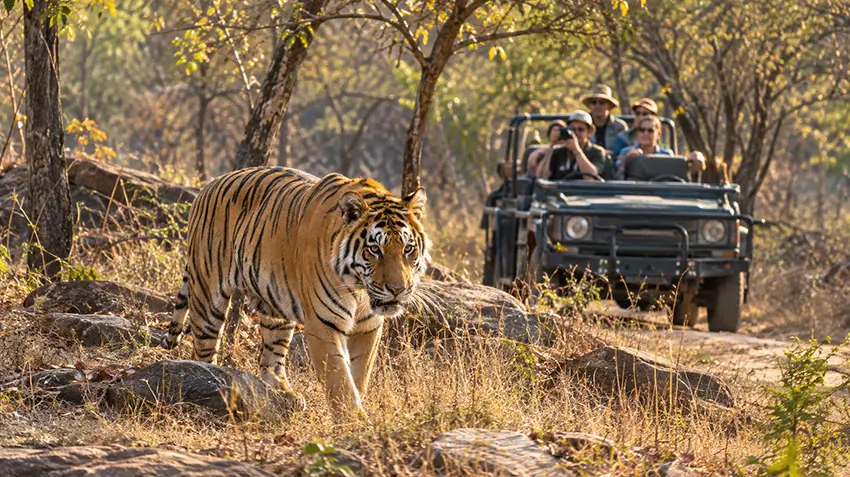
The vehicle is usually a Gypsy reserved exclusively for your group for the whole day. The cost reflects the full day's use, the fuel and the driver's time. A private vehicle is essential for a full day, because you need the flexibility to stay in one place or move as the situation changes.
The naturalist is often the most important part of the purchase. A skilled naturalist knows the park intimately, reads tracks and alarm calls, understands animal behaviour and can predict where wildlife is likely to appear. On a long day, this knowledge decides whether the hours are productive or wasted. Specialist naturalists command higher fees, and they are worth it.
Additional costs may include pickup and drop-off from your lodge, packed meals and drinks for the day, and a booking or service charge. Some operators bundle these into one price, while others list them separately. Ask for a full breakdown so you know exactly what you are paying for.
Compare the full-day cost with a series of standard safaris. For the same money, you might book several standard shifts over two or three days with a private Gypsy and a good naturalist. This spreads your time across more mornings and afternoons, gives you more chances in different conditions and avoids the fatigue of one very long day.
It is also worth asking what happens if the Forest Department changes a rule after you book. Extended access is sometimes adjusted or suspended, and you need to know whether you would receive a refund, a replacement safari or nothing at all. Read the cancellation and change terms carefully.
The right price is one that matches your purpose. For a keen photographer or a naturalist with specific goals, a full day with an expert guide can be excellent value. For a family on a first visit who simply hope to see a tiger, the same money may be better spent on several standard safaris and a comfortable lodge.
A useful way to judge value is to think about cost per productive hour. A standard safari might give you three hours in the park, perhaps two of them in active searching. A full day might give you ten or more hours, with several of them spent in the most productive windows of early morning and late afternoon. If the naturalist uses those hours well, the full day can offer more quality time per rupee than it first appears. If the day is poorly paced, the extra hours add cost without adding much value.
A full day in an open vehicle is physically demanding. You will be sitting for many hours on rough tracks, exposed to sun, dust and changing temperatures. In the cooler months, early mornings can be cold and the middle of the day warm. In the hot months of April to June, midday temperatures in Ranthambore can climb very high, and shade in an open jeep is limited.
Planning for comfort makes a big difference. Bring layers for the cold morning, a hat and sunscreen for the midday heat, a scarf or mask for the dust, and plenty of water. Ask whether your operator provides packed breakfast and lunch, cool drinks and snacks. Good food and hydration help you stay alert through the long hours.
Toilet breaks are an important practical point. Facilities inside the park are limited, and you may need to plan stops at specific points. Ask your operator how this is handled on a full-day safari so there are no surprises.
Concentration is another challenge. Watching for wildlife requires constant attention, and after several hours it becomes harder to stay focused. Many experienced visitors use the quiet middle hours to rest, eat and talk quietly while the driver waits at a promising spot. A good naturalist will pace the day so that you are most alert when animals are most likely to move.
Children and older travellers may find a full day too long. Even adults who enjoy wildlife can find their energy fading by mid-afternoon. If anyone in your group has limited stamina, health concerns or difficulty sitting for long periods, a full day may not be the right choice.
The heat affects animals as well. During the hottest part of the day, tigers and other predators often rest in shade, and sightings may be fewer. This is when waiting near water can be productive, but it also means some hours may pass with little activity. Knowing this in advance helps you stay patient and enjoy the forest for its own sake.
Some visitors split the day with a break at the lodge if the rules allow. This depends on current regulations and the terms of the permit. Ask whether leaving and re-entering is possible, or whether you must stay inside the park for the whole period.
The best full-day safaris feel unhurried rather than exhausting. With good planning, comfortable conditions and a skilled naturalist, the long hours become a patient, rewarding day in the forest. Without these, they can feel like an endurance test.
Rest the evening before and after. A full day often starts before dawn, so an early dinner and a good night's sleep at the lodge make a real difference to how much you enjoy it. Planning a quiet evening afterwards, rather than a long drive to the next destination, also helps. Many travellers underestimate how tired they will feel after ten or more hours of dust, sun and concentration, and a relaxed evening lets the experience settle rather than blur into the next leg of the trip.
Equipment needs extra thought on a long day. Cameras, lenses and phones need spare batteries and memory cards, since charging inside the park is unlikely. Dust can get into equipment quickly on dry tracks, so a simple cover or bag helps. Binoculars are useful for everyone, not only photographers, because many sightings begin with a distant shape on a hillside or at the edge of a lake.
Get closer to the wild beauty of Rajasthan with a carefully arranged Ranthambore safari experience. Enjoy a comfortable journey, explore diverse wildlife habitats, and make the most of your time in tiger country with Luxury Private Tours of India.
The travellers who benefit most from a full day are those with clear goals. Wildlife photographers want time to wait for the right light, the right angle and the right behaviour. A full day lets them stay at a location as long as needed, return to promising spots and work with the changing light from dawn to dusk.
Serious naturalists and birdwatchers also gain a great deal. Ranthambore is home to many species beyond tigers, including leopards, sloth bears, crocodiles, deer, antelope and hundreds of bird species. A full day allows time to observe and study these animals rather than simply ticking them off a list.
Repeat visitors often find a full day rewarding. If you have already done standard safaris in Ranthambore and seen the main sights, extended access offers a deeper experience and the chance to explore at a slower pace.
First-time visitors with a general interest may get better value from standard safaris. Two or three shorter drives across different shifts and zones give a broader introduction to the park, with less fatigue and lower cost. You can rest between drives, enjoy the lodge and still have excellent chances of seeing wildlife.
Families with children should think carefully. Young children may find a full day in a jeep too long, and even older children can lose interest during the quiet hours. A series of shorter safaris, with time for swimming and rest at the lodge in between, often works better for the whole family.
If you are undecided, one approach is to start with standard safaris and add a full day later in your stay if you are enjoying the park and want more. This depends on availability, so discuss it with your tour operator early.
Luxury Private Tours Of India can arrange full-day and standard safaris in Ranthambore, with experienced naturalists and private vehicles. We check current rules, confirm what the extended permit includes and help you decide whether a full day or a series of shorter drives suits your interests, stamina and budget.
Timing within the season matters as well. From October to December, the forest is still green after the monsoon, and animals are spread widely across the park. From February to May, the vegetation thins and water becomes scarce, drawing animals toward the remaining lakes and pools. Many experienced visitors feel the drier months give the best chances of long, rewarding sightings, which can make a full day particularly productive at that time of year, provided you are prepared for the heat.
It is extended access to the park, when officially available, allowing you to stay inside from morning to evening rather than for a single three-hour shift.
Once the permit, private vehicle and naturalist are included, the total can reach a high five-figure rupee amount for the day.
For photographers and serious naturalists, often yes. For first-time visitors, several standard safaris usually give better value and less fatigue.
No. It increases your time and chances, but sightings are never guaranteed.
Layers, a hat, sunscreen, a scarf for dust, water, and any personal items you need for a long day outdoors.
Many operators provide packed breakfast and lunch. Ask what is included in your booking.
Usually not for young children. The long hours can be tiring, and shorter safaris often suit families better.
It depends on current rules and the terms of your permit. Ask before booking.
Ask about refund and change terms in advance, since extended access can be adjusted by the Forest Department.
A skilled naturalist reads tracks and behaviour and uses the extra time well. Without one, the long hours may be far less productive.