Travelling through India as a group becomes much easier when everyone can remain together in one properly sized vehicle. Families, groups of friends, wedding guests, corporate teams and small international tour groups often begin by considering two or three separate cars, only to find that coordinating multiple vehicles creates unnecessary delays. Different cars reach the hotel at different times, one driver takes another route, luggage becomes separated from passengers and every sightseeing departure requires repeated phone calls. A private minibus hire in India with driver solves many of these problems by keeping passengers, luggage and daily transportation under one coordinated arrangement.
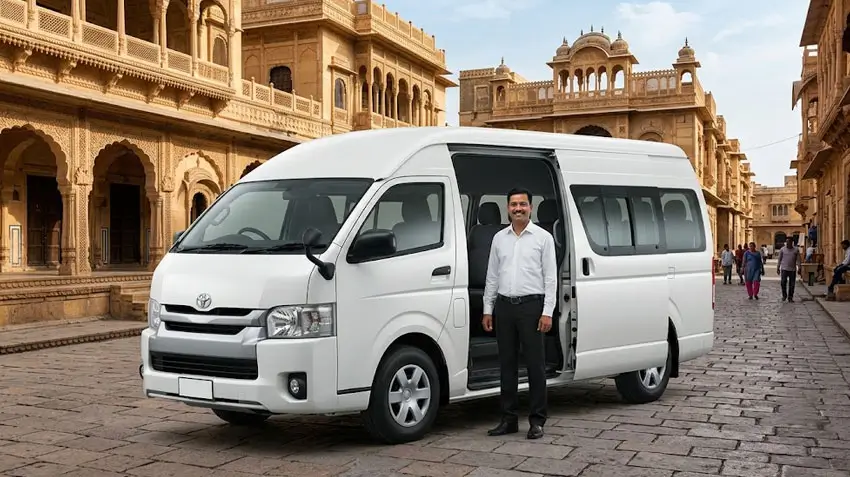
A minibus is particularly useful for groups that have outgrown an Innova, Vellfire or SUV but do not need a full-size luxury coach. Depending on the vehicle, configurations can range from approximately 9 or 12 seats to 16, 20 or more passenger seats. Premium versions can include individual reclining seats, strong air conditioning, overhead storage, charging points and improved suspension, while larger luxury minibuses may offer additional features designed for long-distance tourism.
The correct vehicle depends on far more than the number of people travelling. A 12-seater carrying twelve passengers with twelve international suitcases may be completely unsuitable even though the passenger count technically matches the seat count. The same vehicle could be excellent for eight travellers because the unused capacity creates more room for personal space and luggage. International groups should therefore think in terms of passengers plus baggage plus road duration, rather than simply asking for the smallest vehicle with enough seats.
This becomes even more important on multi-city journeys. A group travelling from Delhi to Agra, Jaipur, Jodhpur and Udaipur may spend several hours on the road between hotels. A cramped vehicle can make those transfers exhausting, while a properly configured chauffeur-driven minibus in India allows guests to sit comfortably, keep essential belongings accessible and enter each destination without the logistical confusion of a multi-car convoy.
For premium travel, the objective is not to put the maximum number of people into the minimum amount of space. The objective is to select a vehicle that still feels comfortable after four or five hours on the road.
A private minibus in India becomes particularly useful once a travelling party reaches approximately seven or eight people with substantial luggage. Smaller groups can sometimes use a large MPV or several SUVs, but one minibus often provides simpler logistics.
For a group of six to eight international travellers, a premium 9-seater or 12-seater vehicle can provide generous space, depending on the exact model and luggage compartment. Using a larger vehicle than the minimum required allows passengers to spread out and keeps the journey more comfortable.
For approximately eight to twelve travellers, a 12-seater or 16-seater is often more appropriate. If every passenger carries a large suitcase, moving to the larger category can be worthwhile even when several seats remain empty.
Groups of approximately twelve to sixteen travellers may need a 17-seater, 20-seater or similar tourist minibus depending on configuration. Once the group approaches twenty people, the difference between a minibus and a small coach becomes increasingly important.
Vehicle terminology in India is not completely standardized. One operator may describe a vehicle as a 12-seater luxury van, another as a minibus and another as a traveller. For this reason, international guests should ask for the actual passenger seating configuration rather than relying only on the category name.
The number of usable seats should exclude the chauffeur and any required assistant or guide seat. If a group consists of twelve travellers plus a professional tour guide, the vehicle needs space for thirteen passengers in addition to the driver.
This detail is frequently overlooked.
For a premium journey, it is generally better to leave one or two passenger seats unused than to operate the vehicle at absolute maximum capacity every day.
Enjoy comfortable group travel across India with a private minibus, professional driver and customized itinerary designed for your group.
India's group-transport market includes several vehicle types suitable for private travel, and the quality can vary substantially between standard commercial transport and premium tourism fleets.
The Force Urbania has become a popular premium option for small groups because it offers a more modern cabin than many traditional traveller-style vehicles. Depending on configuration, operators may offer Urbania vehicles with approximately 10, 12, 16 or more passenger seats. Exact layouts differ, so travellers should confirm the vehicle rather than assuming every Urbania has the same interior.
A premium Urbania can include individual reclining seats, good headroom, effective air conditioning, USB or charging facilities and a cabin designed for longer journeys. For foreign groups wanting something more refined than a conventional Tempo Traveller, it can be an excellent option.
The Tempo Traveller remains extremely common throughout India. These vehicles are available in different sizes and specifications, ranging from practical standard models to upgraded luxury versions with improved seating and interiors. A well-maintained luxury Tempo Traveller can be highly suitable for road trips, but travellers should not assume that every vehicle marketed under the name offers the same quality.
For larger small groups, operators may provide 20-seater or 25-seater minibuses from different commercial manufacturers and coachbuilders. Premium interiors can include pushback seats, individual air vents and improved luggage arrangements.
The most important factor is the actual vehicle supplied.
Ask for recent photographs of the interior and exterior if the booking is significant. Manufacturer images or heavily edited promotional photographs do not necessarily represent the fleet that will arrive at the hotel.
For high-end groups, request information about vehicle age, air-conditioning configuration, seat design and luggage compartment.
A minibus used for a one-hour wedding transfer has different requirements from a vehicle carrying foreign guests across Rajasthan for twelve days.
The cost of minibus hire in India with driver depends on vehicle size, quality, city, distance, number of travel days and whether the service is local or intercity.
A premium smaller vehicle such as a luxury Tempo Traveller may commonly be budgeted at approximately ₹7,000 to ₹12,000 or more per local day, depending on seating capacity, included hours and kilometres.
A Force Urbania with driver can cost approximately ₹10,000 to ₹18,000 or more per day for premium local use, with larger configurations and higher-specification interiors commanding higher rates.
A premium 16- to 20-seat minibus may fall around ₹12,000 to ₹20,000 or more per local day, depending on vehicle, city and operating structure.
For multi-day outstation journeys, pricing is commonly calculated using a minimum daily kilometre allowance rather than a simple local-day rate. The operator may charge for a minimum number of kilometres per day even if the group travels less on a particular sightseeing day.
For example, a multi-day Rajasthan minibus may be priced according to approximately 250 to 300 kilometres per day as a minimum billing structure, although policies vary significantly between companies.
The calculation can apply across the total number of operating days rather than strictly to the kilometres driven each individual day.
Chauffeur allowance is generally additional unless included in the quotation. Larger vehicles may also operate with a driver and helper, particularly on long routes or where luggage handling and vehicle management require additional support.
Tolls, interstate taxes, parking and airport charges can add meaningful amounts over a long journey.
Foreign groups should therefore request a complete estimated trip cost, not merely a price per kilometre.
A quotation of ₹40 per kilometre can sound inexpensive until the minimum daily kilometres, chauffeur allowance, tolls, parking and taxes are added.
Premium group travel benefits from transparent fixed or estimated-total pricing.
Using several private cars may initially appear more luxurious because each couple has its own vehicle. In practice, this can make group travel less efficient.
Imagine a group of ten travellers using three SUVs. Every morning, the three chauffeurs need to be ready simultaneously. The luggage must be divided correctly. Everyone needs to know which vehicle they are using. If one car stops for a restroom break, the other two must either wait or continue separately.
On arrival in a crowded city, the vehicles may become separated by traffic.
At a monument, one car can reach the entrance ten minutes before the others.
At the hotel, one driver may accidentally use another entrance.
None of these issues is serious individually, but repeated every day they create friction.
A private minibus for group travel in India keeps the party together. The tour guide can speak to everyone before reaching the monument. The group arrives and leaves at the same time. There is one principal vehicle to coordinate and one luggage arrangement to manage.
It can also improve the social side of the journey. Families and friends can talk during transfers rather than dividing themselves between cars.
The main trade-off is flexibility in dense urban areas. A minibus is larger and may not be able to access every narrow lane or small hotel entrance as easily as a car.
A competent chauffeur and tour operator should anticipate this and arrange suitable drop-off points where necessary.
Luggage is one of the most important considerations in private group transport in India.
International travellers often carry significantly more baggage than local day-trip passengers. A group of twelve may arrive with twelve large checked suitcases, several cabin bags, handbags, camera equipment and additional purchases accumulated during the journey.
A 12-seat vehicle that can comfortably carry twelve passengers may not have space for all of that baggage.
Before confirming the booking, provide the operator with a realistic luggage estimate.
Ask whether the vehicle has a separate rear luggage compartment, roof storage or another approved luggage arrangement.
Roof-mounted luggage may be used by some tourism vehicles, but travellers carrying expensive suitcases, delicate equipment or electronics should discuss weather protection and security.
For premium travel, a dedicated luggage compartment is preferable.
Groups carrying golf clubs, wheelchairs, baby strollers, professional camera cases or other oversized equipment should mention these items individually.
Do not assume they count as ordinary suitcases.
If necessary, a separate luggage vehicle can accompany a high-end group. This adds cost but can dramatically improve passenger comfort.
A luxury journey should never involve suitcases blocking aisles or being stacked unsafely beside passengers.
The Delhi–Agra–Jaipur route is particularly well suited to a private minibus with chauffeur because the three cities are connected by major road networks and small groups often travel together throughout the circuit.
Delhi to Agra generally requires around three to four hours depending on pickup location, traffic and stops. Agra to Jaipur may take approximately four to five hours, while Jaipur to Delhi commonly requires around five to six hours depending on conditions.
For a group of eight to fourteen travellers, remaining in one premium minibus can make these road sections substantially easier to coordinate.
The guide can use travel time to discuss the next destination where appropriate, while guests have enough room to rest.
At the Taj Mahal, the minibus will normally use the designated parking and access arrangements rather than driving directly to the monument entrance. The guide can accompany the group from the appropriate drop-off point while the chauffeur handles parking.
In Jaipur, a larger vehicle can reach most major sightseeing areas, although access close to crowded bazaars or certain old-city lanes may require walking from a suitable stopping point.
In Delhi, Old Delhi presents similar limitations. A minibus is not intended to move through the narrow lanes of Chandni Chowk. The vehicle can drop guests at an appropriate point, after which the group continues with the guide on foot or by another local arrangement.
The size of the vehicle therefore changes the logistics but does not prevent meaningful sightseeing.
Rajasthan is one of the strongest regions for multi-day group transport because its major destinations are often connected by road.
A group can travel from Jaipur to Jodhpur, continue to Udaipur and include places such as Pushkar, Ranakpur, Kumbhalgarh or Chittorgarh without changing the main vehicle every day.
For a Rajasthan minibus with driver, comfort becomes increasingly important because some road transfers require five, six or more hours.
A premium vehicle should provide reclining seats, effective air conditioning and enough personal space for every traveller.
The chauffeur should have extensive experience with the region. Hotel access in historic cities can be complicated, and some heritage properties are located inside old quarters where a large minibus cannot reach the final entrance.
In these situations, the hotel may provide a smaller vehicle for the last section or guests may transfer from an agreed point.
This should be anticipated rather than treated as a surprise.
Rest stops also matter. A professional tourism chauffeur should know reliable highway restaurants and facilities with clean washrooms suitable for international travellers.
For longer journeys, the itinerary should not force guests to spend the entire day in the vehicle. A comfortable minibus improves road travel, but it does not make an excessive driving schedule desirable.
Travel together with spacious seating, reliable chauffeur service and flexible transportation for family holidays, group tours and special journeys.
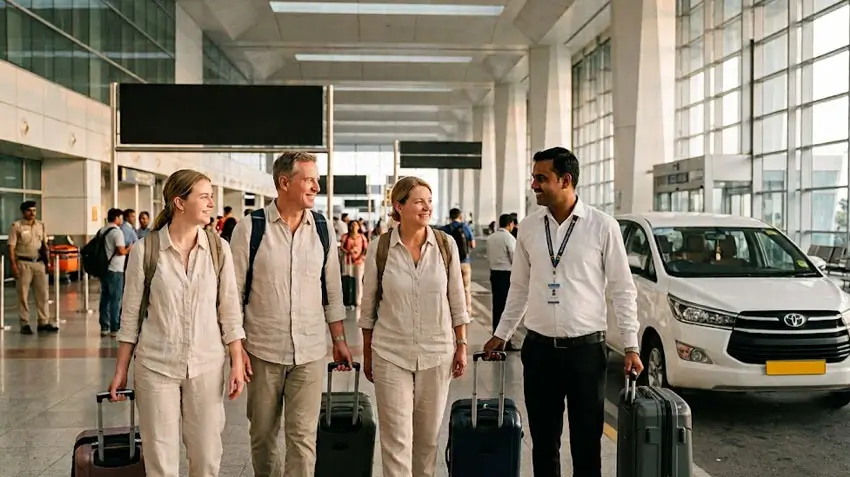
A private minibus airport transfer in India can be extremely useful when a family or group arrives on the same flight.
Instead of assigning several cars, the operator can provide one vehicle large enough for the passengers and luggage.
The flight number should be supplied before arrival so that the chauffeur or transport coordinator can monitor delays.
For large international airports such as Delhi and Mumbai, the group should receive a clear meeting point. A representative may meet the passengers in the public arrivals area and escort them to the vehicle.
Luggage volume is particularly important for airport work.
Ten passengers arriving from overseas may have considerably more baggage than ten passengers taking a domestic weekend trip. The operator should know this before dispatching the vehicle.
For groups with very heavy luggage, a larger minibus or separate luggage van can be more appropriate than a smaller premium vehicle.
Airport parking and waiting charges should also be clarified in advance.
On a premium group journey, travellers may encounter a driver, vehicle helper and professional tour guide, and each has a different role.
The chauffeur is responsible for operating the vehicle safely and managing transportation.
A helper may assist with luggage, vehicle cleanliness and practical operations, particularly on larger minibuses and coaches.
A professional tour guide is responsible for historical, cultural and destination interpretation.
The chauffeur should not automatically be expected to guide a group through monuments.
For multi-city travel, a group may use one accompanying tour escort throughout the journey and additional licensed local guides at specific destinations. Alternatively, separate local guides may meet the group in Delhi, Agra, Jaipur and other cities.
The transport quotation should make clear whether it covers only the vehicle and driving team or includes any guide service.
A premium minibus should be selected with the same attention to safety as a luxury car.
The vehicle should be properly maintained and commercially appropriate for passenger transport. Tyres, brakes and suspension matter enormously because the minibus may travel thousands of kilometres during a multi-city journey.
Seat belts should be available where the vehicle design and applicable requirements provide them, and travellers should use them.
Air conditioning should be powerful enough for the entire cabin, not merely the driver's area.
The chauffeur should avoid excessive speed and unsafe overtaking. Larger vehicles require more stopping distance and should be driven accordingly.
For long journeys, driver fatigue must be taken seriously.
A group should not demand a chauffeur drive until late at night and then begin another long journey before dawn without adequate rest.
When an itinerary requires unusually long operating hours, ask whether a second driver is appropriate.
The most luxurious seat in the vehicle cannot compensate for an exhausted chauffeur.
The written booking should specify the vehicle model or clearly defined category, number of passenger seats, air-conditioning arrangement and luggage capacity.
Ask for recent photographs when the vehicle quality matters.
Confirm the number of travellers and whether a tour guide requires an additional seat.
Check the daily kilometre minimum for outstation travel.
Check the extra kilometre rate.
Check chauffeur allowance and whether a helper is included.
Check tolls, parking, state taxes and airport charges.
Check applicable taxes on the service.
Ask about the replacement policy if the vehicle develops a mechanical problem.
For a multi-day journey, confirm whether the same vehicle and chauffeur are expected to remain with the group throughout.
The operator should also know the complete route before quoting. A Delhi–Agra–Jaipur journey has different operating requirements from a trip continuing through rural Rajasthan.
For approximately six to eight travellers, multiple vehicle options can work.
Two premium SUVs provide privacy and flexibility, but the group becomes separated during transfers.
A Force Urbania with driver keeps everyone together and can provide a modern, comfortable cabin.
For ten or more travellers, the advantage of a minibus becomes stronger.
A larger minibus can provide better luggage handling and more passenger space than trying to distribute the group across several smaller vehicles.
Cost also changes. Several luxury SUVs can become considerably more expensive than one premium group vehicle once chauffeur allowances, parking and multi-day charges are added.
The best choice depends on whether the group values individual privacy or collective convenience.
Families and groups of friends often prefer one vehicle because the journey itself remains social.
Corporate groups may prefer several executive cars if senior personnel require separate schedules.
The purpose of hiring a private minibus in India with professional driver is to make group transportation almost invisible.
Guests should not begin every morning by deciding who sits in which car.
Luggage should not disappear into another vehicle.
The guide should not spend twenty minutes calling drivers because one car took a different road.
Everyone should leave together, travel comfortably and arrive together.
Inside the vehicle, passengers should have enough room that a five-hour journey does not feel like a five-hour flight in a cramped seat. Air conditioning should reach the rear rows effectively, and luggage should remain safely stored rather than occupying the aisle.
The chauffeur should drive calmly and understand the route.
Rest stops should be sensible.
Hotel arrivals should be coordinated.
For a family reunion, friends' holiday, corporate delegation or private small group, these operational details are what transform a minibus from simple transportation into a premium travel service.
A premium smaller minibus or luxury Tempo Traveller may commonly cost approximately ₹7,000 to ₹12,000 or more per local day, while a Force Urbania or larger premium minibus may cost roughly ₹10,000 to ₹20,000+, depending on seating, city and usage.
For ten travellers with international luggage, a 12- to 16-seat vehicle can be more comfortable than a vehicle with exactly ten passenger seats. The exact choice depends on suitcase quantity and vehicle configuration.
Yes. A premium Force Urbania with driver can be a strong choice for small groups because of its cabin height, individual seating and suitability for multi-city road journeys.
Yes. The Delhi–Agra–Jaipur route is well suited to private minibus travel, particularly for families and groups wanting to remain together throughout the journey.
No. Passenger seating and luggage capacity must be considered separately. A 12-seat vehicle may not comfortably carry twelve international travellers plus twelve large suitcases.
Yes. Private minibuses can be arranged for airport transfers. Provide the flight number, terminal, passenger count and exact luggage quantity before arrival.
Not always. Tolls, parking, state taxes, airport charges, chauffeur allowance and helper allowance may be additional depending on the quotation.
Yes, when professional sightseeing interpretation is required. The chauffeur handles transportation, while a professional guide handles monument and destination interpretation.
For groups following the same itinerary, one minibus is often easier because everyone travels and arrives together. Multiple cars may be preferable when travellers require separate schedules or greater privacy.
Advance booking is advisable, particularly when requesting a premium Force Urbania, luxury Tempo Traveller or specific seating configuration for a multi-day journey. Vehicle choice becomes more limited during busy travel and wedding periods.