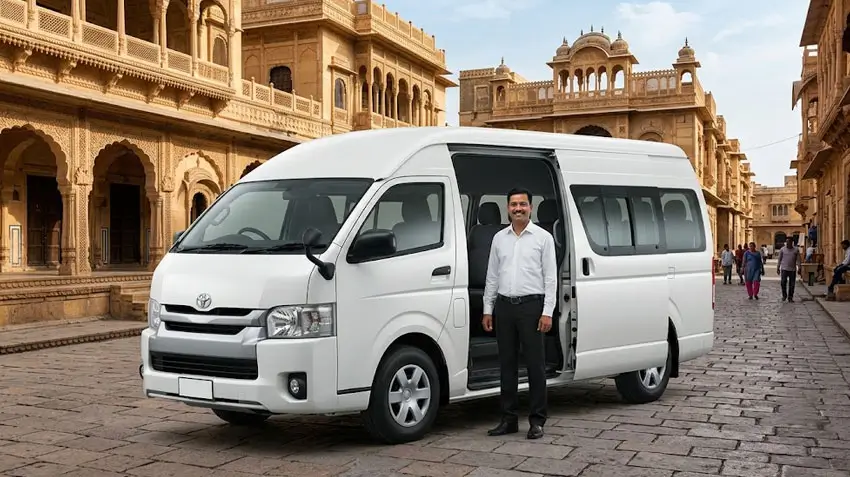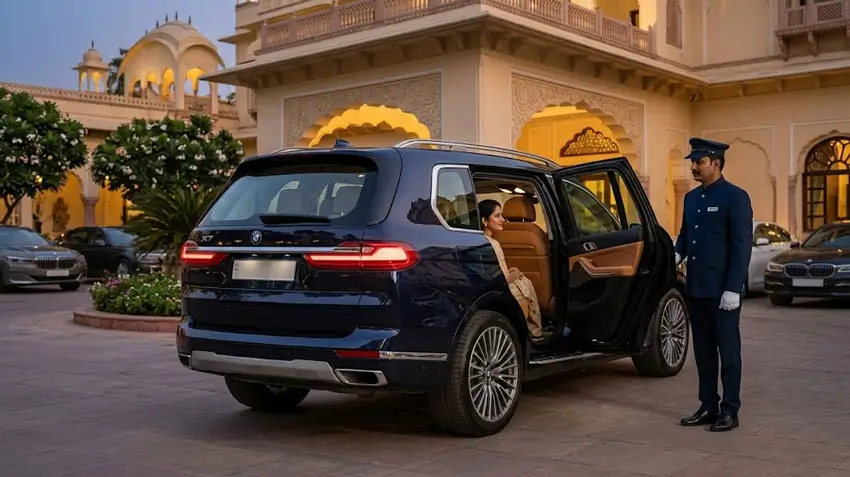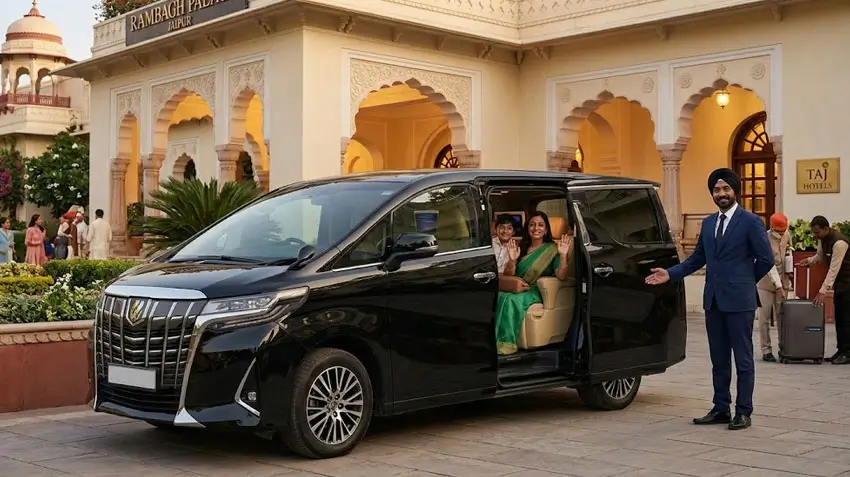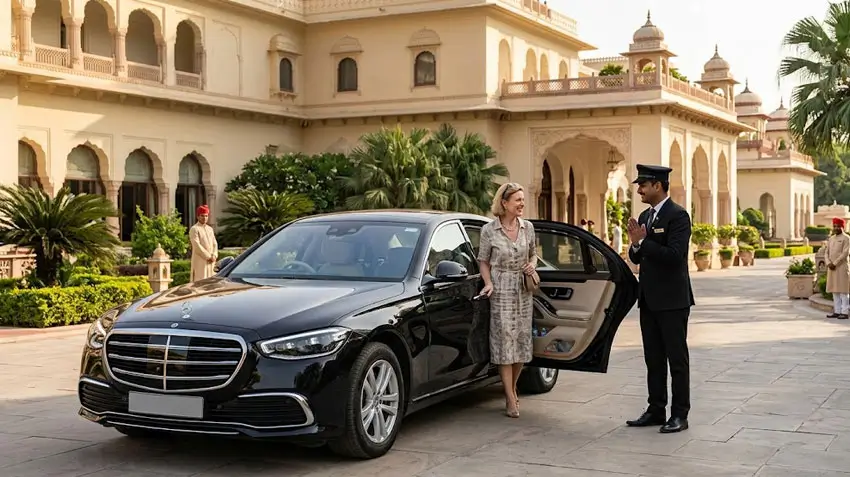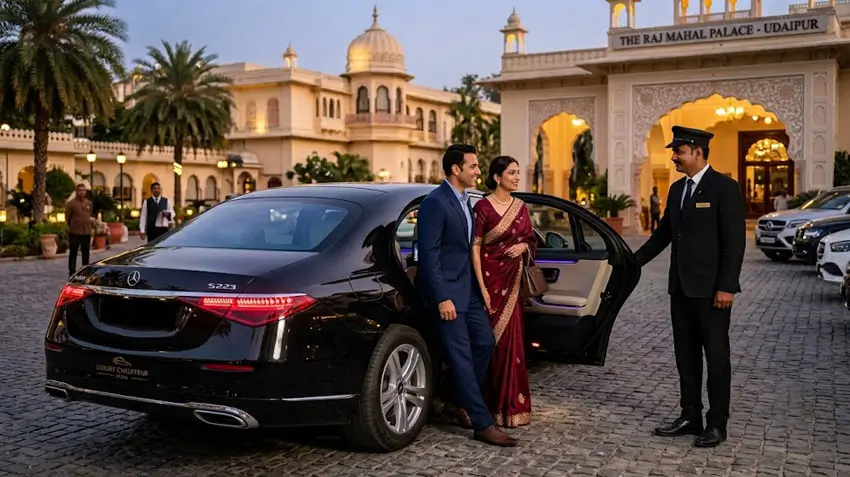
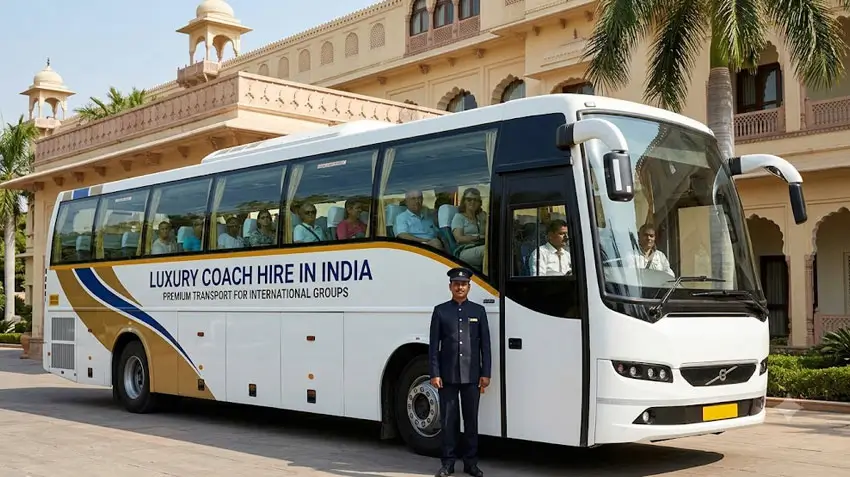
Travelling through India with twenty, thirty or forty people requires a very different transport arrangement from travelling as a couple or a small family. A collection of private cars may work for a short airport transfer, but it becomes difficult to coordinate once an international group starts moving between hotels, monuments, airports and different cities. Vehicles become separated in traffic, luggage is divided between cars, guides have difficulty communicating with everyone and every departure requires several drivers to be coordinated simultaneously. A luxury coach hire in India with driver provides a much more organized solution by keeping the group, guide and most luggage within one professionally managed transport arrangement.
For international groups, the quality of the coach can have a major influence on the entire journey. A group travelling from Delhi to Agra, Jaipur, Jodhpur and Udaipur may spend many hours on the road during the trip. Even an excellent hotel cannot compensate for uncomfortable seating, poor air conditioning or inadequate luggage space during repeated five- or six-hour transfers. The coach therefore needs to be selected as carefully as the hotels when a substantial part of the itinerary involves road travel.
A premium coach should provide more than the maximum number of seats legally available inside the vehicle. International travellers generally require more personal space and carry considerably more luggage than local day groups. A 35-seat coach filled with 35 travellers and their large international suitcases may feel very different from the same vehicle carrying 24 or 26 guests. For a high-quality journey, passenger capacity should therefore be calculated according to comfort, luggage and route duration, rather than simply filling every available seat.
The chauffeur and operational team are equally important. A large tourist coach cannot move through India in the same way as a sedan. Parking, hotel entrances, monument access, city restrictions, turning space and driver rest all need to be considered in advance. A professional chauffeur-driven luxury coach in India should be operated by a team familiar with tourism routes and group logistics rather than merely providing a large commercial vehicle.
When these details are handled correctly, a private coach allows an international group to travel together comfortably while significantly reducing the daily logistical work required from the tour leader.
The term luxury coach in India is used for several different types of vehicles, so travellers should never assume that every coach advertised as luxury offers the same standard. The category can include premium air-conditioned minibuses, mid-size coaches and full-size Volvo or comparable coaches designed for long-distance group travel. Seating layouts, suspension, luggage compartments and onboard facilities can vary substantially.
A premium tourism coach should begin with comfortable individual passenger seats rather than basic commuter-style seating. Pushback or reclining seats are particularly valuable on long road journeys because passengers need to change position during several hours of travel. Adequate legroom is equally important. Operators sometimes increase capacity by reducing the distance between rows, which may be acceptable for short local transfers but is not suitable for a luxury multi-city journey.
Air conditioning should operate effectively throughout the cabin. India's climate can place considerable demand on a large vehicle, particularly when temperatures are high and the coach is carrying a full group. A system that cools the front half of the cabin but leaves the rear rows uncomfortable is not adequate for premium travel. International groups travelling during warmer months should specifically ask whether the coach uses a properly maintained full-cabin air-conditioning system.
Large luggage compartments are another important feature. A coach intended for international tourism should ideally provide dedicated under-floor or external baggage storage so that large suitcases do not need to occupy passenger seats or aisles. Groups should still communicate the approximate luggage quantity before confirmation because thirty travellers with one medium suitcase each have very different requirements from thirty travellers carrying large suitcases, cabin bags and specialist equipment.
Charging points, reading lights, curtains and onboard entertainment may be available in premium coaches, but these facilities should be treated as secondary to seating quality, air conditioning, suspension and vehicle maintenance. Wi-Fi is sometimes offered, although connectivity on long highway routes can vary. Travellers should not select a coach solely because an advertisement promises Wi-Fi or a television.
A clean, mechanically sound vehicle with comfortable seating and an experienced driver is more valuable than a coach filled with decorative features but poorly maintained
Travel together in comfort with spacious seating, reliable driver service and flexible coach hire for family holidays and group tours.
Choosing the correct coach size is one of the most important decisions in group transport. A vehicle that is technically large enough may still be uncomfortable when luggage, guide seating and long-distance travel are considered.
For a group of approximately 15 to 20 travellers, a premium minibus or small coach can often provide sufficient space. However, international groups carrying substantial luggage may prefer a larger 25-seat vehicle so that the cabin does not feel crowded.
Groups of approximately 20 to 25 travellers are often comfortable in a 27- to 35-seat coach, particularly on multi-day journeys. The unused seats create flexibility for the tour escort, personal bags and passengers who prefer not to sit beside another person for every transfer.
For groups of approximately 25 to 35 travellers, a 35- to 41-seat luxury coach may be appropriate depending on luggage capacity. Groups approaching forty travellers should consider a full-size coach rather than attempting to fit everyone into a smaller vehicle.
Larger 45-seat luxury coaches in India can be used for substantial international groups, corporate movements, conferences, weddings and incentive travel. However, the actual number of comfortable passenger seats should be confirmed because seating configurations vary.
The professional guide or tour escort must also have a seat. If a group consists of thirty travellers plus a tour manager and local guide, the transport calculation should not be based on thirty seats.
For a premium journey, leaving several seats unused can substantially improve passenger comfort. Guests can change seats during longer journeys, couples can spread out and the guide has more flexibility when communicating with the group.
Luxury group transport should never be treated as an exercise in achieving maximum occupancy.
The luxury coach hire price in India depends on vehicle size, brand, seating specification, city, route, travel duration, daily kilometres, chauffeur requirements and the overall quality of the fleet. There is no single national daily rate because a local Delhi transfer and a twelve-day Rajasthan road journey involve completely different operating costs.
A premium smaller coach in the 20- to 27-seat category may commonly be budgeted at approximately ₹15,000 to ₹25,000 or more per local day, depending on vehicle and usage. Larger premium coaches can move into the ₹20,000 to ₹35,000 or more per day range for local assignments.
A high-quality Volvo luxury coach with driver or comparable premium full-size vehicle can cost approximately ₹25,000 to ₹45,000 or more per operating day, depending on city, specification, availability and distance. High-end corporate assignments, large events or specially configured coaches can cost more.
These are broad premium-market budgeting figures rather than fixed tariffs.
Multi-day road journeys are frequently calculated using a minimum daily kilometre structure. An operator may use approximately 250 to 300 kilometres per day as a minimum billing basis, although the exact number varies between companies and vehicle categories. If a coach is hired for ten days, the commercial calculation may therefore include a minimum total kilometre allowance even when some sightseeing days involve only short local travel.
Driver allowance is usually relevant. Full-size coaches operating long journeys may also require a second driver or helper depending on the route, hours and operator policy. Their daily allowances and overnight arrangements should be clarified.
Tolls can become a substantial expense for a large coach because toll rates differ from those charged to cars. Interstate taxes, parking and city-entry charges can also accumulate across a multi-state journey.
The correct way to compare coach quotations is therefore to request the estimated total transport cost for the complete itinerary. A low per-kilometre figure is meaningless if it excludes several unavoidable expenses.
The Volvo coach with driver in India is widely associated with premium long-distance group transport because Volvo coaches are designed around passenger comfort, highway stability and longer journeys. For international groups travelling substantial distances, a well-maintained Volvo or comparable high-end coach can provide a significantly better road experience than a basic bus.
One of the main advantages is ride quality. On long highway sections, suspension quality becomes noticeable, particularly to senior travellers and passengers who are not accustomed to extended road journeys. Better seating and a more stable ride reduce fatigue when the group spends several hours between destinations.
The cabin should provide strong air conditioning and properly maintained reclining seats. Depending on the specific coach, overhead storage and charging facilities may also be available. Large luggage compartments beneath the passenger cabin are particularly useful for international groups.
However, the word "Volvo" should not automatically be treated as proof of quality. Vehicle age and maintenance remain important. A poorly maintained older coach can deliver a worse experience than a newer premium vehicle from another manufacturer.
International tour organizers should ask for recent vehicle photographs and, for major high-value groups, may request details about fleet age and maintenance standards. When the exact coach cannot be guaranteed months in advance, the operator should at least guarantee a clearly defined premium category.
A luxury Volvo coach hire in India should be selected for the passenger experience it delivers, not simply because the brand name appears on the quotation.
The Delhi–Agra–Jaipur circuit is one of the most practical routes for international coach travel because the cities are connected by major highways and frequently visited by organized groups.
Delhi to Agra generally requires approximately three to four hours, depending on the hotel's location, city traffic and rest stops. The road infrastructure on the main route allows a premium coach to provide a comfortable journey, although entering and leaving Delhi can add substantial time during peak traffic.
Agra to Jaipur usually requires around four to five hours, while Jaipur to Delhi can take approximately five to six hours or more, depending on traffic and the exact destination in Delhi.
A private luxury coach for the Golden Triangle allows the entire group to remain together throughout these transfers. The tour escort can provide practical information before arrival, explain the next day's schedule and coordinate rest stops without repeating instructions across several vehicles.
At major monuments, coach access needs to be understood in advance. Large vehicles cannot always stop directly beside the entrance. At the Taj Mahal, the coach will use the appropriate parking and access arrangements, after which the group continues toward the monument using the permitted local transport or walking arrangements.
Old Delhi also requires careful handling. A full-size coach cannot enter the narrow lanes around Chandni Chowk. The driver will use an appropriate coach-accessible drop-off location, and the group can continue with its guide on foot, by cycle rickshaw or through another suitable local arrangement.
Jaipur has similar considerations in crowded sections of the old city. A professional driver and guide should coordinate the drop-off point before arrival rather than attempting to force a large coach into unsuitable streets.
These are normal parts of operating a group vehicle in historic Indian cities.
Enjoy comfortable group travel with a luxury coach, professional driver and personalized transportation for your India tour.
Option 2
Rajasthan is exceptionally well suited to road-based group travel because many major destinations are connected by highway rather than convenient direct flights. Jaipur, Jodhpur and Udaipur can be linked by coach, while places such as Pushkar, Ajmer, Chittorgarh and selected countryside destinations can be incorporated according to the route.
The distances, however, should not be underestimated.
Jaipur to Jodhpur can take approximately five to six hours. Jodhpur to Udaipur can require a similar amount of time, particularly if the group visits Ranakpur en route. Udaipur to Jaipur can take approximately six to seven hours, depending on stops and road conditions.
For these journeys, coach quality matters enormously.
A group that has spent a week travelling together will notice poor suspension, insufficient legroom and weak air conditioning far more than it did during the first short airport transfer.
A luxury coach for Rajasthan travel should therefore provide enough space for passengers to remain comfortable across multiple long road days.
The chauffeur should also have Rajasthan tourism experience. Historic hotels sometimes have restricted access, and a full-size coach may not reach the main entrance of a palace property located inside an old quarter. In such cases, the hotel or operator should arrange smaller vehicles for the final transfer.
This should be identified before arrival.
For remote properties, the operator should also assess whether the access road is appropriate for a large coach. A luxury group should not discover after several hours of travel that the final road cannot accommodate the vehicle.
Airport logistics become more complicated as the group size increases. A private coach airport transfer in India should therefore be organized with passenger arrival information, luggage and terminal procedures in mind.
If the entire group arrives on one flight, the process is relatively straightforward. A representative can meet passengers in the designated public arrivals area, assist with gathering the group and guide everyone toward the coach parking location.
The coach itself may not be permitted to wait immediately outside the terminal for an extended period. Airport regulations and parking arrangements differ, so a transport coordinator may communicate with the chauffeur once the group is ready to leave.
International arrivals also require patience. Thirty passengers will not necessarily clear immigration and baggage collection at the same time. One person's suitcase may be delayed while the rest of the group is already outside.
The transport team should therefore avoid moving the coach until the tour leader confirms that everyone is accounted for.
For groups arriving on several different flights, the logistics become more complex. It may be more efficient to use smaller vehicles for separate arrivals and assemble the group at the hotel rather than keeping a large coach waiting for several hours.
The decision should be based on flight schedules and passenger numbers rather than assuming one coach is always the best solution.
International group luggage is one of the main reasons to use a full-size coach rather than a smaller vehicle.
A group of thirty travellers can easily carry thirty large suitcases, twenty or thirty cabin bags, handbags, camera equipment and other personal items. If the trip includes shopping destinations, the total volume may increase during the journey.
A proper tourist coach for international groups should provide dedicated baggage compartments suitable for the expected load.
Before confirming the vehicle, tell the operator the approximate number of large suitcases.
Groups travelling for special purposes may need additional space. Golf groups can carry large golf bags. Photography groups may have specialist cases. Wedding parties can travel with clothing and event equipment. Corporate groups may carry display materials.
These items should be disclosed before the vehicle is assigned.
Passenger aisles should remain clear.
Large suitcases should not be stacked beside passengers merely because the vehicle technically has enough seats.
For unusually heavy luggage requirements, a separate luggage van can accompany the coach. This is particularly useful for premium delegations and long international journeys where passenger comfort is a priority.
Large-group travel works best when responsibilities are clearly separated.
The coach driver is responsible for operating the vehicle and managing transportation safely. On long journeys, there may be a second driver depending on the itinerary and operating requirements.
A coach assistant or helper can support luggage loading, vehicle cleanliness and practical tasks. The exact staffing depends on the vehicle and operator.
The tour escort or guide manages the passenger experience, destination information and daily schedule. This person should not be confused with the chauffeur.
For international groups, an experienced tour escort can be extremely valuable because communication between hotels, local guides, restaurants and the transport team becomes a full-time responsibility.
The guide should have access to a microphone or public-address system when the coach is used for group commentary. The system should be tested before the journey begins because a guide attempting to speak loudly to forty passengers without a functioning microphone is neither comfortable nor professional.
For a multi-city journey, the tour escort may travel with the group throughout, while licensed local guides join at individual destinations.
The vehicle must have sufficient seating for these additional personnel.
Driver fatigue is one of the most important issues in long-distance coach travel.
A luxury itinerary should not be designed around forcing the driver to operate from early morning until midnight and then repeat the schedule the following day.
Large coaches require concentration, particularly in urban traffic and on highways shared with commercial vehicles.
When a day involves a long intercity transfer followed by an evening event, the operating schedule should be discussed with the transport company.
If exceptionally long hours are unavoidable, a second qualified driver may be necessary.
Night driving should be minimized when the same journey can reasonably be completed during daylight. This improves both passenger comfort and driver safety.
The group should also build sensible rest stops into longer transfers. A five- or six-hour road journey should not be treated as a competition to reach the destination without stopping.
A break allows passengers to use washrooms, buy refreshments and stretch their legs. It also gives the chauffeur an opportunity to rest briefly.
The transport operator or tour manager should select clean and reliable stopping points appropriate for international travellers.
Large vehicles cannot reach every hotel entrance in India, particularly in historic districts.
A palace hotel may be located inside a fort, on a narrow hill road or within an old-city area where full-size coaches are restricted.
This does not necessarily mean the hotel is unsuitable for groups.
The correct solution is usually a coordinated last-mile transfer.
The coach can stop at an accessible point, and the hotel may provide smaller vehicles to move guests and luggage to the property.
The same principle applies during sightseeing.
In Old Delhi, Varanasi's historic lanes and parts of Jaipur, Jodhpur or Udaipur, a large coach should be viewed as the main transport base rather than a vehicle that must reach every monument entrance.
A professional group transport company in India should understand these restrictions before the group arrives.
Tour leaders should ask about access when using unusual heritage hotels rather than assuming a coach can park directly outside reception.
International travellers sometimes assume that every large luxury coach in India includes a functioning onboard toilet. This should never be assumed.
Some premium coaches may offer washroom facilities, but availability depends on vehicle design and operator. Even when a toilet is fitted, operators may impose usage restrictions because of maintenance and waste-management considerations.
For most road journeys in India, a well-organized schedule with appropriate rest stops is often more practical.
If an onboard washroom is an essential requirement because of the age or medical needs of passengers, it must be specifically requested and confirmed before booking.
Do not rely on a generic photograph of a European-style coach.
The actual vehicle specification needs to be confirmed.
For senior groups, the tour manager should also arrange more frequent rest stops rather than depending entirely on onboard facilities.
Large Indian weddings, international conferences, incentive programmes and corporate events often require several coaches operating simultaneously.
In these situations, transport management becomes as important as vehicle quality.
Each coach should have a clear number or identification. Passenger lists can be assigned to individual vehicles, and coordinators should know which hotels and venues each coach serves.
For a destination wedding, guests may arrive on multiple flights and stay across several hotels. Coaches can then operate scheduled movements between hotels, ceremony venues and evening events.
For conferences, the main challenge is punctuality. Hundreds of delegates may need to arrive at the venue within a narrow time window.
A luxury coach service for corporate groups in India should therefore include operational coordination rather than simply supplying vehicles.
Backup planning is important as well. If one coach experiences a mechanical issue, the operator should have a procedure for replacing it without leaving a large number of passengers stranded.
For major events, the transport company should ideally have an on-ground coordinator who communicates with the event team and drivers.
A professional quotation should identify the coach category, seating capacity, air-conditioning standard and approximate vehicle specification. If a Volvo or another specific premium brand is guaranteed, that should be written clearly.
The quote should state the number of operating days and the kilometre calculation used for the journey.
If a daily minimum kilometre allowance applies, the operator should explain how it is calculated.
Driver allowance and helper allowance should be identified.
If a second driver is required, the associated cost should be included.
Tolls, parking, interstate taxes and city-entry charges should be addressed.
Applicable taxes should be clearly stated.
The quotation should also explain whether driver accommodation is included or payable separately.
For airport movements, waiting and parking arrangements should be included.
For multi-day journeys, ask whether the same coach is expected to remain with the group throughout. Continuity is valuable because the driver becomes familiar with the group's luggage and operating schedule.
Cancellation conditions and deposit requirements should be provided in writing.
For high-value group bookings, ask about the replacement procedure if the assigned coach becomes unavailable or develops a mechanical problem.
A group of twenty-five travellers may have the option of using one large coach or two smaller minibuses.
One coach keeps everyone together and usually simplifies guide communication, luggage handling and daily departures.
Two minibuses provide more flexibility. They may access smaller roads more easily and can separate if part of the group wants a different schedule.
The correct choice depends on the itinerary.
For a group following one fixed sightseeing programme, a single private luxury coach is generally more efficient.
For a multi-generational family where some guests may return to the hotel early, two smaller vehicles can provide valuable flexibility.
Cost should also be compared carefully. Two premium minibuses require two chauffeurs and potentially two sets of parking and operating costs. A full-size coach may therefore be more economical for a larger group.
However, price should not be the only factor. If the large coach cannot reach several important hotels on the itinerary, smaller vehicles may make operational sense.
A well-operated luxury coach journey should feel organized from the moment the group leaves the airport until the final hotel transfer.
Passengers should know which vehicle they are using.
Luggage should have a defined storage system.
The coach should arrive before the scheduled departure rather than after the group has assembled.
The cabin should already be cool when passengers board during hot weather.
The microphone should work.
Seats should recline properly.
The driver should understand the day's route before departure.
Rest stops should be selected for cleanliness and convenience rather than commission opportunities.
At the destination, the tour escort and driver should already know where the coach can park and where the group will disembark.
These details are what make premium coach transport in India genuinely premium.
The purpose is not simply to move forty people from one city to another. It is to make the transportation component of a complex group journey predictable, comfortable and professionally coordinated.
For international groups travelling substantial distances through India, that level of organization can be as important as the hotels, guides and sightseeing programme themselves
A premium smaller coach may commonly cost approximately ₹15,000 to ₹25,000 or more per local day, while larger luxury coaches can range from roughly ₹20,000 to ₹35,000+. A premium Volvo coach with driver may cost approximately ₹25,000 to ₹45,000 or more, depending on vehicle, city and usage.
A 30- to 35-seat coach can provide greater comfort than using a vehicle with exactly 25 passenger seats, particularly when the journey includes several long road transfers. Luggage capacity should also be checked separately.
Yes. A private coach can remain with the group for multi-city routes such as Delhi, Agra, Jaipur, Jodhpur and Udaipur. The quotation should include the complete route, daily kilometre structure, driver costs, tolls and interstate expenses.
A well-maintained Volvo luxury coach can provide excellent suspension, seating and highway comfort for long journeys. However, vehicle age, maintenance and actual interior configuration remain just as important as the brand.
Yes. For large groups, a representative can meet passengers at the airport and coordinate movement to the coach parking area. Flight details, terminal, passenger count and luggage quantity should be provided in advance.
Not every coach does. If an onboard washroom is essential, it must be specifically requested and confirmed for the actual vehicle. Groups should otherwise schedule suitable rest stops during long road journeys.
Capacity depends on the coach design and luggage compartment. A coach intended for international tourism should have substantial baggage storage, but the operator should still be told how many large suitcases and special items the group will carry.
Not always. Tolls, parking, interstate taxes, driver allowance, helper allowance and applicable taxes may be additional. Request a complete estimated trip total before confirming the booking.
Yes. The driver is responsible for transportation. A professional tour escort or licensed local guide should handle sightseeing information, monument visits and group coordination.
Advance booking is strongly advisable, especially for a specific Volvo coach, premium seating configuration, large international group, wedding, conference or multi-city journey. Early confirmation also gives the operator time to review hotel access, luggage requirements and the complete route.