A first visit to the Taj Mahal often begins with a simple assumption: once the main entrance ticket has been purchased, every important part of the monument is included. That is not quite how admission works. The standard Taj Mahal entry ticket allows visitors into the principal complex, but anyone who wants to enter the main marble mausoleum must purchase an additional ticket.
The official Taj Mahal tourism website currently lists the additional Taj Mahal main mausoleum ticket at ₹200 per person. It applies on top of the regular admission charge and is optional. For foreign tourists, the published regular admission is ₹1,100, meaning a foreign adult paying the published gate rate would spend ₹1,300 when adding mausoleum access. Foreign visitors buying regular admission online are currently offered a ₹50 discount on that base ticket.
The extra ₹200 is a relatively small amount compared with the overall cost of a premium holiday in India. Yet price is not the only question. Travellers want to know what they actually receive for that additional ticket. Does the interior look as impressive as the exterior? How much time does it add to the visit? Can photographs be taken inside? Does entering the mausoleum improve a sunrise visit? Is it suitable for elderly travellers? And if someone has travelled thousands of miles to see the Taj Mahal, does skipping the interior mean missing an essential part of the monument?
For most first-time international visitors, the Taj Mahal mausoleum entry is worth considering precisely because it completes the architectural story of the monument. However, it is important to enter with realistic expectations. The interior experience is very different from standing in the gardens and looking at the famous marble façade. It is darker, more enclosed and can become crowded. Photography is prohibited inside the main mausoleum. The experience is less about obtaining another spectacular photograph and more about physically entering the central structure around which the entire Taj Mahal complex was created.
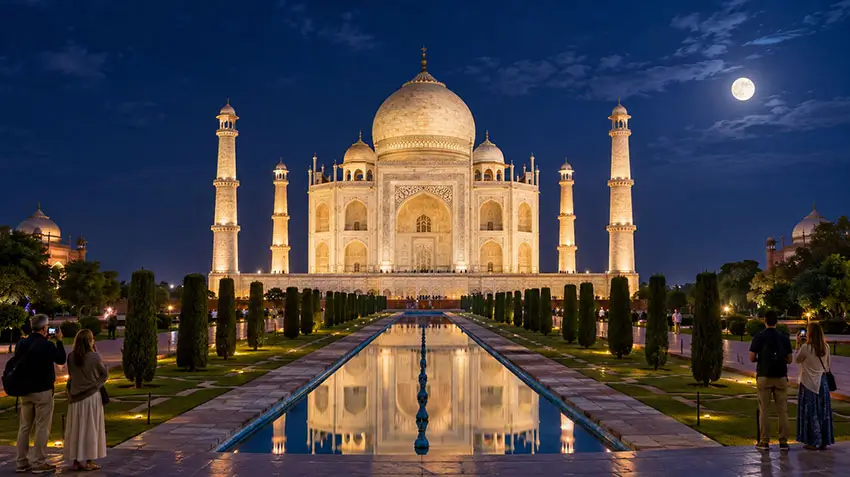
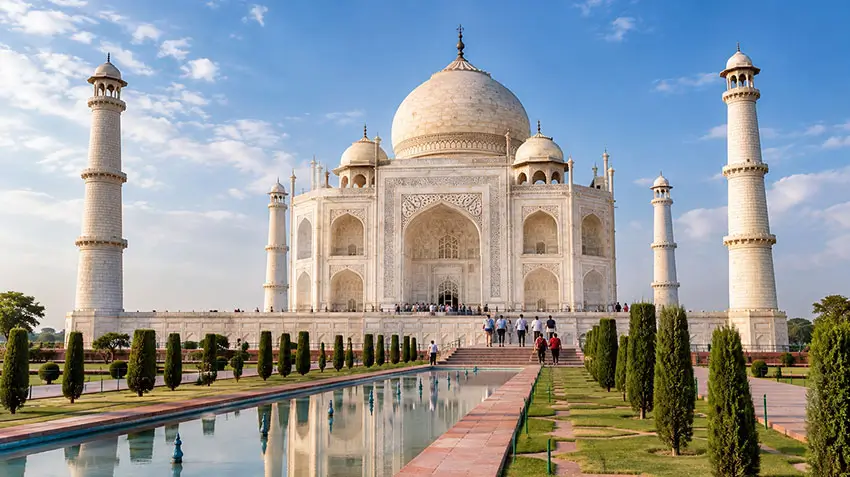
The Taj Mahal is not simply a single white building. Visitors enter a large protected complex containing the monumental gateway, formal gardens, reflecting water channels, mosque, matching guest building, riverfront setting and the raised marble platform on which the central mausoleum stands. The standard entrance ticket provides access to the complex, but entry inside the main Taj Mahal mausoleum requires the additional ₹200 ticket. The official Taj Mahal website specifically identifies this charge as optional and states that it must be purchased in addition to regular admission.
For a foreign visitor, the current published regular admission charge is ₹1,100, while the optional mausoleum supplement is ₹200. A foreign adult therefore pays ₹1,300 at the published standard rates when both are included. Visitors from SAARC and BIMSTEC countries have a published general admission rate of ₹540 plus the same ₹200 optional mausoleum charge, while the domestic/Indian rate is ₹50 plus ₹200 for mausoleum access. Children below 15 years are currently exempt from the regular entry fee according to the official ticketing information.
The extra charge allows the visitor to move beyond simply viewing the marble exterior and enter the central chamber area of the mausoleum. Inside are the famous cenotaphs associated with Mumtaz Mahal and Emperor Shah Jahan. Visitors should understand an important historical distinction: the richly decorated structures visible to visitors are cenotaphs. The actual graves are located in a lower chamber that is not part of the ordinary visitor route.
That difference often makes the interior more meaningful when a knowledgeable guide has explained it before entry. Without context, a traveller may walk through the chamber, notice the marble screens and decorative work, and leave without understanding why the space is arranged as it is. With proper historical interpretation before entering, the relationship between the cenotaphs, the building's symmetry, the positioning of Shah Jahan's cenotaph and the actual burial chamber below becomes much more interesting.
The main mausoleum is also where visitors can appreciate the craftsmanship at close range. From the gardens, the Taj Mahal appears almost perfectly white. At close distance, the marble is filled with decorative details. Floral motifs, calligraphic work and intricate stone inlay become much more apparent. The technique commonly associated with the Taj Mahal uses carefully cut semi-precious stones fitted into marble to create delicate decorative patterns. A private guide can point out these details before entry and explain what visitors should look for once inside.
There is one important limitation for anyone thinking primarily about photographs. Photography is prohibited inside the main mausoleum. The official visitor instructions explicitly state this restriction. If the objective is to obtain photographs of the Taj Mahal, the gardens, central waterway, monumental gateway and exterior marble platform are considerably more useful. Paying the ₹200 supplement should therefore be viewed as purchasing access to an important historic interior, not access to an exclusive photography location.
Visitors also receive shoe covers as part of the foreign visitor entry arrangements, and the official information notes that shoe racks are available below the main mausoleum. Foreign visitor admission includes certain facilities such as a half-litre water bottle, shoe covers, a tourist guide map, and battery bus or golf-cart service according to the official visitor information.
The additional ticket does not transform the visit into private access. The Taj Mahal is one of India's most visited monuments, and the interior can become busy. Visitors move through according to the directions of monument staff. Someone expecting to spend a long period alone inside the central chamber will probably be disappointed. The value comes from being able to say that you entered the principal mausoleum and saw the interior details firsthand.
For first-time visitors, that can matter. The Taj Mahal was created as a mausoleum, so viewing only the exterior means seeing its most famous visual identity while omitting the space connected most directly with its original purpose.
The ₹200 Taj Mahal mausoleum ticket is inexpensive when placed in the context of an international holiday. A traveller may spend considerably more on a private chauffeur from Delhi, a luxury hotel in Agra, a licensed guide, meals and other arrangements. For that reason, the decision is usually less about saving ₹200 and more about whether the interior adds enough substance to justify the additional queue and time.
For a first visit, it generally does.
Imagine arriving at the Taj Mahal before sunrise. The main gateway gradually frames the marble monument as morning light begins to change the colour of the façade. You walk through the gardens, stop beside the reflecting pool, photograph the monument from the central axis and gradually approach the raised platform. At that stage, stopping outside because you did not purchase the relatively inexpensive additional ticket can feel incomplete, particularly if this may be your only visit to Agra.
The interior gives the visit a different character. The exterior is about scale, proportion, symmetry and landscape. The interior is about craftsmanship, memorial architecture and the human story behind the building. Visitors can observe the decorative marble work much more closely and understand how the central chamber relates to the purpose for which the monument was constructed.
The value is particularly strong for travellers interested in Mughal architecture, Indian history, decorative arts and heritage conservation. A good private guide can explain the important details outside before the group enters because speaking loudly or creating unnecessary noise inside the mausoleum is discouraged. The official visitor guidance asks visitors not to make noise inside.
There are circumstances in which a visitor may reasonably skip the interior. Someone with severe mobility limitations may decide that conserving energy for the gardens and exterior viewpoints is more important. A traveller making a very short stop in Agra with strict onward transport timing might prefer to focus on the exterior. Repeat visitors who have previously entered the mausoleum may also decide that they would rather spend additional time photographing the building from different positions.
Families with very young children should consider crowd tolerance as well. The interior is enclosed and can feel busy during popular visiting periods. Travellers who are uncomfortable in dense visitor flows may find the gardens considerably more relaxing.
Even in those cases, however, ₹200 itself is rarely the reason to skip it. The more relevant considerations are time, mobility, crowd levels and personal interest.
The difference becomes especially clear when looking at the overall cost for two foreign adults. Using the official published standard rates, regular admission for two foreign adults totals ₹2,200 before any online discount. Adding mausoleum access for both costs another ₹400. In other words, the additional amount required for a couple to enter the central mausoleum is modest relative to the cost of almost every other premium element of an India holiday.
Travellers booking online should also remember that the official website currently states that foreign visitors receive a ₹50 discount on each regular online ticket. The mausoleum supplement remains a separate additional charge.
Another reason the supplement can be worthwhile is that there is no meaningful substitute for entering the building. Mehtab Bagh can provide a beautiful distant view across the Yamuna. A Taj-view hotel room can provide privacy and atmosphere. Agra Fort can provide a historically important distant perspective. None of those experiences allows the visitor to stand inside the central mausoleum itself.
That makes the decision straightforward for many first-time visitors: if mobility and time permit, purchase the extra access.
The Taj Mahal currently opens 30 minutes before sunrise and closes 30 minutes before sunset on normal operating days. It is closed to general visitors every Friday. Ticket windows open one hour before sunrise and close 45 minutes before sunset, while online ticketing is also available through the official channels identified by the Taj Mahal authorities.
For travellers who want to combine Taj Mahal sunrise entry with mausoleum access, arriving early has several advantages. Morning temperatures can be more comfortable, especially outside the cooler winter period. Light is often softer, which is valuable for exterior photography, and the emotional impact of seeing the monument emerge in early morning light can be significant.
Sunrise does not guarantee an empty Taj Mahal. It is one of the most popular visiting times precisely because experienced travellers know its advantages. However, arriving early generally gives a better chance of completing the key exterior viewpoints before larger daytime visitor flows build.
A well-paced private visit should not rush directly from the gate to the mausoleum. The first view from the monumental gateway deserves time. The classic central-axis photographs should be taken before moving closer. The mosque and surrounding structures help explain the symmetry of the complex, while the riverside platform provides a different perspective on the Yamuna.
The main mausoleum can then become the central architectural element of the visit rather than the only objective.
Visitors should carry minimal belongings. Official rules prohibit numerous items including food, tobacco products, alcohol, headphones, knives, mobile chargers, certain electrical goods and tripods. Drones are strictly prohibited. Large bags and books can increase security-check time. A small permitted bag with essential belongings is far more practical than arriving with everything carried during a multi-day road journey.
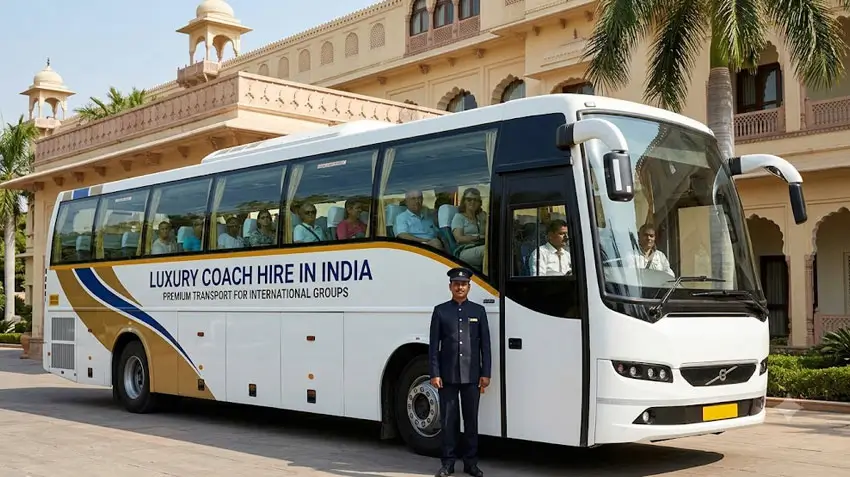
Foreign travellers arriving with a private chauffeur should leave unnecessary luggage securely in the vehicle rather than attempting to carry it through monument security. Polluting vehicles are not permitted within a 500-metre radius of the Taj Mahal, and designated parking areas are used, with battery buses and golf carts available toward the monument gates.
Government-issued identification should also be carried. The official ticketing guidance instructs tourists to keep identity proof with them.
Inside the mausoleum, expectations should change. This is not the place for phone photography or extended posing. Photography inside the Taj Mahal mausoleum is prohibited, and visitors should respect instructions from monument staff. The most rewarding approach is simply to look carefully at the stonework, screens, proportions and central chamber.
Visitors travelling with an approved private guide can benefit from receiving the detailed explanation before entering. The official Taj Mahal guidance recommends hiring approved guides and photographers who display identity cards. A professional guide can explain the historical details at a comfortable location outside, allowing the visitor to appreciate the interior without needing a long lecture in the enclosed chamber.
Time should also be allowed after exiting. One of the mistakes made on tightly scheduled Agra visits is treating the mausoleum as the end of the experience and immediately walking back toward the gate. The marble platform and river-facing side deserve attention. Depending on light and weather, the building can look noticeably different from the moment the visitor first entered the complex.
For a comfortable private Taj Mahal tour, two to three hours is a more sensible allowance than trying to complete the monument in a rushed hour, particularly when mausoleum access, photography and guide interpretation are included. During busy periods, security and visitor movement can add time.
For a first-time foreign visitor who has travelled to Agra specifically to see the Taj Mahal, buying the extra Taj Mahal mausoleum ticket is usually a sensible decision. The additional ₹200 represents a very small proportion of the total cost of reaching Agra and provides access to the central building that gives the entire complex its meaning.
History enthusiasts should certainly consider it. Architecture enthusiasts will benefit from seeing the decorative details at much closer range. Couples visiting the Taj Mahal as a once-in-a-lifetime landmark will often appreciate completing both the exterior and interior portions rather than leaving with the thought that they stopped at the threshold of the principal building.
Luxury travellers should also avoid thinking of the ticket in purely monetary terms. Someone staying at a five-star hotel, travelling in a chauffeur-driven vehicle and using a private guide gains little from saving ₹200 while omitting an important part of the monument. The better question is whether physical comfort and available time permit the entry.
Travellers with reduced mobility need a more individual assessment. The official Taj Mahal visitor information states that wheelchairs for differently abled visitors are available at the ASI office. However, the overall visit still involves movement through a very large heritage complex and managing visitor flows around the marble platform. Anyone with significant mobility concerns should discuss the practical route with their guide or tour operator before arrival.
Repeat visitors are another category. Someone who has already entered the mausoleum on a previous trip may reasonably decide to spend a second visit focusing on photography, gardens or changing light. The extra ticket has greatest incremental value for someone who has never seen the interior.
Travellers visiting primarily for professional exterior photography may also prefer to allocate their time elsewhere because cameras cannot be used inside the mausoleum. The ₹200 access does not create an additional photography opportunity inside.
Anyone on an extremely compressed schedule should be cautious. If the choice is between spending sufficient time appreciating the Taj Mahal exterior or rushing through both exterior and interior simply to say everything was covered, a slower exterior visit can be more enjoyable. Premium private travel should reduce unnecessary rushing rather than create it.
For most other first-time visitors, the additional entry is difficult to argue against. The standard foreign ticket gets you into one of the world's most celebrated heritage complexes. The extra ₹200 gets you inside its architectural and historical centrepiece.
The strongest way to experience it is to arrive early, carry only permitted essentials, use an approved guide if historical context matters to you, take exterior photographs before the complex becomes busier, and enter the mausoleum knowing that photography is prohibited. Once outside again, allow enough time to appreciate the marble façade from the platform before returning through the gardens.
The Taj Mahal main mausoleum ticket is not an expensive VIP upgrade, a skip-the-line product or a private-access pass. It is simply an additional admission required to enter the monument's central mausoleum. For a traveller who may see the Taj Mahal only once in a lifetime, that modest extra access can make the visit feel considerably more complete.
The official additional charge for entering the Taj Mahal main mausoleum is ₹200 per person. It must be purchased in addition to the applicable regular Taj Mahal entry ticket.
No. The additional ₹200 Taj Mahal mausoleum ticket is optional. Visitors can enter the Taj Mahal complex and see the exterior without purchasing it. The additional ticket is required specifically for access inside the main mausoleum.
The official published foreign tourist admission is ₹1,100, plus an optional ₹200 for main mausoleum access, making the published combined amount ₹1,300 before applicable online-ticket discounts. The official website currently states that foreign visitors receive a ₹50 discount when buying their regular ticket online.
For most first-time visitors, it is worth considering. The interior provides historical and architectural context that cannot be obtained from exterior viewpoints alone. The value is particularly good given that the additional ticket currently costs only ₹200.
No. Photography is prohibited inside the main mausoleum. Visitors can photograph the Taj Mahal from permitted exterior locations but should put cameras and phones away when entering the restricted interior.
Visitors see the central chamber containing the ornate cenotaphs associated with Mumtaz Mahal and Shah Jahan, surrounded by detailed marble craftsmanship and decorative stonework. The actual graves are located in a lower chamber rather than being the visible cenotaphs encountered on the standard visitor route.
The official monument currently opens 30 minutes before sunrise and closes 30 minutes before sunset, except Friday, when it is closed for general viewing. Early morning is particularly attractive for softer light and more comfortable conditions.
The official ticketing information states that there is no regular entry fee for children below 15 years of age, for both domestic and foreign visitors. Families should check the latest official conditions when booking because monument regulations can change.
Small permitted belongings can be carried, but the official guidance advises against large bags and books because they can increase security-check time. Food, tobacco, alcohol, tripods, chargers, headphones and several other items are prohibited.
Yes, if you want to enter the main mausoleum. Hiring a private Taj Mahal guide does not include or replace the official mausoleum admission requirement. A knowledgeable approved guide can provide historical context before entry, but each eligible visitor still needs the appropriate monument ticket.