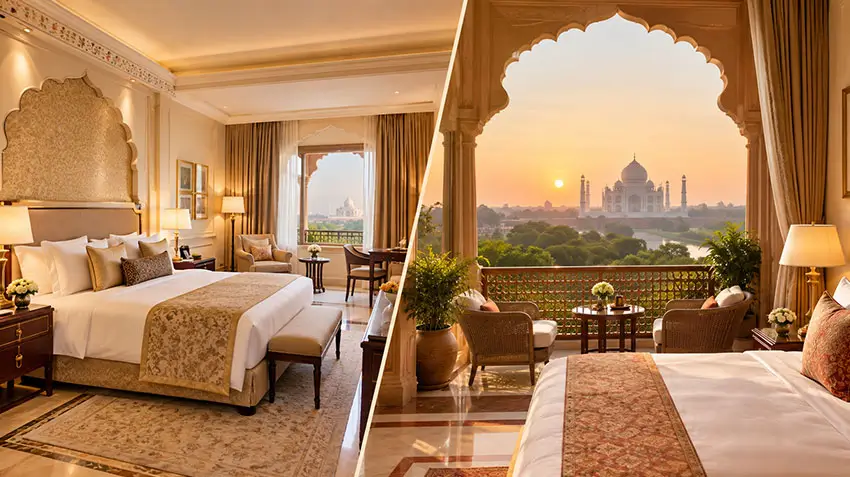
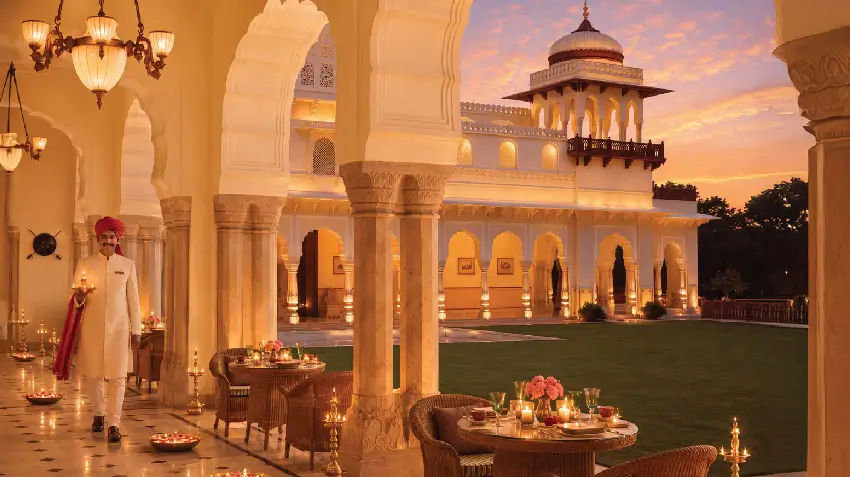
Rambagh was a home before it was a hotel. The building began life in the nineteenth century as a garden house, grew into a royal hunting lodge and later became the residence of the Maharaja of Jaipur. It opened to guests in the 1950s and is often described as one of India's first palace hotels. That history matters when you choose a room, because the categories here are shaped by an old building rather than by the standard floor plan of a modern hotel.
For travellers comparing options at Rambagh Palace Jaipur, the choice is partly about space and partly about atmosphere. Some rooms feel like elegant heritage accommodation within a large estate. The grander suites feel closer to living in a royal apartment, with separate rooms for sitting and dining, more personal service and a stronger sense of the palace's past.
This guide explains how the categories differ in practice, how suite space works across a stay of two or three nights, what butler service and separate living areas really add, and how to match the category to the purpose of your trip. The goal is to help you choose the room that suits your time in Jaipur, rather than simply the most expensive name on the list.
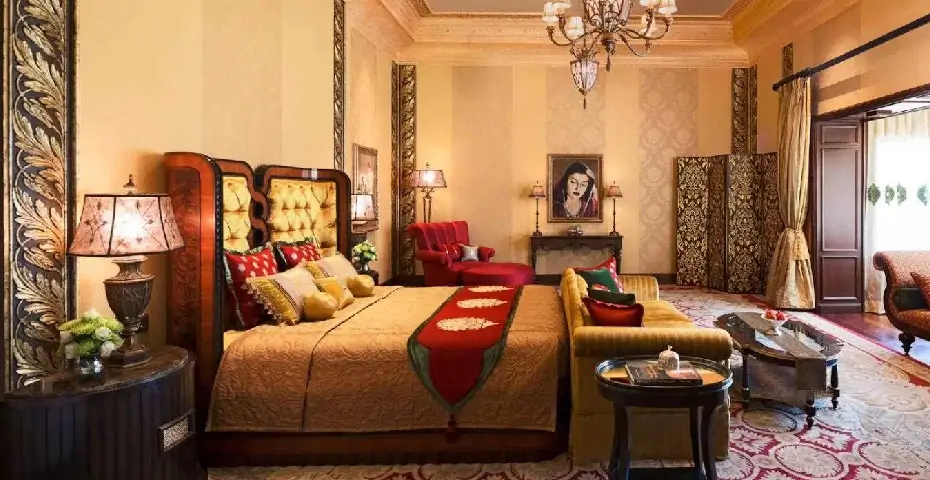
At a modern city hotel, a higher category usually means a larger version of the same room with a better view. At Rambagh, the difference is more about character. Rooms in different parts of the palace can vary in shape, ceiling height, furnishings and outlook. Some face the gardens, some face courtyards, and some sit in wings with their own distinct feel.
The entry categories give you the essential Rambagh experience. You stay within the palace, walk its corridors and verandahs, eat in its restaurants and wander its gardens, where peacocks are a familiar sight. For many guests who are out sightseeing all day in Jaipur, this is exactly what they want. The palace itself becomes the living room, and the bedroom is a comfortable retreat within it.
As you move up, the rooms tend to become larger and more individual, with more historic detail and more private space. Suites often have separate sitting areas or full living rooms, and some carry names or stories linked to the royal family or famous visitors. The top suites are among the most striking hotel rooms in India, with a scale that feels closer to a royal apartment than a hotel room.
At the top sits the Grand Royal Suite, which is published at roughly 139 to 144 sqm. It can accommodate up to three guests and includes separate living areas with butler service. This is a very different product from a standard room. It is designed for guests who want to spend real time in their accommodation, entertain within it and feel that they are living in the palace rather than staying at it.
It helps to be clear about what you are buying at each level. A lower category buys access to the palace, its gardens and its service. A mid-level suite buys more private space and more historic character. A top suite buys a residence within the palace, with the privacy and staff attention that go with it. Knowing which of these you actually need is the first step toward a good decision.
Because the building is historic, photographs online are not always a reliable guide to a specific room. Two rooms in the same category might have different furniture, window positions or layouts. This is part of the charm of staying in a real palace, but it means you should read category descriptions carefully and ask questions when something matters to you.
A good request describes the experience you want, not just a room size. For example, you might ask for a garden-facing room in a quiet wing, or a suite with a strong sense of the original palace interiors. The reservations team can then match you to rooms within your category that fit that description, subject to availability.
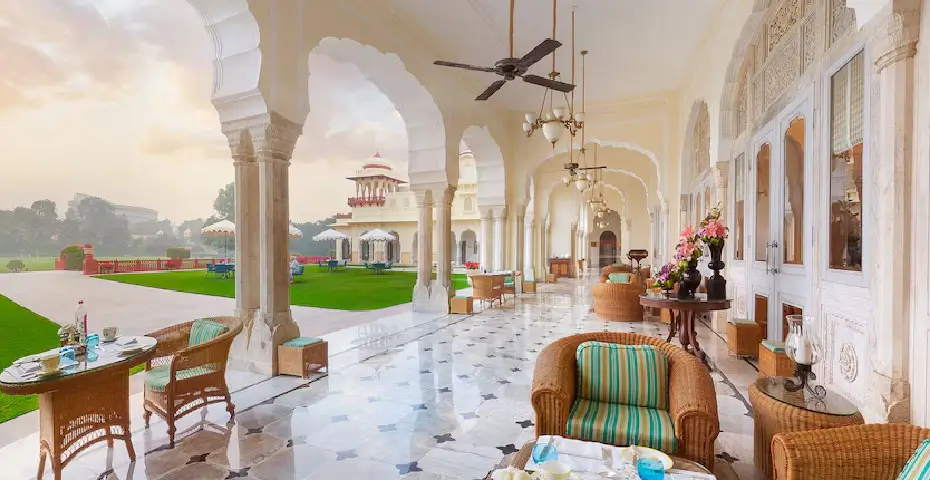
Many travellers find that the palace setting itself does most of the work. Breakfast on the verandah, a drink in the bar, a walk through the gardens at dusk and dinner in a grand dining room are available to every guest. The room category decides how much of that experience continues once you close your own door.
The public spaces deserve a mention of their own, because they shape the value of every category. The Suvarna Mahal dining room, with its high ceilings, chandeliers and painted details, is one of the grandest restaurant settings in the country. The bar carries a strong connection to the polo history of the Jaipur royal family. The long verandahs look out over lawns where peacocks wander in the early morning. A guest in the smallest room can enjoy all of these, which is why an entry category at Rambagh often feels more special than a larger room at a newer hotel.Evening at the palace has its own mood. As the light fades, the building is lit, the gardens grow quiet and the air cools for much of the year. Many guests simply walk the grounds before dinner. This part of the stay has nothing to do with the room you book, and it is worth remembering when you weigh up the premium for a suite.
From royal palace stays to private sightseeing and curated Rajasthan tours, make your Jaipur trip truly memorable. Explore our luxury tour packages today.
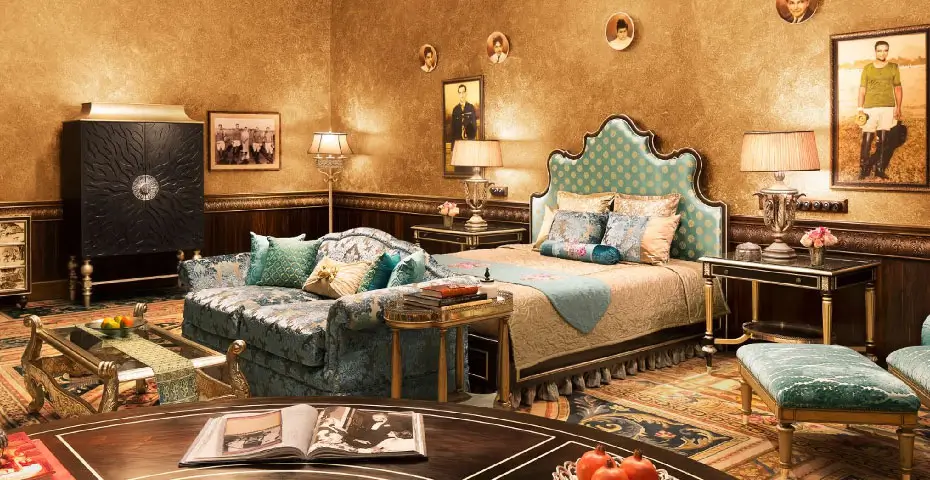
The length of your stay changes the value of a suite more than almost anything else. On a single night, much of the time in the room is spent sleeping, dressing and packing. On two or three nights, you begin to live in the space, and a separate sitting room starts to earn its place.
Jaipur is a busy city to explore. A typical visit includes Amber Fort, the City Palace, Jantar Mantar, Hawa Mahal and time in the old bazaars. These are full days, often with an early start to reach Amber before the heat and crowds. On such days, guests often return to the hotel in the afternoon for a rest before heading out again in the evening. That afternoon break is where a larger room or suite comes into its own.
A suite with a living room lets one person rest in the bedroom while another reads, works or has tea in the sitting area. For couples with different rhythms, this can make a real difference to how relaxed the stay feels. For families, it gives space for children to play or sleep without the whole room having to go quiet.
On a three-night stay, you might also choose to spend one day largely at the palace. Rambagh has a pool, a spa and extensive gardens, and many guests find that a slower day in the middle of a Rajasthan tour is welcome. On that day, a suite with generous living space makes the palace feel like your own home for a while.
It is also worth thinking about luggage and routine. Long trips around India often involve several suitcases, shopping from bazaars and changes of clothing for different climates. A larger room or suite gives space to unpack properly, which makes a stay of several nights more comfortable than living out of a suitcase in a smaller room.
That said, a suite on a one-night stay can still make sense if the occasion is special. A proposal, a milestone birthday or an anniversary dinner may justify the space even if you only use it for an evening and a morning. In those cases you are paying for the feeling of the occasion as much as for practical space.
If the budget does not stretch to a suite for the whole stay, one approach is to split it. Some travellers book a standard room for most nights and move to a suite for the final evening, often to mark a special occasion. This depends on availability and on the hotel's policy, so ask in advance whether a room change mid-stay is possible and whether it would be handled smoothly.
The key question is simple. How many hours will you spend in the room while awake? If the answer is a few, the palace itself will give you most of what you want. If the answer is many, a suite will probably feel like money well spent.
Weather can change the value of space too. In the heat of April, May and June, Jaipur afternoons are hard work outside, and most guests spend the middle of the day indoors. A suite with a comfortable living room makes those hours pleasant. In the cooler months, guests spend more time in the gardens and on the verandahs, and the extra indoor space matters a little less.
Travellers with a lot of shopping planned should also think about space. Jaipur is one of India's best cities for block-printed textiles, gemstones, silver, carpets and blue pottery. After a few days, bags can pile up quickly. A larger room gives you somewhere to spread purchases out, check what you have bought and pack carefully for the rest of the journey.
Butler service is often described in romantic terms, but at a hotel like Rambagh it has very practical uses. A good butler can unpack and press your clothes after a long drive, organise laundry, arrange in-room dining, book spa treatments and restaurant tables, and help with small requests throughout your stay. For guests arriving tired from Delhi or Agra, this support takes pressure off from the first hour.
In the higher suites, butler service is part of the published product. That means the service is built into the stay rather than being a favour you have to request. Ask what the butler's role covers in your chosen category, how to reach them and what hours they are available, so you know how to make the most of it from the start.
Separate living areas bring privacy of a different kind. In a standard room, anything delivered to the room enters the space where you sleep. In a suite, room service, a visiting tailor or a private meeting can happen in the sitting room while the bedroom stays private. For guests who value this separation, it can make the difference between feeling like a hotel guest and feeling at home.
Jaipur is famous for textiles, jewellery and tailoring, and many visitors buy clothes or fabrics during their stay. Some shops offer fittings at the hotel. A living room gives a comfortable, private place for these fittings, which is much easier than trying to arrange them in a bedroom.
For families, separate living space often matters more than any other feature. Children can sleep in one room while parents stay up in the other. If the suite allows an extra bed or connects with another room, the whole family can stay together in comfort. Ask about these arrangements early, because heritage buildings may have limits on extra beds or connecting options.
Older travellers can also benefit. A suite with a comfortable chair, good lighting and space to move around is easier to use than a smaller room with limited seating. Some guests prefer to take meals in their suite on quieter evenings rather than walking to a restaurant, and a dining area makes this more pleasant.
Business travellers occasionally need to work or hold short meetings during a leisure trip. A suite's living room provides a proper place to do this without leaving the palace or turning the bedroom into an office.
In short, butler service and living space are not only about luxury. They make daily routines easier, protect privacy and give the stay a calmer rhythm. Whether they are worth the premium depends on how much of that ease you need on your trip.
There is also the matter of arrival. Many guests reach Rambagh after a long drive from Agra or Delhi, or after a flight into Jaipur's airport. A butler who meets you, takes care of your luggage, orders tea and draws a bath can turn a tiring travel day into a gentle evening. This first hour often sets the tone for the whole stay, and it is one of the places where a higher level of service is felt most clearly.Guests who have stayed in several Indian palace hotels often say that service is what separates a good stay from a great one. Architecture and gardens are fixed, but attention to detail is personal. When you are deciding how much to spend, weigh the service element as seriously as the space, particularly if you are travelling after a busy stretch of the trip.
Experience royal hospitality, elegant rooms, and unforgettable moments in Jaipur. Explore the best luxury stay options and plan your perfect Rajasthan getaway.
The simplest approach to room choice at Rambagh is to start with the purpose of your stay. A honeymoon, a milestone anniversary or a proposal is a strong reason to consider a suite. A busy sightseeing trip with long days out is a reason to consider a well-placed entry category and spend the difference elsewhere.
Rates at Rambagh move with the seasons. The cooler months from October to March are the busiest, and wedding season and holiday periods can push prices higher still. Summer and the monsoon often bring lower rates. Because of this, it is better to compare live quotes for your dates than to rely on a figure seen months ago. When you do compare, look at the difference across the whole stay, including taxes, rather than just the nightly gap.
Then set that total against what else it could fund. The difference between a room and a suite over three nights could pay for a private guide for your whole Rajasthan tour, a special dinner at another palace, an extra night in Udaipur or a hot-air balloon flight over Jaipur's countryside. None of these is better or worse than a suite, but seeing the trade-off clearly makes the decision easier.
Consider your group. Couples often value privacy and atmosphere. Families need beds and space. Older travellers may care most about walking distances and an easy bathroom. Guests celebrating something special may happily pay for the feeling of a grand suite. Once you name the main priority, the right category usually becomes clear.
Location within the palace is worth raising too. Some rooms and suites sit closer to the main public areas, which is convenient but can be livelier. Others are further away in quieter wings. If you want peace, say so. If you want easy access to restaurants and the lobby, say that instead.
Photographs and names can mislead in any heritage hotel. A suite named after a royal figure sounds grand, but its size and layout are what shape your stay. Ask for the published size, bed type, occupancy and any special features in writing, and treat photographs as a general guide rather than a promise about a specific unit.
Luxury Private Tours Of India often books Rambagh as part of wider Rajasthan journeys. We look at how many nights you have in Jaipur, how much sightseeing you want and what occasion you are marking, then recommend a category that suits that plan. If a suite will be used well, we say so. If it will mostly sit empty while you are at Amber Fort and the bazaars, we suggest where the money might do more for you.
A final tip is to think about the order of your hotels. If Rambagh comes early in a long trip, a standard room may be fine, with the splurge saved for a lake palace later. If it comes at the end, a suite can make a strong finale. Placing the big spending where it will feel most rewarding is one of the simplest ways to get more from a luxury trip.
Before paying, read the confirmation carefully. It should show the exact category name, the bed type, the number of guests, the meal plan, the taxes and the cancellation terms. If you have asked for a garden view, a quiet wing or a special arrangement for an occasion, check that these are listed and marked as confirmed or requested. A clear written record avoids any confusion when you arrive after a long day on the road.
It is a former royal residence set in large gardens, so rooms vary in shape and character rather than following one standard plan.
It is published at roughly 139 to 144 sqm, with separate living areas, butler service and space for up to three guests.
Usually only for a special occasion. On one night, much of the suite's space goes unused while you sleep or sightsee.
Yes. The gardens, verandahs, bar and restaurants are shared spaces, so every category gives access to the palace atmosphere.
Yes. Put the request in writing and ask whether it is confirmed or only noted for check-in.
Typically unpacking, pressing, dining and spa bookings, and help with requests during the stay. Ask what is included for your category.
Yes. October to March, festive dates and wedding season are usually the most expensive periods.
It depends on the suite and the hotel's extra-bed policy. Ask early about occupancy limits and connecting options.
They are a good guide, but rooms within a category can differ. Ask for the published details of your specific category.
Yes. A private tour operator can book the category, plan transfers and match your Jaipur sightseeing to the time you want at the palace.