Tipping is one of those small travel details that causes a surprising amount of quiet worry. Foreign travelers arriving in India often have the same set of questions. Is tipping expected here? How much is appropriate? Who should be tipped, and who should not? Get it wrong and you risk either causing awkwardness or feeling that you have been unfair to someone who looked after you well.
This guide answers all of that clearly and practically. It explains the culture of tipping in India, sets out sensible amounts for the people you are most likely to want to thank, namely drivers, guides, hotel staff, and restaurant servers, and offers simple etiquette so you can tip with confidence rather than guesswork. By the end, this small worry should be gone entirely.
A reassuring point to begin with. Tipping in India is genuinely appreciated but rarely demanded, and there is real flexibility in the amounts. Nobody expects a foreign visitor to know precise local conventions. A thoughtful, reasonable approach is always well received, and this guide will give you exactly that.
The honest answer is that tipping in India is customary and appreciated, but it is not as rigidly expected as in some countries, and the amounts are generally modest by Western standards.
Tipping is woven into Indian service culture, particularly in tourism, hospitality, and travel. People who provide good personal service, your driver, your guide, hotel staff who assist you, do appreciate a gratuity, and it is a normal and welcome way to acknowledge their care. At the same time, India does not have the high-percentage, almost obligatory tipping culture found in some Western countries. There is room for judgment, and a reasonable tip is always gratefully received.
The local word often used for a tip is baksheesh, and the spirit of it is simple. It is a thank-you for good service, given with goodwill. Approached in that spirit, tipping becomes easy rather than stressful.
Don't Overpay or Under Tip in India
Get clear, practical tipping advice for restaurants, hotels, drivers, and guides so you can travel India with confidence.
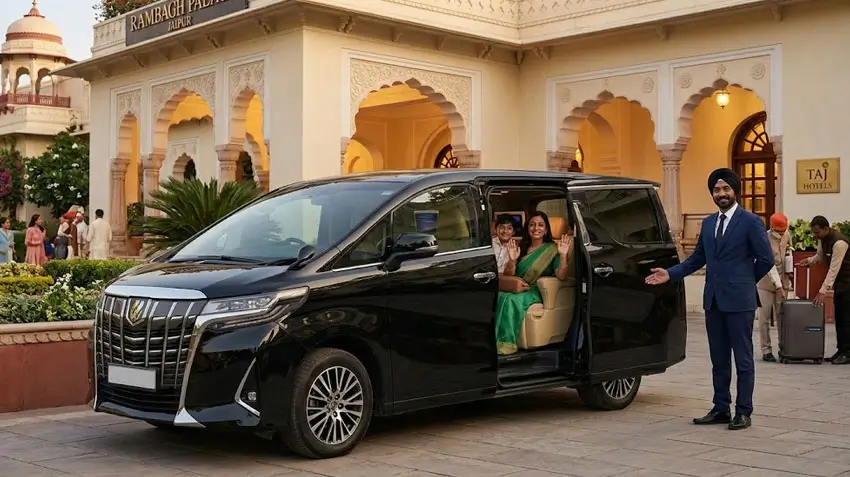
On a private, chauffeur-driven trip, your driver is often the person you spend the most time with and rely on the most. They handle the routes, the long days, the early starts, and your comfort throughout, and a tip is a natural way to thank them at the end of the journey.
For a private driver, it is most common to tip at the end of the trip rather than each day, giving a single amount that reflects the whole journey and the quality of the service. As a general guide, a tip in the region of a few US dollars per day of travel is a reasonable and well-received benchmark, adjusted upward for an exceptionally attentive driver or a long, demanding itinerary, and downward only if the service genuinely fell short.
A few practical points help. Tip your driver directly and privately at the end. Consider the length and difficulty of the trip, as a two-week journey naturally warrants more than a single day. And remember this is a guideline, not a rule. The right amount is one that feels fair to you for the care you received.
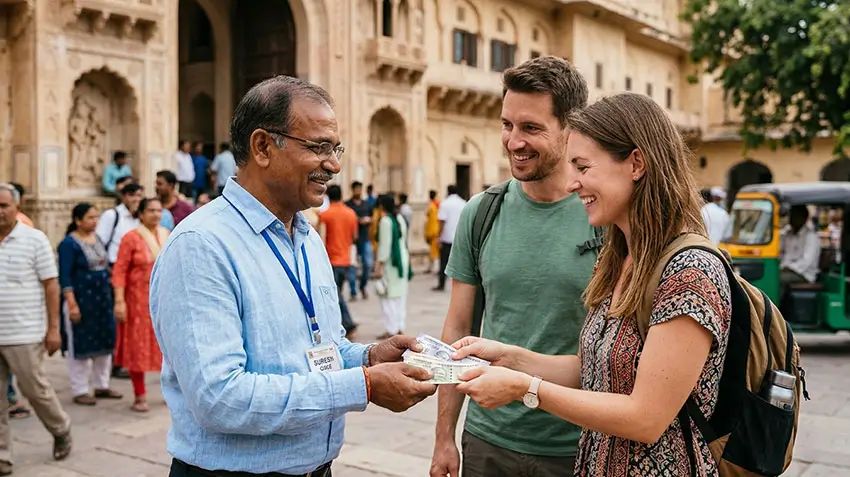
Local guides bring the monuments, the cities, and the culture to life, and a good guide adds enormously to a trip. When a guide has been knowledgeable, engaging, and attentive, a tip is a fitting thank-you.
Guides are usually tipped per day or at the end of the time they spend with you. Because a guide's role is skilled and personal, the customary tip for a guide is often a little higher than for a driver, and again a benchmark of a few US dollars per day, scaling with the quality of the experience and the size of your group, works well. A larger group might collectively give more, reflecting that the guide is looking after more people.
If a single guide accompanies you for several days, a tip at the end covering the full period is fine. If you have different guides in different cities, each is tipped separately for their own time. As always, the amount should reflect the genuine value the guide added.
Hotels involve several different staff members, and a few simple conventions cover them all.
For porters or bellboys who carry your luggage, a small tip per occasion of service is customary, given at the time. For housekeeping staff who service your room, a modest daily amount, left at the end of the stay or each day, is a thoughtful gesture and is genuinely appreciated, since these are often the people whose work is least seen.
For other staff who provide a specific personal service, such as room service or a helpful concierge, a small tip at the time is appropriate. In many luxury hotels, a service charge may already be included on the bill, in which case additional tipping is entirely optional and at your discretion.
The amounts here are small. Hotel tipping in India is about modest, frequent gestures of thanks rather than large sums, and a little goes a long way in acknowledging good care.
Restaurant tipping in India is straightforward once you know one key thing. Always check the bill first.
Many restaurants, particularly in hotels and at the upper end, add a service charge to the bill automatically. Where a service charge is already included, additional tipping is optional, and any small amount you add is purely a gesture of appreciation for service you especially enjoyed.
Where no service charge is included, a tip of around ten percent of the bill is a reasonable and customary amount for good service in a sit-down restaurant. For casual eateries and very inexpensive meals, simply rounding up the bill or leaving a small amount is perfectly acceptable.
The simple rule is this. Look at the bill, see whether a service charge is already there, and then decide. That single habit removes all the uncertainty around restaurant tipping.
Tipping in India Made Simple
Unsure how much to tip in India? Discover local tipping customs for guides, drivers, hotels, and restaurants to travel confidently and respectfully.
A few other situations come up, and they are easily handled.
People who provide a specific small service, such as someone arranging a memorable experience, a spa therapist, or a boatman on a private ride, may be given a small tip if you wish, in proportion to the service. It is a kind gesture but not an obligation.
Equally, there are people you do not need to tip. You are not expected to tip for casual interactions, for ordinary directions, or for unsolicited help that you did not request. And you should never feel obliged to tip under pressure. Genuine tipping is given freely as a thank-you, never extracted through insistence.
If someone is pushy about a tip for a service you did not ask for, it is perfectly fine to decline politely. Real, deserved tipping is calm and goodwilled on both sides.
A few practical habits make tipping smooth and easy throughout your trip.
Carry small denomination notes. Tipping works best when you have suitable small notes on hand, so keep a few aside rather than relying on large notes or expecting change. Tip in the local currency, as Indian rupees are far more useful to the recipient than foreign notes.
Tip discreetly and directly, handing the gratuity to the person with a simple thank-you. Keep a rough mental budget for tipping across your trip, so it is accounted for rather than a series of small surprises. And above all, treat these figures as flexible guidelines. The right tip reflects the service you received and what feels fair to you.
If you are travelling on a fully arranged private tour, your operator can also advise you on sensible tipping for your specific itinerary, which removes any remaining uncertainty.
To close, it helps to step back from the numbers. Tipping in India is not a test to be passed or a rigid code to be memorized. It is simply a way of saying thank you to people who have looked after you well.
The drivers, guides, and hotel staff who make a trip comfortable take genuine pride in their work, and a thoughtful gratuity is a warm, human acknowledgment of that care. Approached in that spirit, with reasonable amounts and genuine goodwill, tipping becomes one of the easiest and most pleasant small parts of travelling in India, rather than a source of worry. Be fair, be kind, and tip for service that deserves it, and you will always get it right.
Travel India with Every Detail Taken Care Of
From professional chauffeurs to expert guides and handpicked hotels, our team arranges every part of your journey, and we are always happy to advise on practical details like tipping. Tell us your travel plans.
Call & WhatsApp: +91-9829202521
Email: info@luxuryprivatetoursofindia.com
Plan your journey: https://luxuryprivatetoursofindia.com/contact-us
Tipping in India is customary and appreciated, especially in tourism and hospitality, but it is not as rigidly expected as in some Western countries. The amounts are generally modest, and a reasonable, thoughtful approach is always well received.
For a private driver, a tip in the region of a few US dollars per day of travel is a reasonable benchmark, usually given as a single amount at the end of the trip, adjusted up for exceptional service or a long itinerary.
Tour guides are usually tipped per day or at the end of their time with you. A benchmark of a few US dollars per day works well, often slightly higher than for a driver, scaling with the quality of the experience and the group size.
Hotel tipping involves small, modest amounts. A small tip for porters per occasion, a modest daily amount for housekeeping, and a small tip for specific personal services are all customary and appreciated.
Always check the bill first. If a service charge is already included, additional tipping is optional. If not, around ten percent is customary for good service in a sit-down restaurant, while rounding up is fine at casual eateries.
Baksheesh is the local word often used for a tip or gratuity in India. The spirit of it is a thank-you for good service, given with goodwill.
For a private driver on a multi-day trip, it is most common to tip a single amount at the end of the journey, reflecting the whole trip and the quality of the service.
You should tip in the local currency, Indian rupees, as this is far more useful to the recipient than foreign notes. Carrying small denomination notes makes tipping easy.
No. Tipping in India is appreciated but not mandatory, and there is genuine flexibility in the amounts. You should never feel obliged to tip under pressure, as genuine tipping is given freely.
Many luxury hotels and upper-end restaurants add a service charge to the bill automatically. Where this is included, additional tipping is entirely optional and at your discretion.
You need not tip for casual interactions, ordinary directions, or unsolicited help you did not request. You should also never feel pressured into tipping, and it is fine to politely decline pushy requests.
It helps to keep a rough mental budget for tipping across your trip, covering your driver, guides, and hotel staff. The amounts are modest, but accounting for them in advance avoids small surprises.
You may give a small tip, in proportion to the service, to people who provide a specific personal service such as a spa therapist or a boatman on a private ride. It is a kind gesture but not an obligation.
Hand the gratuity directly to the person with a simple thank-you. Discreet, direct tipping is the norm, and it makes the gesture feel personal and genuine.
Yes. If you are travelling on a fully arranged private tour, your operator can advise on sensible tipping for your specific itinerary, which removes any remaining uncertainty.
Think of tipping as a simple way to say thank you to people who looked after you well. With reasonable amounts and genuine goodwill, tipping becomes easy rather than a source of worry.