If you have spent any time researching a first trip to India, you have met the Golden Triangle. It is the route that links Delhi, Agra, and Jaipur, and it is recommended so often and so confidently that a fair question starts to form in the mind of a careful traveler. Is the Golden Triangle worth it, or is it simply the easy answer that every travel site repeats?
This guide is written to answer that question honestly. Rather than selling the route, it sets out the real strengths of the Golden Triangle and the genuine downsides, and then it explains clearly who the route suits and who might want to consider something different. The aim is to help you make an informed decision about your own trip rather than follow a recommendation on trust alone.
To be upfront about the conclusion, for most first-time visitors the answer is yes, the Golden Triangle is worth it, and the reasons are solid. But that yes comes with conditions, and the way you travel the route matters enormously. Read on for the full picture.
A quick definition first, so everyone is starting from the same point. The Golden Triangle is a travel circuit in northern India that connects three cities. Delhi, the capital, with its layers of Mughal and colonial history. Agra, home of the Taj Mahal and the great Agra Fort. And Jaipur, the Pink City, the royal capital of Rajasthan, full of palaces and bazaars.
On a map, these three cities form a rough triangle, with each leg of the journey taking a few hours by road. The name comes from that shape, and the word golden reflects both the value of the route and the warm sandstone tone of so many of its monuments.
A typical Golden Triangle trip runs anywhere from four to seven days, though it can be done faster or extended considerably. Understanding what the route actually is makes it much easier to weigh its pros and cons fairly.
Discover Delhi, Agra, and Jaipur with a private luxury tour designed around your interests. Enjoy expert guides, premium hotels, and a seamless travel experience.
There are real and substantial reasons this route has become the default first trip to India. These are not marketing claims. They are genuine advantages.
The first and biggest is the concentration of world-class sights. In a single short circuit you see the Taj Mahal, one of the most famous buildings on earth, alongside major forts, palaces, and monuments, several of them recognized as sites of global heritage importance. Very few travel routes anywhere pack this many icons into so small an area.
The second advantage is efficiency. The three cities are genuinely close together, and the roads connecting them, particularly the modern expressway between Delhi and Agra, are good. For a traveler with limited time, the route delivers an enormous amount without long, exhausting transfers.
The third advantage is variety within a compact trip. Delhi offers the energy of a great capital and a mix of historical eras. Agra centers on Mughal grandeur. Jaipur brings in Rajput royalty, color, and craft. Three cities, three distinct characters, one easy loop.
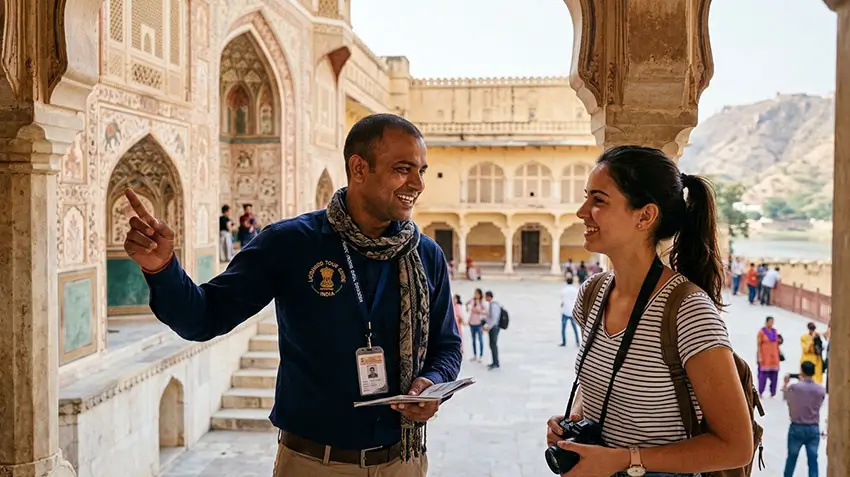
The fourth advantage is the strength of the infrastructure. Because the route is so well established, it has excellent hotels at every level, experienced guides, smooth logistics, and reliable services. A first-time visitor is well looked after here in a way that is not always true of more remote regions.
The fifth advantage is flexibility. The Golden Triangle works as a complete short trip on its own, and it also works as the opening chapter of a longer journey, extending naturally into Rajasthan, into wildlife parks, or beyond. Few routes are so easy to build around.
A fair guide has to be just as clear about the drawbacks, and the Golden Triangle does have them. None of these are reasons to avoid the route outright, but they are real and worth knowing.
The first downside is crowds. Because the route is so popular, the major sites, especially the Taj Mahal, can be very busy, particularly in peak season and during the middle of the day. The experience of a monument changes when it is crowded.
The second downside is that the route is intensely urban. All three points are large, busy cities. There is traffic, noise, and the general intensity of Indian urban life. Travelers who picture India as palaces and desert calm should know that the Golden Triangle is, at its core, a city trip.
The third downside is the risk of feeling rushed. When the route is done too fast, in three or four days, it can become a tiring checklist of monuments rather than an experience. The sights are wonderful, but they deserve time, and a compressed schedule undersells them.
The fourth downside is that it is, by design, the well-trodden path. Travelers specifically seeking offbeat, remote, or undiscovered India will not find it here. The Golden Triangle is the famous route precisely because everyone travels it.
The fifth downside is exposure to tourist-trade pressures. On a heavily visited circuit, there can be more touts, more commission-driven shopping stops, and more of the friction that comes with mass tourism. This is very manageable, but it is more present here than in quieter regions.
Here is the most important point in this entire guide. Most of the downsides above are not fixed features of the route. They are consequences of how the route is traveled, and they can be reduced dramatically by good planning.
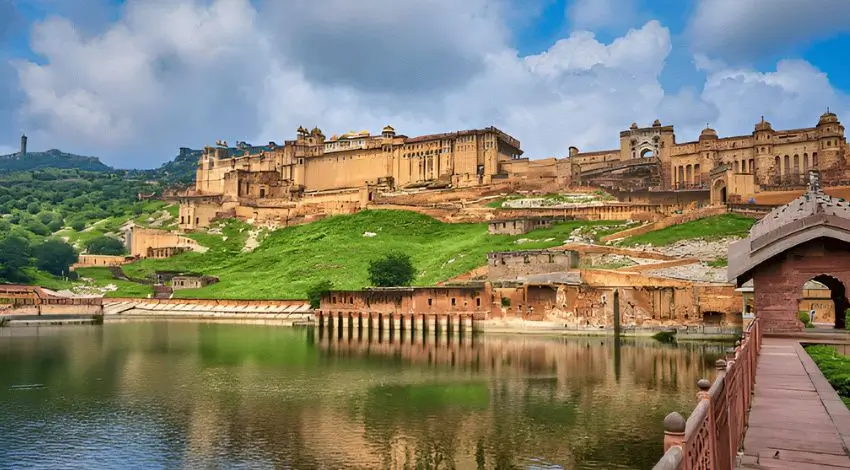
Crowds, for example, are largely a matter of timing. A private trip can visit the Taj Mahal at sunrise, when it is at its quietest and most beautiful, rather than at midday with the tour buses. The same logic applies to Amber Fort in Jaipur and other major sights. Private timing changes the experience completely.
The feeling of being rushed is a matter of pace. A private, tailor-made itinerary can give each city the time it deserves, building in slower mornings, deeper experiences, and room to breathe. A well-paced Golden Triangle feels relaxed, not hurried.
The pressure of commission-driven shopping stops disappears on a properly run private tour, where there is no incentive to steer you anywhere you do not wish to go. Trusted guides take you to genuine artisans only if you ask.
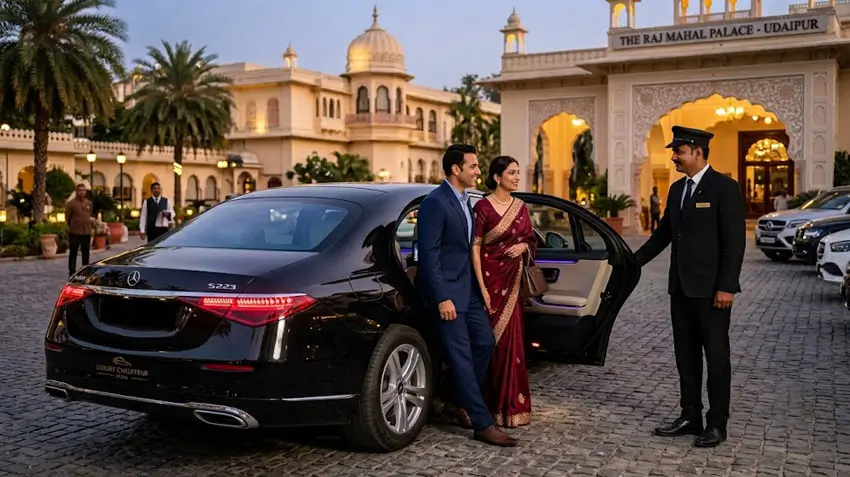
Even the urban intensity is softened by a private chauffeur, who absorbs the traffic and the logistics so that you experience the cities rather than fight them. In short, a group budget tour and a private luxury tour of the same route are almost two different trips. The route is the same. The experience is not.
With the pros and cons clear, the route suits some travelers far better than others. The Golden Triangle is an excellent choice if you are visiting India for the first time and want to see its most iconic sights. It is ideal if you have limited time, perhaps a week or less, and want maximum reward for those days. It works well if you appreciate strong infrastructure, good hotels, and smooth logistics, and it is a natural fit if you want a manageable, well-supported introduction to a complex country.
It is also the right choice if you intend to do a longer India trip and want a solid, classic opening before moving into Rajasthan, wildlife, or other regions. As a foundation, it is hard to beat.
Still deciding if the Golden Triangle is worth it? Let our travel experts create a personalized journey featuring iconic landmarks, cultural experiences, and luxury accommodations.
Equally, the Golden Triangle is not the best fit for everyone. Travelers who have already visited India and seen these sights will naturally want to look beyond the route. Those who are specifically seeking remote, offbeat, or undiscovered places will find the Golden Triangle too well known for their taste.
Travelers who dislike cities and want a trip centered on nature, beaches, mountains, or quiet countryside should consider regions such as Kerala, the Himalayas, or rural Rajasthan instead, or use the Golden Triangle only as a brief opening. And travelers with a particular single interest, such as wildlife or wellness, may prefer a route built entirely around that theme.
None of this makes the Golden Triangle a poor route. It simply means that the best trip is the one matched to the traveler.
If you decide the route is right for you, a few clear choices will ensure it lives up to its reputation.
Give it enough time. Five to seven days is far better than three or four. The extra days are what turn a checklist into an experience.
Travel privately. A private car, a chauffeur, and a tailor-made itinerary give you control over timing, pace, and crowds, which addresses most of the route's downsides at once.
Visit the icons at the right hours. Sunrise at the Taj Mahal and early mornings at the major forts make an enormous difference to both the atmosphere and the photographs.
Consider a small extension. Adding a lake city such as Udaipur or a tiger safari at Ranthambore introduces calm and nature, balancing the urban focus of the core route.
Choose good hotels and guides. The route's strong infrastructure is one of its real advantages, so use it. Heritage hotels and knowledgeable guides lift the whole trip.
Do these things, and the question of whether the Golden Triangle is worth it answers itself. It becomes not just worth it, but one of the most rewarding first journeys a traveler can take.
So, is the Golden Triangle worth it? For most first-time visitors to India, yes, clearly and confidently. The route delivers an unmatched concentration of world-class sights, it is efficient, varied, and well supported, and it provides a superb foundation for understanding India.
The honest caveats are real. The route is urban, popular, and capable of feeling rushed when done badly. But those caveats are largely answered by how you choose to travel. A private, well-paced, tailor-made Golden Triangle, with smart timing and perhaps a calming extension, is an outstanding trip. The route has earned its reputation. The key is simply to travel it well.
Let our team design a private, well-paced Golden Triangle trip that visits the icons at their quietest, moves at your pace, and can be extended with a lake city or a tiger safari, all with a private chauffeur throughout.
Call & WhatsApp: +91-9829202521
Email: info@luxuryprivatetoursofindia.com
Plan your journey: https://luxuryprivatetoursofindia.com/contact-us
For most first-time visitors, yes. The Golden Triangle offers an unmatched concentration of iconic sights, including the Taj Mahal, in an efficient and well-supported circuit, making it an excellent introduction to India.
The Golden Triangle connects three cities in northern India, namely Delhi the capital, Agra the home of the Taj Mahal, and Jaipur the Pink City and capital of Rajasthan. They form a rough triangle on the map.
The main downsides are crowds at popular sites, the intensely urban nature of all three cities, the risk of feeling rushed if done too fast, and the fact that it is a well-trodden route rather than an offbeat one.
A comfortable Golden Triangle trip takes five to seven days. It can be done in three or four, but a longer schedule gives each city the time it deserves and turns a checklist into a proper experience.
Largely, yes. Most downsides come from how the route is traveled. Private timing reduces crowds, a relaxed pace removes the rushed feeling, and a private chauffeur softens the urban intensity and logistics.
Travelers who have already seen these sights, those seeking remote or offbeat India, and those who want a nature, beach, or mountain trip rather than a city-focused one may prefer a different route or use the Golden Triangle only briefly.
Yes. The route has excellent luxury hotels, including heritage palaces, and strong infrastructure. A private, luxury Golden Triangle tour is a very different and far more rewarding experience than a budget group tour.
It is a popular and well-known route, so the major sights are busy. However, private early-morning visits and a tailor-made itinerary make the experience feel far more personal and far less crowded.
Many travelers do. Adding a lake city such as Udaipur, or a tiger safari at Ranthambore, introduces calm and nature to balance the urban core of the route, and the trip extends easily into Rajasthan.
The Taj Mahal can be very busy, especially at midday in peak season. A private sunrise visit, when crowds are thin and the light is soft, offers a far more peaceful and memorable experience.
Yes. With a private, well-planned tour, the route is safe and comfortable. A professional chauffeur, reputable hotels, and a trusted operator ensure a smooth experience throughout.
Give it enough time, travel privately, visit the icons at quiet hours, consider a calming extension, and choose good hotels and guides. Travelled well, the route consistently lives up to its reputation.
Absolutely. The Golden Triangle works very well as the opening chapter of a longer journey, extending naturally into Rajasthan, wildlife parks, or other regions of India.
A private tour is generally better. It gives control over timing and pace, removes commission-driven shopping stops, and lets the itinerary be shaped around you, addressing most of the route's common complaints.
Yes. The route works well for families, with a good mix of sights and strong infrastructure. A private vehicle and a flexible pace make
traveling with children or older relatives comfortable.
The best time is October to March, when the weather is comfortable across all three cities. April to June is very hot, and the peak monsoon brings some rain, though Rajasthan stays relatively dry.