Most travelers from the USA and UK spend months thinking about an India trip before they actually do anything about it. They save Instagram posts of the Taj Mahal at sunrise. They add Rajasthan palace hotels to their wishlist. They tell themselves they'll look into it properly after the holidays, after the busy work period, after the kids finish school.
And then one of two things happens. Either they finally sit down to plan and discover that the heritage hotel they've been dreaming about is fully booked for the dates they want. Or they book everything comfortably in advance, arrive in India prepared and relaxed, and wonder why they waited so long to do this.
The difference between those two outcomes is almost entirely about timing. Not the timing of your travel - but the timing of your booking.
Booking a luxury private tour of India is not like booking a flight to London or a hotel in New York. The best properties have limited rooms. Tiger safari jeep slots at top national parks operate under strict government quotas. Heritage palace hotels in peak-season Rajasthan fill up months in advance. And the tour operator who will build your customized itinerary needs adequate time to put it together properly - not scramble it together in two weeks because you waited until October to book a December trip.
This guide gives you a clear, honest seasonal breakdown of exactly when to book - and why getting the timing right is one of the most important decisions in the entire planning process.
Before we get into specific advance booking windows, you need to understand how India's seasons work - because your booking timeline is entirely determined by when you want to travel.
India does not have one universal travel season. It has distinct regional climates that shift significantly across the country's geography. But for the purposes of luxury private tours of India covering North India, Rajasthan, and the Golden Triangle - which is where the majority of USA and UK travelers focus their itineraries - the seasonal breakdown looks like this.
Peak Season: October through February
This is when India is at its most welcoming for international travelers. Across North India and Rajasthan, days are warm and sunny, evenings are cool, and the light - particularly in the golden hour before sunset - is extraordinary. The Taj Mahal in December morning light is not something you forget. Rajasthan's forts and desert landscapes in November look like paintings.
This is also when every other international traveler wants to be in India. Heritage palace hotels operate at or near full capacity. Ranthambore tiger safari slots disappear weeks or months before the dates. Flights into Delhi and Mumbai fill up. The best private drivers and guides are booked by travelers who planned ahead.
Shoulder Season: March, September, and early October
March is the tail end of comfortable weather before the heat arrives. It's genuinely pleasant, and the crowds begin to thin as February ends. September and early October are the transition out of monsoon season - weather is unpredictable but improving, greenery is lush, and the country feels quieter. These months offer real advantages for travelers willing to work with slightly variable conditions.
Hot Season: April through June
Temperatures across Rajasthan and North India climb dramatically - regularly hitting 40°C to 45°C in May and June. This is not a comfortable time for most international travelers to visit the desert forts and palace courtyards that define a Rajasthan luxury tour. South India and the Himalayan regions become more appealing during these months.
Monsoon Season: July through August
Heavy rainfall across most of India. Certain regions - Kerala in particular - are transformed into something beautiful by the monsoon. But for the Golden Triangle and Rajasthan circuit that most USA and UK travelers plan, July and August present genuine logistical challenges: road conditions, outdoor site visits limited by rain, and reduced visibility at many monuments.
The best palace hotels, luxury trains, wildlife lodges, and private guides in India often get booked months in advance - especially for winter travel season. Start planning early to secure the finest experiences, preferred rooms, and smooth private travel arrangements across India.
This is the most important section of this guide for the majority of travelers reading it. If you want to travel to India between October and February - particularly in November, December, and January - here is your honest booking timeline.
Heritage Palace Hotels: Book 6 to 9 Months in Advance
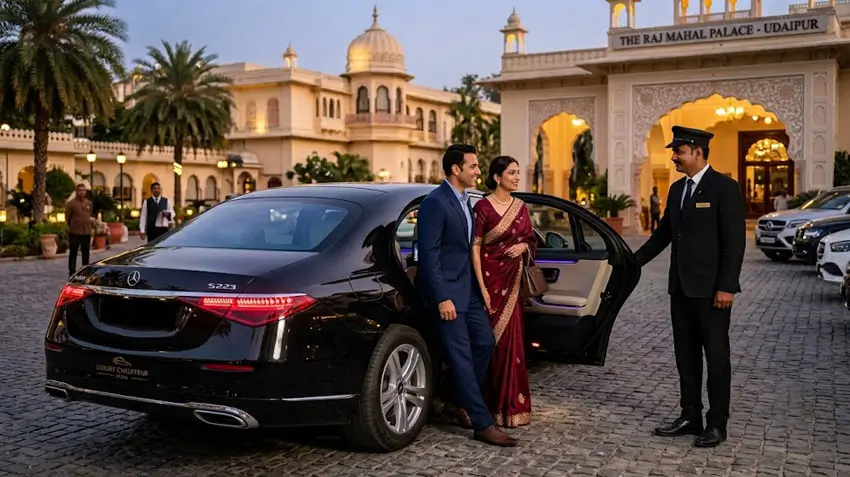
The Taj Lake Palace in Udaipur. The Rambagh Palace in Jaipur. The Umaid Bhawan Palace in Jodhpur. The Oberoi Amarvilas in Agra. These are not just hotels - they are experiences that define a luxury private India tour. They also have a finite number of rooms, and those rooms are in demand from travelers worldwide.
For December and January travel, serious inquiries to these properties through your tour operator should happen in March, April, or May at the latest. For November travel, June or July gives you a solid window. Waiting until August or September to start planning a December trip and expecting your first-choice palace hotels to be available is optimistic at best.
Some specific situations require even earlier action. Certain rooms at the Taj Lake Palace - lake-facing suites, for instance - have waiting lists that form the moment the season opens. The Oberoi Amarvilas' Taj-facing rooms are among the most requested hotel rooms in India. If your heart is set on specific rooms at specific properties, nine months is not too early.
Tiger Safari Slots: Book 4 to 6 Months in Advance
India's national parks operate under strict government-mandated limits on daily visitor numbers. At Ranthambore National Park - the most popular tiger safari destination for international travelers and easily combined with a Golden Triangle luxury tour - jeep zone allocations are limited and can be booked online through the government portal months in advance.
Peak safari season at Ranthambore runs from October through June, with the best tiger sighting conditions typically in the dry months of March through May when vegetation thins and tigers come to water sources. For October and November travel - the sweet spot of weather and safari - begin booking your safari slots four to five months ahead.
Jawai Leopard Safari Camp in western Rajasthan operates differently - it's a private reserve - but their premium tented camps have limited capacity and fill quickly for peak season. If Jawai is on your itinerary, four to five months ahead is a safe window.
Private Drivers and Guides: Book 3 to 5 Months in Advance
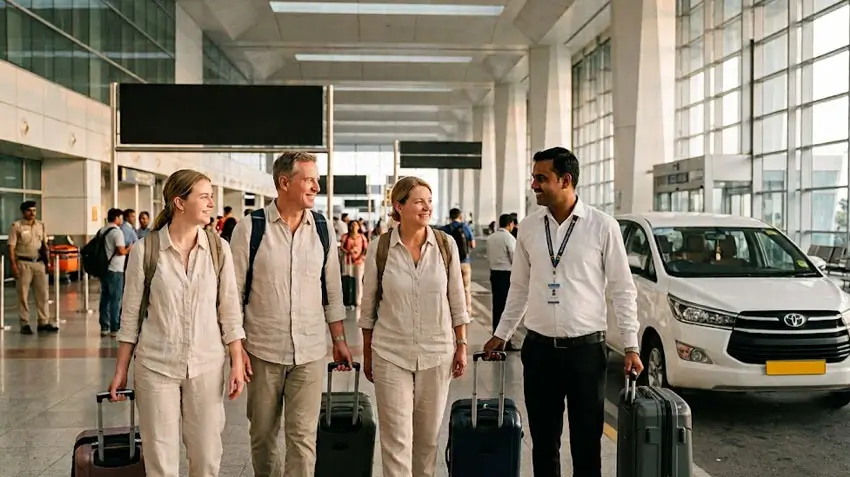
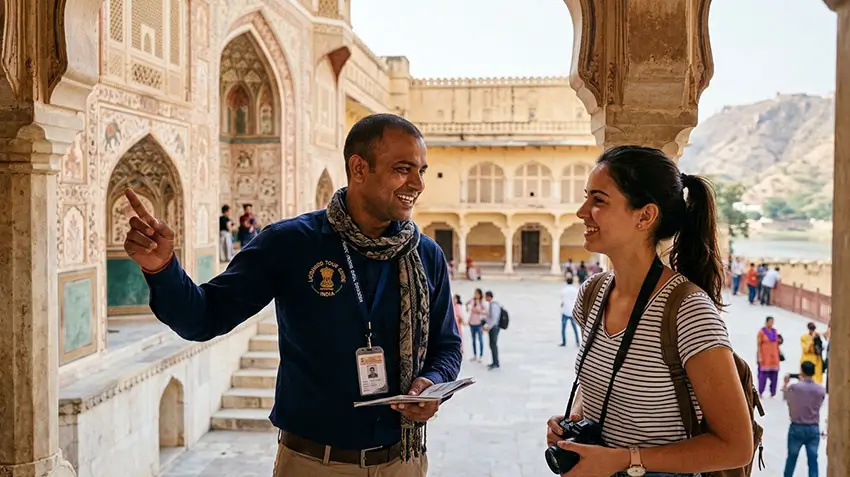
The best private drivers in India - those with years of experience handling international travelers from the USA and UK, with strong English communication skills, and with genuinely deep knowledge of the regions you're visiting - are not sitting idle waiting for last-minute bookings in peak season. They're working with travelers who planned ahead.
When you engage a luxury private India tour operator, they assign a driver to your itinerary as part of the booking process. This is another reason why booking your operator early is important - it's not just about locking in hotels. It's about ensuring the full quality of the experience, including the person who will be with you every single day of the trip.
Flights from USA and UK: Book 4 to 6 Months in Advance
International flights from the United States and United Kingdom to India - typically routing through Delhi or Mumbai - follow standard airline pricing dynamics. Prices for peak season travel climb as the dates approach and seats fill. Booking four to six months ahead typically gives you access to competitive fares before the demand surge pushes prices significantly higher. If you're traveling over Christmas or New Year, six months is a safer target.
Shoulder season offers a genuine opportunity for travelers with flexibility - better availability, lower hotel rates at some properties, and fewer crowds at major monuments.
Heritage Hotels: Book 2 to 4 Months in Advance
In March and September, luxury palace hotels in Rajasthan have more breathing room. You're unlikely to find the Taj Lake Palace completely booked for a March date if you inquire in January. That said, March has become increasingly popular as travelers have recognized its advantages - comfortable temperatures, post-peak crowd reduction, and still-beautiful light. Don't take availability for granted. Two to three months ahead is comfortable; four months is safe.
Safari Slots: Book 2 to 3 Months in Advance
September is technically pre-season for most national parks - many parks close during monsoon and reopen in October. Early October openings can be in high demand as the first fresh slots become available. For March safaris, two to three months ahead is generally sufficient.
Tour Operator and Driver: Book 2 to 3 Months in Advance
Shoulder season gives your luxury private India tour operator more flexibility to build your itinerary and assign your driver. Two months ahead is a comfortable minimum. Three months gives you the most options in terms of customization and hotel selection.
From Rajasthan palace stays and luxury Golden Triangle journeys to Kerala retreats and wildlife safaris, our tailor-made private tours are designed for travelers who want flexibility, comfort, and authentic experiences with premium service throughout India.
India's festival calendar adds a layer of complexity to advance booking that many international travelers don't account for until it's too late.
Diwali - October or November (date varies by year)
Diwali is India's largest festival - the Festival of Lights - and it transforms the country in ways that are genuinely extraordinary to witness as a traveler. Jaipur, Udaipur, and Varanasi during Diwali are unforgettable. Demand for luxury private tours of India during Diwali spikes dramatically. Hotels in Rajasthan sell out. Flight prices surge. If Diwali travel is your goal, begin planning eight to ten months in advance - not as a precaution, but as a practical necessity.
Holi - March (date varies by year)
Holi is one of the world's most visually spectacular celebrations, and Jaipur's Royal Holi at the City Palace is an experience that draws international travelers specifically. Like Diwali, Holi dates shift each year. Once the date is confirmed - typically several months before - bookings for Jaipur accommodation surge. If a Holi luxury India tour is on your list, lock in your dates and operator six to eight months ahead of the festival date.
Pushkar Camel Fair - October or November (date varies by year)
The Pushkar Camel Fair in Rajasthan is one of the most photographed events in India - a gathering of camels, traders, musicians, and color that has no parallel anywhere in the world. Accommodation in and around Pushkar during the fair is extremely limited. Luxury camp options book out up to a year in advance. If this is on your itinerary, treat it as the most time-sensitive booking of your entire trip.
Christmas and New Year Travel
December 25th through January 2nd is the single most competitive booking period for luxury private India tours from the USA and UK. Families traveling during school holidays, couples seeking a memorable New Year experience, travelers using year-end leave - all targeting the same dates. Heritage hotels in Rajasthan frequently run minimum-stay requirements and premium pricing during this window. Begin planning in March or April for Christmas and New Year travel. Six to nine months is not excessive - it's realistic.
The honest answer is: sometimes, with compromises.
If you're looking to book a luxury private India tour within six to eight weeks of travel during peak season, you will almost certainly face constraints. Your first-choice heritage hotels may not be available. Specific safari zones at Ranthambore may be fully booked. You may need to adjust your itinerary around what's still open rather than building from scratch.
That said, a good luxury private India tour operator with strong hotel relationships can sometimes access availability that isn't visible on standard booking channels. Cancellations happen. Rooms open up. It's worth making the inquiry - but go in with realistic expectations and genuine flexibility.
For shoulder season and non-festival periods, last-minute windows of four to six weeks can work reasonably well for travelers who aren't fixed on specific properties or safari locations.
For peak season travel (October through February): Start your inquiry and operator engagement 7 to 9 months before travel. Confirm hotels and safari slots no later than 5 to 6 months out. Book international flights 4 to 6 months ahead.
For shoulder season travel (March, September, early October): Start your inquiry 3 to 4 months before travel. Confirm hotels and operator 2 to 3 months out. Flights 3 to 4 months ahead.
For festival travel (Diwali, Holi, Pushkar, Christmas/New Year): Treat these as peak-plus situations. Add 2 to 3 months to the peak season timeline. Festival dates that move annually require monitoring - as soon as dates are confirmed, begin booking immediately.
This is not a scare tactic - it's a straightforward accounting of what late booking actually costs you in a luxury India tour context.
You risk losing your preferred heritage hotels and settling for alternatives that are available but not what you wanted. You risk missing out on tiger safari slots during the optimal viewing windows. You risk paying significantly more for international flights as peak season demand pushes fares higher. You risk engaging with a tour operator under time pressure, which means less time to customize your itinerary properly.
None of these outcomes are catastrophic. But none of them are what you imagined when you started planning the trip. The simplest way to avoid all of them is to start the process earlier than feels necessary. In India's luxury private travel market, early action is almost always rewarded.
October through February is widely considered the prime window for luxury private tours of India, particularly for North India and Rajasthan. Weather is dry and comfortable, light is beautiful, and all major heritage sites and national parks are fully operational. Within this window, November and early December offer the optimal combination of pleasant temperatures and pre-Christmas crowd levels.
For travel between October and February, begin engaging with a luxury private India tour operator seven to nine months before your travel dates. Confirm your heritage hotel bookings and safari slots no later than five to six months out. Waiting until three or four months before peak season travel significantly reduces your options at premier properties.
For shoulder season travel in March or September, two months can work - with some flexibility on hotel selection. For peak season travel between November and February, two months is genuinely late. You may face limited availability at heritage palace hotels and restricted safari slot options. A good operator will do their best, but first-choice experiences may not be available.
Yes - significantly. Heritage palace hotels in Rajasthan have fewer rooms than standard hotels and attract international demand from multiple markets simultaneously. The Taj Lake Palace, Rambagh Palace, and Umaid Bhawan Palace in particular require booking six to nine months ahead for peak season stays. These are not properties where last-minute availability is reliably found.
For peak safari season - October through March - book your Ranthambore tiger safari slots four to six months in advance. Government-allocated jeep zones fill quickly once bookings open. Specific zones with historically higher tiger sighting rates are the first to go. Your tour operator can handle this booking as part of your overall itinerary planning.
South India - Kerala, Tamil Nadu, Karnataka - has a different peak season that partially overlaps with North India. Kerala's peak runs roughly December through March. The backwaters, Ayurveda resorts, and premium wildlife lodges in South India face similar advance booking pressures during their peak months. Apply the same seven to nine month advance booking principle for peak season South India travel.
The two processes can run in parallel. Confirm your travel dates with your luxury private India tour operator first - even provisionally - and then book international flights as soon as your dates are set. Don't wait for the full tour to be confirmed before booking flights if you're traveling in peak season, as airfare prices from the USA and UK to India climb steadily as peak season approaches.
Your operator will work with what's available. You may need to adjust your hotel list to properties that still have availability. Safari zones at national parks may be restricted to less optimal areas. That said, a well-connected luxury India tour operator can sometimes access rooms through established hotel relationships that aren't visible in standard channels. Make the inquiry - but be prepared to be flexible.
Yes. Late January and February - after the Christmas/New Year surge and before the March school holiday period - can offer genuine last-minute availability at luxury heritage hotels with shorter notice. Similarly, October is sometimes accessible with six to eight weeks notice before the full peak season demand takes hold. These windows exist, but they require flexibility on dates and hotel selection.
Diwali creates a surge in demand for luxury private India tours that rivals or exceeds the Christmas/New Year period. Hotels in Jaipur, Udaipur, and Varanasi - the most popular Diwali destinations for international travelers - book out months in advance. If witnessing Diwali is your goal, begin planning eight to ten months before the festival date, which shifts annually based on the Hindu lunar calendar.
Absolutely. March offers genuinely comfortable temperatures, thinning crowds, and good availability at luxury heritage hotels in Rajasthan. September and early October bring lush post-monsoon greenery and significantly lower hotel rates at some properties. Travelers with schedule flexibility who can avoid peak season often describe shoulder season trips as their preferred India experience - fewer crowds, more authentic atmosphere, and more personal attention from hotel staff.
Contact two or three reputable luxury private India tour operators simultaneously with your rough dates, preferred destinations, group size, and budget range. A good operator will respond quickly with specific questions about your preferences and a preliminary proposal. This initial conversation is free, carries no commitment, and gives you an immediate sense of what's realistically available for your target travel window - which is exactly the information you need to make a confident booking decision.