India's temples represent thousands of years of faith, history, architecture, and cultural traditions. Some temples are famous because of their ancient origins, some because of their extraordinary architecture, and some because of the enormous wealth accumulated through centuries of royal patronage and devotee offerings.
The richest temples in India are not simply wealthy because of cash donations. Their total value includes gold ornaments, precious stones, silver articles, ancient jewellery, land properties, buildings, investments, historical artefacts, and daily offerings made by millions of devotees.
Calculating the exact wealth of a temple is difficult because many assets have religious and historical value beyond their financial worth. An ancient gold ornament may have a market price based on its weight, but its historical importance and connection with centuries-old traditions make it priceless.
Some temples are considered among the richest because of their treasure collections, while others are among the wealthiest because of their enormous annual donations and large trust-managed assets.
For travelers, these temples offer much more than a religious visit. They provide an opportunity to experience India's spiritual traditions, understand regional cultures, witness extraordinary architecture, and explore some of the country's most important heritage destinations.
A luxury cultural journey through India's richest temples can include private guides, heritage hotels, traditional cuisine experiences, and carefully planned visits that respect local customs.
This guide covers India's richest temples with their estimated wealth, history, architecture, religious importance, and practical information required for visiting them.
Estimated Wealth: ₹1 Lakh Crore+ (Reported Treasure Value)
Located in Thiruvananthapuram, Kerala, Sree Padmanabhaswamy Temple is widely considered one of the wealthiest temples in the world. The temple became globally famous after the discovery of enormous treasures stored inside its underground vaults.
The reported value of the temple's treasures has been estimated at more than ₹1 lakh crore, although the exact value remains difficult to calculate. The treasure includes gold ornaments, precious stones, ancient coins, jewellery, and religious objects collected over centuries.
The wealth of this temple is mainly connected with historical offerings, royal patronage, and centuries of devotion. It is important to understand that this valuation does not represent cash reserves. A significant portion consists of priceless historical objects whose cultural value cannot be measured accurately.
The temple's history is deeply connected with the Travancore royal family. For centuries, the rulers of Travancore considered Lord Padmanabha as the true owner of the kingdom and dedicated their rule to the deity.
This royal relationship played a major role in preserving and expanding the temple. The offerings made by the royal family and devotees over generations contributed to the enormous collection of treasures associated with the temple today.
The temple is dedicated to Lord Vishnu in the form of Anantha Padmanabha. The main deity is shown reclining on the serpent Ananta, creating one of the most unique representations of Lord Vishnu worship in India.
The architecture of Sree Padmanabhaswamy Temple reflects the traditional Dravidian style with strong Kerala influences. The massive gopuram, detailed carvings, long corridors, and artistic sculptures showcase the craftsmanship of ancient South Indian architecture.
The temple complex represents a combination of spiritual importance and architectural excellence. Every section reflects centuries of religious traditions and artistic development.
Visitors should note that Sree Padmanabhaswamy Temple follows strict entry rules. The temple maintains traditional customs, and visitors must follow the prescribed dress code.
Men are required to wear traditional attire, generally a mundu or dhoti, while women must wear suitable traditional clothing. Modern western clothing may not be allowed inside the main temple premises.
Photography is restricted in several areas, and visitors are expected to maintain the sanctity of the temple environment.
The temple timings are divided according to daily rituals. Generally, the temple opens during morning and evening darshan periods, but timings can change during festivals and special occasions.
The temple is located in central Thiruvananthapuram and is easily accessible from Trivandrum International Airport, which is approximately 5 kilometres away.
Luxury travelers visiting Kerala can combine Sree Padmanabhaswamy Temple with premium experiences such as Kovalam Beach, Kumarakom backwaters, Alleppey houseboat journeys, and luxury heritage resorts.
A private cultural guide can help visitors understand the temple's history, traditions, and importance while ensuring that local customs are respected.
Explore India’s most fascinating temples, from Padmanabhaswamy and Tirupati to Kashi Vishwanath and Meenakshi Amman, with private guides, comfortable transfers, and carefully planned cultural experiences.
Estimated Wealth: ₹2 Lakh Crore+ (Including Assets and Trust Holdings)
The Tirumala Tirupati Venkateswara Temple in Andhra Pradesh is one of the most visited temples in the world and among India's richest religious institutions.
Unlike temples known mainly for ancient treasures, Tirupati's wealth comes from continuous devotion, daily offerings, gold donations, jewellery, properties, investments, and assets managed by Tirumala Tirupati Devasthanams (TTD).
The estimated value of TTD-managed assets has been reported in the range of several lakh crores when including properties, gold reserves, investments, and other holdings. Exact valuation changes regularly because of donations, asset appreciation, and administrative decisions.
The temple receives millions of visitors every year, making it one of the largest pilgrimage centres globally.
Dedicated to Lord Venkateswara, an incarnation of Lord Vishnu, the temple is located on the Tirumala Hills of Andhra Pradesh.
The history of Tirupati dates back many centuries. Several South Indian dynasties contributed to the temple's development through donations, architecture, and expansion.
The temple's popularity grew because devotees believe that Lord Venkateswara fulfils wishes and provides blessings for prosperity and well-being.
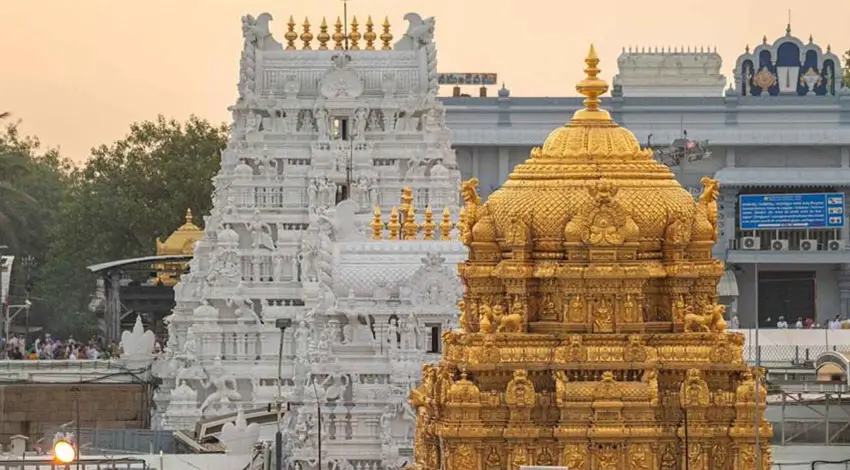
The architecture of Tirumala Temple represents classic Dravidian style. The golden-covered main structure, detailed carvings, and traditional rituals create a magnificent spiritual atmosphere.
One of the most famous traditions connected with Tirupati is hair donation. Thousands of devotees offer their hair as a symbol of devotion. The temple manages this tradition through an organised system.
Another famous feature is the Tirupati Laddu, which is offered as sacred food to devotees. It has become one of India's most recognised religious offerings.
Because of the enormous number of visitors, the temple has a highly organised darshan system. Different categories of darshan are available depending on booking availability.
Travelers should plan carefully because waiting times can become very long during weekends, festivals, and special occasions.
Tirupati can be reached through Tirupati Airport, which connects with major Indian cities. Many international travelers prefer combining Tirupati with Chennai because Chennai offers better international connectivity.
Luxury travelers often include Tirupati as part of a South India cultural journey covering Chennai, Mahabalipuram, Pondicherry, Kerala, and Karnataka.
Estimated Wealth: ₹3,000 Crore+ (Approximate Trust Assets, Donations & Properties)
Located in the small town of Shirdi in Maharashtra, the Sai Baba Temple is one of India's most visited religious destinations and one of the wealthiest temples in the country. The temple is dedicated to Sai Baba, a spiritual figure respected by millions of people across different communities.
Unlike ancient temples whose wealth mainly comes from royal treasures, the financial strength of Shirdi Sai Baba Temple has developed through continuous devotion and offerings made by millions of followers from India and around the world.
The estimated value of the temple trust's assets is believed to be in thousands of crores, including cash donations, gold and silver articles, fixed deposits, properties, and other assets managed by the Shri Saibaba Sansthan Trust.
The exact net worth of the temple cannot be measured as a single figure because temple assets continuously change due to donations, expenses, charitable activities, and administrative investments.
The wealth of Shirdi Sai Baba Temple is also reflected in its large-scale social activities. The trust operates various facilities including hospitals, educational institutions, accommodation services, food distribution programs, and charitable initiatives.
The story of Sai Baba is central to the importance of Shirdi. Sai Baba lived in Shirdi during the late 19th and early 20th century and became known for his teachings of faith, compassion, equality, and service.
Although Sai Baba's exact origins remain a subject of discussion, his message attracted followers from different religious backgrounds. His teachings focused on devotion, helping others, and seeing humanity beyond social divisions.
The main temple complex houses Sai Baba's Samadhi, where devotees come throughout the year to offer prayers. The white marble structure and peaceful atmosphere create a deeply spiritual environment for visitors.
The temple complex includes important locations connected with Sai Baba's life, including Dwarkamai, where Sai Baba spent much of his life, and Chavadi, where he participated in important traditions.
Dwarkamai is especially significant because it was the place where Sai Baba lived and interacted with devotees. The simple surroundings reflect his lifestyle and teachings.
The temple architecture is not as ancient or grand as some South Indian temples, but its importance comes from the emotional connection millions of devotees share with Sai Baba.
Shirdi is located in Maharashtra's Ahmednagar district and is well connected by road, rail, and air.
The nearest airport is Shirdi Airport, which connects the town with major Indian cities. Travelers can also reach Shirdi through Mumbai or Pune and continue by road.
The distance from Mumbai to Shirdi is approximately 240 kilometres, and a private car journey generally takes around five to six hours depending on traffic conditions.
The distance from Pune to Shirdi is approximately 185 kilometres, with a road journey of around four to five hours.
For luxury travelers, private chauffeur-driven transfers are usually the most comfortable option because they provide flexibility and convenience.
The temple remains open throughout the year, but the number of visitors increases significantly during weekends, festivals, and Sai Baba-related special occasions.
The general darshan process is organised through queues, and visitors can choose different options depending on availability.
The temple trust provides various facilities for devotees, including accommodation, food services, and assistance centres.
Visitors should maintain respectful behaviour inside the temple premises. Photography restrictions apply in certain areas.
The best time to visit Shirdi is generally between October and March when Maharashtra weather is more comfortable. Summer months can become hot, especially during daytime travel.
Luxury travelers can combine Shirdi with destinations such as Nashik vineyards, Mumbai, Aurangabad, Ajanta and Ellora Caves, creating a cultural Maharashtra itinerary.
Estimated Wealth: ₹2,000 Crore+ (Approximate Trust Assets and Offerings)
The Vaishno Devi Temple, located in the Trikuta Mountains near Katra in Jammu and Kashmir, is one of India's most important pilgrimage destinations.
The temple attracts millions of devotees every year who undertake the challenging journey to the holy shrine dedicated to Mata Vaishno Devi.
The wealth of Vaishno Devi Temple comes from donations, offerings, properties, and assets managed by the Shri Mata Vaishno Devi Shrine Board.
The estimated value of the shrine's assets is believed to be in thousands of crores, although the exact valuation changes because of continuous donations and administrative activities.
Unlike temples known for gold treasures, Vaishno Devi's significance comes from the enormous number of devotees visiting every year and the large-scale facilities created to support pilgrims.
The history and legend of Vaishno Devi are deeply connected with Hindu traditions. According to religious beliefs, Mata Vaishno Devi meditated in the Trikuta Mountains and the cave shrine became a sacred destination for devotees.
The journey to the temple is considered an important spiritual experience. Unlike many temples that can be reached directly by vehicle, Vaishno Devi traditionally involves a mountain pilgrimage.
The old walking route from Katra to the Bhawan, where the holy cave shrine is located, is approximately 12 to 13 kilometres.
Over time, facilities have improved significantly. Pilgrims can now choose between walking, pony services, battery-operated vehicles on certain routes, and helicopter services.
The helicopter service is popular among travelers who want a shorter and more comfortable journey. However, availability depends on weather conditions and advance booking.
The route includes resting areas, food facilities, medical assistance, and security arrangements.
The temple's location in the Himalayan foothills adds to the spiritual atmosphere. The journey itself becomes part of the experience as visitors move through mountain landscapes.
Discover magnificent temples, ancient traditions, remarkable architecture, and sacred cities with a personalized luxury itinerary designed around your interests and travel style.
The nearest major airport is Jammu Airport, located approximately 50 kilometres from Katra. Katra is the base town from where the pilgrimage begins.
The newly developed railway connectivity to Katra has made the journey easier for visitors travelling from different parts of India.
Luxury travelers often choose private transfers from Jammu Airport to Katra for greater comfort.
The best time to visit Vaishno Devi depends on personal preference. The months between March and June offer comfortable weather, while September to November is also popular.
Winter months provide a different experience because snowfall can transform the Himalayan landscape, but travelers need proper preparation.
Visitors should carry comfortable footwear because walking is an important part of the traditional journey.
Senior travelers should carefully choose their travel method and consider helicopter services or assisted options.
Katra offers various accommodation options, from comfortable hotels to premium properties.
Luxury travelers can combine Vaishno Devi with Kashmir experiences, including Srinagar, Gulmarg, Pahalgam, and premium Himalayan stays.
Estimated Wealth: Gold Value Hundreds of Crores + Significant Religious Assets
The Golden Temple, officially known as Harmandir Sahib, is one of India's most respected religious monuments and the spiritual centre of Sikhism.
Located in Amritsar, Punjab, the temple attracts millions of visitors from around the world, including people from different faiths who come to experience its peaceful atmosphere and exceptional hospitality.
Unlike many temples where wealth is measured through stored treasures, the Golden Temple's importance comes from its gold-covered architecture, religious significance, community service, and the global Sikh community's contributions.
The temple's upper structure is covered with gold, which gives it the famous appearance reflected beautifully in the surrounding holy water pool.
The estimated value of the gold used in the temple's decoration is believed to be hundreds of crores of rupees, although the complete value of the institution cannot be measured only through gold.
The Golden Temple is managed by the Shiromani Gurdwara Parbandhak Committee (SGPC), which oversees religious activities and community services.
One of the most remarkable aspects of Harmandir Sahib is the Langar tradition. The temple operates one of the world's largest community kitchens, serving free meals to thousands of visitors every day regardless of religion, nationality, or social background.
This service represents the Sikh principles of equality, generosity, and community support.
The history of Harmandir Sahib dates back several centuries and is connected with Sikh Gurus who established Amritsar as an important spiritual centre.
The temple architecture combines beauty with simplicity. Unlike structures built to display royal power, Harmandir Sahib represents humility because the temple is located lower than the surrounding area, symbolising equality before God.
The Golden Temple is located in the heart of Amritsar city and is easily accessible through air, rail, and road connections.
The nearest airport is Sri Guru Ram Dass Jee International Airport, Amritsar, which is approximately 13 kilometres from the temple complex. The airport has connections with major Indian cities and selected international destinations.
Amritsar Railway Station is located around 2 kilometres from Harmandir Sahib, making train travel a convenient option for visitors arriving from Delhi, Chandigarh, Jaipur, and other Indian cities.
For luxury travelers, private chauffeur-driven transfers are the most comfortable way to explore Amritsar. A premium heritage itinerary can combine the Golden Temple with Jallianwala Bagh, Wagah Border ceremony, Punjabi cuisine experiences, and luxury hotel stays.
The temple remains open throughout the day, allowing visitors to experience different atmospheres. Early morning visits are especially popular because the peaceful environment, devotional music, and reflection of the golden structure in the holy pool create a memorable experience.
Visitors must remove their shoes before entering the temple complex and cover their heads as a mark of respect. Scarves are available near the entrance for visitors who need them.
The Golden Temple welcomes people of all nationalities and religions. There is no entry fee, and visitors can participate in the Langar service.
The best time to visit Amritsar is generally between October and March when the weather is comfortable for sightseeing. During summer months, daytime temperatures can become very high.
Luxury travelers can stay at premium hotels in Amritsar and combine their temple visit with Punjab's cultural experiences, including traditional food, heritage walks, and local markets.
Estimated Wealth: ₹1,000 Crore+ (Approximate Assets, Donations and Properties)
Located in Mumbai, Maharashtra, Siddhivinayak Temple is one of India's most famous and wealthiest temples dedicated to Lord Ganesha.
The temple is especially popular among devotees, celebrities, business leaders, and public figures who visit to seek blessings from Lord Ganesha.
The estimated wealth of Siddhivinayak Temple is believed to be more than ₹1,000 crore when considering donations, gold and silver ornaments, fixed deposits, and properties managed by the temple trust.
Like many major temples, the exact net worth is difficult to calculate because assets continuously change through donations, investments, and charitable activities.
The temple's popularity comes from the belief that Lord Ganesha fulfils wishes and removes obstacles. Devotees from across India visit Mumbai specifically to offer prayers here.
The history of Siddhivinayak Temple dates back to the 19th century when it was established as a small shrine. Over time, the temple grew significantly because of increasing devotion and public support.
The current temple structure reflects modern religious architecture designed to accommodate a large number of visitors while preserving the importance of the original shrine.
The idol of Lord Ganesha inside the temple is unique because the trunk is positioned towards the right side, which holds special religious significance in Hindu traditions.
The temple has also become famous because many Bollywood personalities and business leaders regularly visit. However, its importance extends far beyond celebrity visits because millions of ordinary devotees also consider it a deeply sacred place.
The temple trust conducts various charitable activities, including healthcare support, education initiatives, and community services.
Combine India’s iconic temples with private transportation, expert cultural guides, premium accommodation, and authentic local experiences for a seamless spiritual and cultural journey.
Siddhivinayak Temple is located in Prabhadevi, one of Mumbai's central areas.
The nearest airport is Chhatrapati Shivaji Maharaj International Airport, which is approximately 15 to 18 kilometres away depending on the route.
The temple is well connected by road and public transportation. Mumbai's local train network also provides access through nearby railway stations.
For luxury travelers staying at premium hotels in South Mumbai, such as properties near Marine Drive, Colaba, or Worli, private transfers provide the most comfortable option.
The temple usually opens early in the morning and remains accessible until late evening. Timings may change during festivals and special occasions.
Tuesday is considered especially important because it is traditionally associated with Lord Ganesha, and the temple receives a much larger number of visitors on this day.
Visitors should expect crowds, especially during Tuesdays, weekends, and festivals.
Photography restrictions apply inside the main temple area, and visitors should follow temple guidelines.
A visit to Siddhivinayak can be combined with Mumbai luxury experiences, including heritage walks, Marine Drive sunset views, Gateway of India, Elephanta Caves, and premium dining experiences.
Estimated Wealth: Significant Religious Trust Assets and Donations (Exact Net Worth Not Publicly Available)
Located on the western coast of Gujarat, Somnath Temple is one of the twelve Jyotirlinga temples dedicated to Lord Shiva and one of India's most important religious landmarks.
Unlike some temples where wealth is discussed mainly through gold reserves or donations, Somnath's importance comes from its extraordinary history, spiritual significance, and cultural legacy.
The temple has been rebuilt multiple times throughout history after facing destruction during various invasions. Its repeated reconstruction became a symbol of resilience and devotion.
The present structure was rebuilt in the modern era while following traditional architectural principles.
The temple stands beside the Arabian Sea, creating one of the most dramatic temple locations in India. The sound of ocean waves, the temple architecture, and the spiritual atmosphere create a unique visitor experience.
The history of Somnath dates back thousands of years through religious traditions and historical references. It has remained an important pilgrimage centre for devotees of Lord Shiva.
The architecture follows the Chalukya style of temple design, featuring detailed carvings, a grand structure, and a location that highlights India's connection between spirituality and nature.
The temple trust manages religious activities, visitor facilities, and maintenance operations.
For travelers, Somnath offers more than a temple visit. The surrounding region includes beaches, coastal landscapes, historical sites, and cultural attractions.
Somnath is located in Gujarat's Gir Somnath district.
The nearest airport is Diu Airport, located approximately 80 to 90 kilometres away. Rajkot Airport and Ahmedabad Airport are also commonly used by travelers.
The nearest railway station is Veraval, which is approximately 7 kilometres from Somnath Temple.
Luxury travelers often prefer private road journeys from Ahmedabad, Rajkot, or nearby destinations because Gujarat has excellent highways.
The temple is open throughout the year. The morning and evening prayer ceremonies are among the most memorable experiences for visitors.
The evening aarti, with the Arabian Sea as a backdrop, is particularly popular.
The best time to visit Somnath is between October and March when Gujarat weather is more comfortable.
Travelers can combine Somnath with Gir National Park, Dwarka, Ahmedabad heritage sites, and luxury Gujarat experiences.
Estimated Wealth: Thousands of Crores Through Land, Jewellery, Donations and Assets
Jagannath Temple in Puri, Odisha, is one of India's most important pilgrimage centres and one of the most culturally significant temples in the country.
Dedicated to Lord Jagannath, a form of Lord Vishnu, the temple is famous for its unique traditions, annual Rath Yatra festival, and centuries-old rituals.
The wealth of Jagannath Temple comes from centuries of donations, gold and silver ornaments, jewellery, land properties, and other temple assets.
The temple owns significant properties and receives continuous offerings from devotees. However, exact valuation is difficult because many assets are historical and religious in nature.
The temple's history dates back centuries and is closely connected with Odisha's cultural identity.
The architecture represents the Kalinga style of temple construction, characterised by a massive tower, detailed stone work, and impressive craftsmanship.
One of the most unique aspects of Jagannath Temple is the daily Mahaprasad tradition. Food prepared inside the temple kitchen is considered sacred and distributed among devotees.
The Rath Yatra festival is the temple's most famous event, attracting millions of visitors. During this festival, the deities are taken outside the temple in enormous decorated chariots.
Jagannath Temple is located in Puri, Odisha, one of India's most important coastal pilgrimage destinations. The city is well connected by road and rail, making it accessible for both domestic and international travelers.
The nearest airport is Biju Patnaik International Airport in Bhubaneswar, located approximately 60 kilometres from Puri. The road journey from Bhubaneswar to Puri generally takes around one and a half to two hours depending on traffic conditions.
Puri Railway Station is well connected with major Indian cities, including Kolkata, Delhi, Mumbai, Chennai, and other destinations.
For luxury travelers, a private chauffeur-driven journey from Bhubaneswar is the most comfortable option. This allows visitors to combine Puri with other Odisha experiences, including Konark Sun Temple, Chilika Lake, heritage villages, and coastal destinations.
The temple follows strict entry rules. Only Hindus are permitted to enter the main temple premises according to traditional regulations. Visitors from other religions can view the temple from designated areas outside.
Photography is not permitted inside the temple complex, and visitors should follow all instructions regarding dress and behaviour.
The temple timings are divided according to daily rituals, and schedules may change during festivals or special occasions.
The best time to visit Puri is between October and March when the weather is comfortable. Summer months can become hot and humid, while monsoon brings heavy rainfall.
Luxury travelers can combine a visit to Jagannath Temple with premium beach resorts, Odisha cultural experiences, and heritage tours.
Estimated Wealth: Significant Gold Assets, Donations and Trust Properties (Exact Net Worth Not Publicly Available)
Kashi Vishwanath Temple in Varanasi is one of India's most sacred temples and one of the twelve Jyotirlingas dedicated to Lord Shiva.
Located on the banks of the holy Ganges River, the temple represents the spiritual heart of Varanasi, one of the world's oldest continuously inhabited cities.
The wealth of Kashi Vishwanath Temple comes from centuries of donations, gold offerings, religious gifts, properties, and assets managed for temple operations. The exact net worth is not publicly calculated because many assets have religious and historical importance.
The temple is famous for its golden spires, which were donated during the reign of Maharaja Ranjit Singh of Punjab. A significant amount of gold was used to cover parts of the temple structure, creating its iconic appearance.
The history of Kashi Vishwanath Temple is deeply connected with the history of Varanasi itself. The temple has been destroyed and rebuilt several times throughout history, reflecting the changing political and cultural landscape of India.
The current temple structure was built in the 18th century under the patronage of Ahilyabai Holkar, the respected queen of Indore.
The spiritual importance of Kashi Vishwanath comes from the belief that Lord Shiva resides permanently in Kashi and grants liberation to devotees.
The temple's location near the Ganges adds to its significance. Many visitors combine their temple visit with sunrise boat rides, Ganga aarti ceremonies, and exploration of Varanasi's ancient streets.
The recently developed Kashi Vishwanath Corridor has transformed the visitor experience by improving access, creating wider pathways, and connecting the temple with the riverfront.
For travelers, the corridor has made temple visits more organised while preserving the spiritual atmosphere of the ancient city.
Varanasi is well connected through air, rail, and road networks.
Lal Bahadur Shastri International Airport is approximately 25 kilometres from the city centre. The airport connects Varanasi with major Indian cities.
Varanasi Junction Railway Station is one of the busiest railway stations in India and provides excellent connectivity.
For luxury travelers, private transfers and heritage hotels provide a more comfortable experience because the old city areas can be crowded and difficult to navigate.
The temple opens early in the morning and remains accessible throughout the day with specific darshan arrangements.
Visitors should be prepared for security checks. Mobile phones, cameras, and certain personal items may not be allowed inside specific areas.
The dress code is generally traditional and modest clothing is recommended.
The best time to visit Varanasi is between October and March when the weather is more comfortable for walking tours and river experiences.
A luxury Varanasi itinerary can include:
Varanasi is especially popular among international travelers seeking cultural and spiritual experiences.
Estimated Wealth: Significant Gold, Jewellery, Donations and Temple Properties
Meenakshi Amman Temple in Madurai, Tamil Nadu, is one of India's most spectacular architectural monuments and one of the wealthiest temples in South India.
Dedicated to Goddess Meenakshi and Lord Sundareswarar, the temple is famous for its extraordinary Dravidian architecture, colourful towers, detailed sculptures, and thousands of artistic carvings.
The wealth of Meenakshi Amman Temple comes from centuries of offerings, gold and silver ornaments, jewellery, donations, and temple properties.
The exact financial value of the temple is difficult to calculate because much of its importance lies in its heritage, religious traditions, and architectural significance.
The temple's history dates back thousands of years through Tamil traditions, although the present structure developed significantly during the Nayaka period.
The temple complex covers a large area and includes multiple halls, shrines, corridors, and towering gateways known as gopurams.
The most famous feature of Meenakshi Amman Temple is its fourteen massive gopurams decorated with thousands of colourful sculptures depicting gods, goddesses, mythical figures, and stories from Hindu traditions.
The Hall of Thousand Pillars is another major attraction. Although traditionally called the Thousand Pillar Hall, it contains hundreds of beautifully carved pillars displaying exceptional craftsmanship.
The temple is not only a place of worship but also a living cultural centre where festivals, rituals, music, and traditions continue throughout the year.
The annual Meenakshi Thirukalyanam festival is one of the most important celebrations, attracting large numbers of visitors.
For architecture lovers, photographers, and cultural travelers, Meenakshi Amman Temple is among India's most impressive heritage experiences.
Madurai is located in Tamil Nadu and is well connected through air, rail, and road.
Madurai International Airport connects the city with major Indian destinations.
Madurai Railway Station is located close to the temple area and provides connectivity with Chennai, Bengaluru, Coimbatore, and other cities.
The temple is located in the centre of Madurai, making it easily accessible from hotels and city areas.
Visitors should follow traditional dress guidelines and maintain respectful behaviour inside the temple.
Photography rules vary depending on areas inside the complex.
The best time to visit Madurai is between October and March because the weather is more comfortable for exploring the temple and nearby attractions.
Luxury travelers can combine Madurai with Tamil Nadu heritage destinations including:
Premium South India itineraries often include Madurai because it represents the artistic and spiritual heritage of Tamil culture.
A journey covering India's richest temples can become a remarkable cultural experience when planned properly.
These temples are located across different regions, from Kerala and Tamil Nadu in the south to Punjab, Maharashtra, Gujarat, Odisha, Andhra Pradesh, and Uttar Pradesh.
Because of the geographical distance between destinations, a complete temple journey requires careful planning.
International travelers often combine temple visits with luxury cultural circuits.
A South India route may include:
Kerala temples, Tamil Nadu temples, and Andhra Pradesh pilgrimage destinations.
A North India route may include:
Varanasi, Amritsar, and Jammu & Kashmir.
A West India route may include:
Mumbai, Gujarat, and Maharashtra temples.
With Luxury Private Tours Of India, travelers can create customized cultural journeys with private transportation, luxury hotels, expert guides, and flexible schedules.
A premium temple tour is not about visiting the maximum number of places in the shortest time. It is about understanding India's history, respecting traditions, and experiencing each destination meaningfully.
Sree Padmanabhaswamy Temple is often considered the richest temple based on reported treasure value, while Tirumala Tirupati Temple is among the wealthiest based on assets, donations, and trust holdings.
Temple wealth includes gold, jewellery, historical treasures, donations, properties, investments, and other assets. Exact valuation is often difficult.
Sree Padmanabhaswamy Temple and Golden Temple are among the most famous temples associated with significant gold holdings.
Yes, many temples welcome international visitors, although some temples have specific entry rules based on religious traditions.
The cooler months between October and March are generally comfortable for temple tourism across most Indian regions.
Rules vary by temple. Many major temples restrict photography inside inner areas.
Tirumala Tirupati Venkateswara Temple is among the temples receiving the highest annual donations.
Many major temples operate hospitals, schools, food programs, and charitable activities through their trusts.
Yes, these temples can be combined with heritage hotels, cultural experiences, and private guided journeys.
The best choice depends on interests. Varanasi offers spiritual heritage, Kerala offers royal temple traditions, Rajasthan offers cultural experiences, and South India offers exceptional temple architecture.