India is not one climate but many, and a trip here can move you through several in a single itinerary. A morning in a cool Rajasthan desert, an afternoon in a humid southern city, an evening in a hill station with a genuine chill in the air. Packing for India well means packing thoughtfully rather than heavily, with an eye on the season, the regions you will visit, and the experiences you have planned.
For the luxury traveller, the goal is to arrive prepared but unburdened. The right wardrobe lets you move from a palace dinner to a fort walk to a temple visit without a wardrobe crisis, and the right essentials keep you comfortable and healthy throughout. This guide breaks packing down by season, then covers the items every traveller should bring regardless of when they visit.
A reassuring note before the lists begin. India is a country where almost anything can be bought, and where laundry service at quality hotels is excellent and quick. You do not need to pack for every eventuality. You need to pack well.
India broadly has three travel seasons, and knowing which one your trip falls in shapes your packing more than anything else.
The winter season, roughly November through February, is the most popular time to visit much of India, particularly the north and Rajasthan. Days are mild to warm and pleasant, while mornings and evenings can be genuinely cold, especially in the desert and at altitude.
The summer season, roughly March through June, brings heat to much of the country, often considerable heat in the plains. Hill stations and certain regions remain comfortable, and this season has its own appeal for travellers who plan around it.
The monsoon season, roughly June through September, brings rain in varying intensity across different regions. It is a green, atmospheric and underrated time to travel, covered in detail in our dedicated monsoon guide, and it calls for specific packing.
The regions on your itinerary matter alongside the season. The same calendar month feels very different in the northern plains, the southern coast and a Himalayan hill station. A well-planned itinerary will tell you exactly what to expect, and a good operator will advise you precisely.
Picked Your Season? Now Lock in Your Dream Experience
Whether you are traveling in the crisp winter or the atmospheric monsoon, a perfect luxury trip requires flawless planning. Let our local experts craft the ultimate private tour for you.
Winter is when most luxury travellers visit India, and the packing brief is layering for a wide daily temperature range.
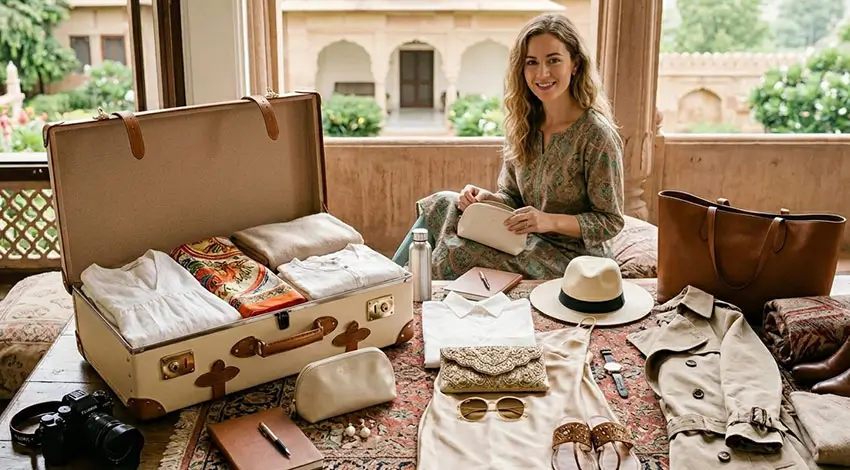
For clothing, bring light layers for warm afternoons, such as cotton and linen shirts and tops. Add warmer mid-layers for the cool mornings and evenings, including a sweater or two and a light fleece. A proper jacket is essential for the genuinely cold early mornings in Rajasthan and any hill destinations, and a warm scarf earns its place. Comfortable trousers and a few smarter options for evenings at fine hotels round out the wardrobe.
For footwear, comfortable closed walking shoes for forts, palaces and sightseeing are the priority, along with one smarter pair for evenings and sandals or slip-on shoes that are easy to remove at temples.
The single most useful winter packing principle is layering. A morning fort visit may begin cold and end mild, and the traveller who can add and remove layers easily is the comfortable one.
Summer travel calls for staying cool, protected from the sun, and comfortable in the heat.
For clothing, choose loose, light, breathable fabrics, with cotton and linen well ahead of synthetics. Light colours are kinder in strong sun. Long, loose sleeves and trousers may sound counterintuitive in heat but they protect against the sun and are often more comfortable than they appear. A wide-brimmed hat is genuinely valuable. If your itinerary includes hill stations, pack a light layer for cooler evenings there.
For footwear, breathable, comfortable shoes and good sandals are the priority, with closed shoes still useful for sightseeing.
Sun protection moves to the front of the list in summer: a high-factor sunscreen, sunglasses, the hat already mentioned, and a refillable water bottle to support steady hydration.
Monsoon travel is rewarding and atmospheric, and it asks for sensible rain preparation rather than heavy waterproofing.
For clothing, quick-drying fabrics are your friend, as humidity is high and a soaked cotton shirt is slow to dry. A light, packable rain jacket is far more practical than a bulky one, and a compact travel umbrella is worth carrying. Bring a few more changes of clothing than usual, since humidity slows drying.
For footwear, quick-drying sandals or water-friendly shoes are ideal for wet days, with a dry pair kept for evenings. Footwear that handles occasional puddles without being ruined is the sensible choice.
A few monsoon extras help: dry bags or zip pouches to protect electronics and documents, and a little extra patience for the occasional weather-related schedule adjustment, which a good operator will manage smoothly.
Beyond climate, India rewards a little thought about dress, particularly at religious and cultural sites.
At temples, mosques and other places of worship, modest dress is expected. Shoulders and knees should be covered, and shoes are removed before entering many sites. Carrying a scarf or shawl that can cover shoulders or a head when needed is practical and considerate. Loose, modest clothing is also simply comfortable in much of India and rarely out of place.
For evenings at luxury hotels and fine restaurants, smart-casual dress is appropriate, and some special dining experiences or events may invite something dressier. A couple of smarter outfits cover this comfortably.
The overall principle is respectful, comfortable and adaptable. You are not expected to dress in any particular style, simply to be considerate at sacred sites and presentable at fine establishments.
A small, well-chosen health kit belongs in every India bag, whatever the season.
Bring any prescription medication you need in sufficient quantity, in original packaging, with a copy of the prescription. Add a basic kit of everyday remedies for minor ailments, along with rehydration salts, plasters and any personal items you rely on. A hand sanitiser and a packet of tissues are genuinely useful day to day. Insect repellent matters in many regions and seasons, particularly the monsoon. Sun protection, as noted, is essential in summer and useful year-round.
For specific medical and vaccination advice, consult a travel health professional before your trip, and see our dedicated guides on staying healthy and on travel insurance.
Your Luxury India Checklist Starts Here
Avoid overpacking and never miss the essentials. Get expert guidance on what to bring for a comfortable, stylish, and worry-free journey through India.
Some items have nothing to do with the weather and everything to do with a smooth journey.
Carry your passport, visa documentation and travel insurance details, with photocopies or secure digital copies kept separately. Bring the payment cards you intend to use and some way to access local currency. A universal travel adapter is essential, as is a power bank for long sightseeing days. If you plan to use a local SIM, our connectivity guide explains the process.
A reusable water bottle, ideally one suited to refilling from safe sources, supports both hydration and a lighter environmental footprint. A daypack for sightseeing keeps water, sun protection and a layer easily to hand.
India is one of the most photogenic countries on earth, and travellers often want to capture it well. Bring your camera of choice, ample memory storage, spare batteries and chargers, and consider how you will back up images as you travel. Our dedicated photography guide covers this in depth for keen photographers.
Beyond that, a few personal comforts make long travel days easier: a light scarf or shawl that doubles for warmth, sun and modest cover, good sunglasses, a book for quiet moments, and any small item that makes a hotel room feel restful.
It is worth saying clearly. India is not a country where you must bring everything. Quality hotels offer excellent, fast laundry service, which means a smaller, well-chosen wardrobe worn in rotation works perfectly. Toiletries and most everyday items are readily available. Beautiful clothing, textiles and accessories are a pleasure to buy locally, and many travellers deliberately leave room in their luggage for exactly this.
Packing light is not a sacrifice in India. It is the more comfortable way to travel, and it leaves space for what you will inevitably want to bring home.
One of the quiet advantages of a private, tailored journey is that you never have to guess what to pack. A good operator knows precisely which regions your itinerary covers, what the weather will be doing during your specific travel dates, and what each planned experience calls for. Ahead of your trip, you receive clear, tailored guidance rather than a generic list.
Beyond the advice, a private journey simply asks less of your luggage. Reliable laundry is built into your hotel stays, your transport is private so a slightly fuller bag is never a burden, and your operator is on hand if something is forgotten. You pack for the trip you are actually taking, advised by people who know exactly what that trip involves.
If you would like a journey through India where even the packing is made simple, let us help. We design private, tailored itineraries and give every traveller clear, season-specific guidance on exactly what to bring for their route and dates. Get in touch to begin planning a luxury India journey arranged with care from the first item on your packing list to the last day of your trip.
The winter season, roughly November to February, is the most popular for much of India, particularly the north and Rajasthan, thanks to mild, pleasant days. Summer and the monsoon each have their own appeal depending on the region.
Pack light layers for warm afternoons and warmer layers for cold mornings and evenings, including a proper jacket and a scarf. Layering is the key principle for winter travel.
Choose loose, light, breathable fabrics in lighter colours, with long loose sleeves and trousers for sun protection. A wide-brimmed hat, sunglasses and strong sunscreen are essential.
Bring quick-drying clothing, a light packable rain jacket, a compact umbrella, water-friendly footwear and dry bags to protect electronics and documents.
Modest dress is expected, with shoulders and knees covered. Shoes are removed at many sites, and carrying a scarf or shawl to cover up when needed is practical and considerate.
Smart-casual dress is appropriate for most evenings at luxury hotels and fine restaurants. A couple of dressier outfits will cover special dining experiences or events.
Comfortable closed walking shoes for sightseeing, sandals or slip-on shoes that are easy to remove at temples, and one smarter pair for evenings cover most itineraries.
Bring prescription medication in original packaging with a copy of the prescription, a basic kit of everyday remedies, rehydration salts, hand sanitiser and insect repellent.
Yes, in many regions and seasons, particularly during the monsoon. It is a sensible item to include year-round depending on your itinerary.
Most everyday toiletries are readily available in India. Bring any specific personal items you rely on, but there is no need to overpack standard products.
Yes. Quality hotels offer excellent and fast laundry service, which means a smaller, well-chosen wardrobe worn in rotation works perfectly.
Bring a universal travel adapter, a power bank for long sightseeing days, and your chargers. A camera with spare batteries and storage is worth packing for India's scenery.
Yes. India offers beautiful textiles, clothing and crafts, and many travellers deliberately leave room in their luggage to bring purchases home.
The same month feels very different in the northern plains, the southern coast and a hill station. Pack according to the specific regions on your itinerary, not the country as a whole.
Carry your passport, visa documentation and travel insurance details, with copies kept separately. Bring your payment cards and a means of accessing local currency.
A private operator knows exactly which regions and weather your itinerary involves and provides clear, tailored packing guidance for your specific dates and experiences, so you never have to guess.