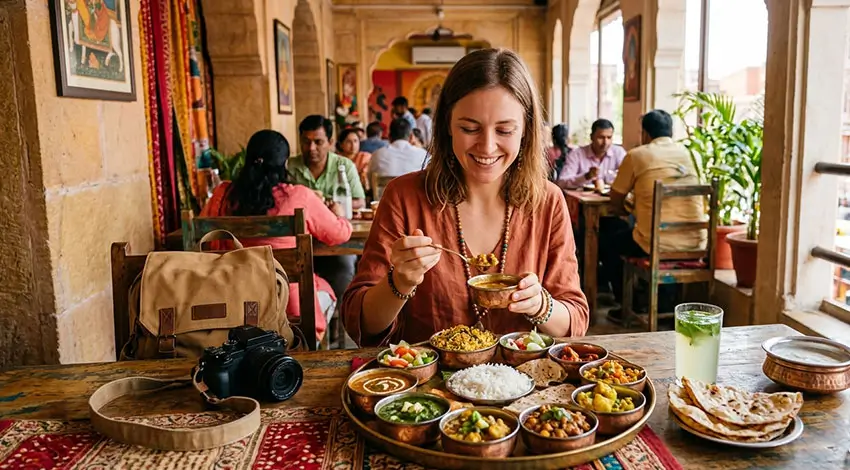
For travellers with dietary needs, few countries are as welcoming as India. This is a land where vegetarianism is woven deep into the culture, where plant-based cooking has been refined over thousands of years, and where a meal without meat is not a compromise but often the main event. A vegetarian, a vegan or a gluten-free traveller does not merely cope in India. They eat extraordinarily well.
That said, India is vast, its cuisines are many, and the terms a traveller relies on at home do not always translate neatly. A dish labelled vegetarian may contain dairy. A naan that looks harmless is made of wheat. Knowing how to navigate the menu is the difference between constant worry and genuine pleasure at the table.
This guide explains how to eat confidently in India whatever your diet. It covers what the labels mean, what to order, what to watch for, and how a well-arranged journey removes the uncertainty entirely, leaving you free to enjoy one of the world's great food cultures.
It is worth saying clearly at the start. India is, for a vegetarian, one of the easiest countries on earth.
A very large share of the population is vegetarian, and this shapes everything about how food is sold and served. Restaurants across the country are either entirely vegetarian or offer a substantial vegetarian section as a matter of course, not as an afterthought. Indian packaged food carries a small symbol indicating vegetarian or non-vegetarian content, a green mark for vegetarian and a brown or red mark for non-vegetarian, which makes shop-bought items easy to check at a glance.
For a vegetarian traveller, the practical reality is liberating. You will rarely struggle to find a meal. The harder task is choosing between the many excellent options in front of you.
Your Perfect Culinary Journey Through India
Explore India's rich food traditions with exclusive dining recommendations and luxury travel experiences crafted just for you.
Here is the single most important distinction for a traveller to grasp. In India, vegetarian food very often includes dairy. Milk, yoghurt, paneer, ghee and cream are central to Indian cooking and are considered entirely vegetarian.
For a lacto-vegetarian, this is good news, as the dairy-rich dishes are some of the finest in the cuisine. For a vegan, it means a vegetarian label is only the starting point. A creamy curry, a paneer dish, a lassi or a sweet may all be vegetarian and still contain dairy.
The encouraging news is that a great deal of Indian food is naturally vegan, or easily made so. Many South Indian dishes, lentil preparations, vegetable curries cooked in oil rather than ghee, and rice-based meals are plant-based by nature. The skill lies in asking the right questions, which the next sections cover.
Vegan food in India is very achievable with a little awareness. Several things work in your favour.
South Indian cuisine is a vegan traveller's ally. Many of its staple dishes are based on rice and lentils and are traditionally cooked without dairy, though it is still worth confirming that no ghee or butter has been added. Lentil dishes, known broadly as dal, are widespread and often vegan, though some versions are finished with ghee or cream. Vegetable curries are frequently cooked in oil rather than ghee in many regions and can often be prepared vegan on request. Chickpea and other legume dishes are common and frequently plant-based. Indian breads vary, and several flatbreads are made without dairy, though some are brushed with butter or ghee.
The two ingredients to ask about every time are ghee, which is clarified butter, and cream or paneer. A simple, polite request to have a dish prepared without ghee, butter, cream or paneer is widely understood, particularly in restaurants used to international guests. Honey is also worth a mention for strict vegans, as it appears in some sweets and dishes.
Gluten-free food in India is more accessible than many travellers anticipate, because so much of Indian cuisine is built on rice and lentils rather than wheat.
Rice is a staple across much of the country, particularly in the south, which gives a gluten-free traveller a naturally safe base for many meals. South Indian dishes made from rice and lentil batters are often gluten-free by nature, though it is wise to confirm preparation. Many lentil and vegetable dishes contain no wheat. Flatbreads made from chickpea flour, millet or other non-wheat grains exist in regional cuisines and are good gluten-free options.
The main ingredient to watch is wheat. Several of the most familiar Indian breads, including the common leavened bread served in restaurants, are wheat-based and not gluten-free. A traveller avoiding gluten should also be aware of cross-contamination in kitchens, and of wheat appearing in less obvious places such as some thickeners, certain snacks and a few sauces. Asafoetida, a spice used widely in Indian cooking, is sometimes blended with wheat flour, so a coeliac traveller may wish to ask about it specifically.
For travellers with coeliac disease as opposed to a preference, communicating the seriousness of the requirement clearly is important, and the section below on communication will help.
India does not have one cuisine. It has many, and knowing the broad strokes helps you eat well as you travel.
The south leans heavily on rice, lentils, coconut and vegetables, which makes it particularly friendly for vegan and gluten-free travellers. The north features more wheat-based breads and dairy-rich gravies, wonderful for vegetarians who eat dairy, with vegan and gluten-free choices available with a little care. The west includes regions with strong vegetarian traditions and a remarkable range of plant-based dishes. The east has its own distinct preparations, with rice featuring prominently.
As you move through the country, the menu changes, and so do the easiest choices. A traveller who understands this treats each region as a fresh set of opportunities rather than expecting the same dishes everywhere.
Clear communication is the heart of eating safely and well in India. A few approaches help enormously.
Be specific rather than general. Saying you do not eat meat is clear, but for a vegan, naming dairy, ghee, butter, cream, paneer and honey leaves no room for misunderstanding. For a gluten-free traveller, naming wheat directly is clearer than using the word gluten, which may not be universally understood.
Explain the reason when it matters. For a medical requirement such as coeliac disease or a genuine allergy, saying so plainly helps kitchen staff understand that this is not a preference to be loosely accommodated.
Carry a written description. A short note explaining your dietary needs, ideally translated into the local language of the region you are in, is invaluable in smaller establishments. A private guide can help convey requirements precisely in any setting.
Confirm at the point of ordering. A polite question about how a specific dish is prepared is normal and welcome, particularly in restaurants accustomed to international guests.
Experience India, Your Way
Savor the best of India with expertly curated vegetarian, vegan, and gluten-free dining experiences tailored to your lifestyle and travel preferences.
Travelling with dietary needs should not mean a narrow diet. India rewards the curious eater.
Vegetarians should explore the great paneer dishes, the rich lentil preparations, the vegetable curries of different regions, and the enormous variety of regional thali platters, which present many small dishes on a single plate. Vegans will find joy in South Indian rice and lentil specialities, in oil-cooked vegetable dishes, in chickpea preparations and in the many naturally plant-based street and home-style dishes. Gluten-free travellers can build excellent meals around rice dishes, lentil preparations, non-wheat flatbreads and the rice-based specialities of the south.
The point is simple. A dietary requirement in India narrows the menu far less than travellers fear, and what remains is still one of the most varied and rewarding cuisines in the world.
Dietary suitability is one matter. General food safety is another, and both deserve attention.
Choosing busy, well-regarded restaurants, eating freshly cooked hot food, being thoughtful about raw salads and peeled fruit, and drinking safe water all contribute to a healthy trip. Luxury hotels and quality restaurants maintain high standards, and a traveller eating mainly in such places, with well-chosen experiences elsewhere, can enjoy India's food with confidence. This guide focuses on dietary needs, and our separate guide on drinking water and staying healthy covers food safety in full.
For a traveller with dietary needs, a private, tailored journey changes the experience of eating in India entirely.
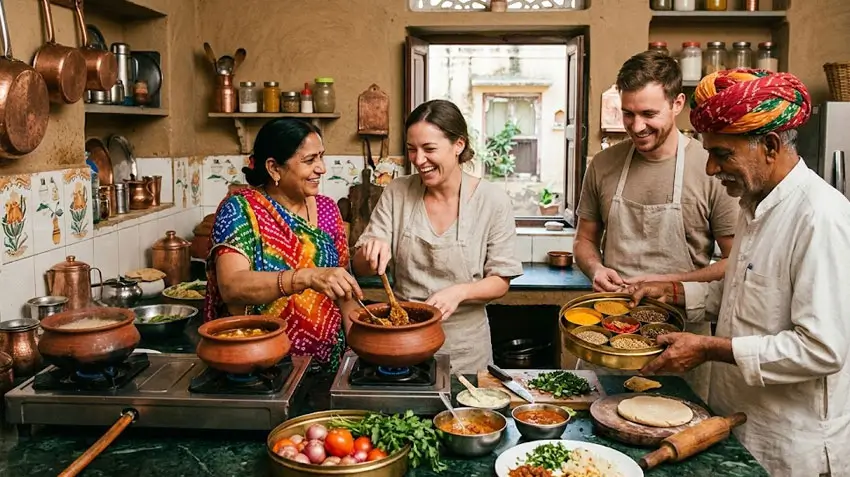
A good operator briefs every hotel and restaurant on your requirements before you arrive, so your needs are known rather than explained anew at each meal. A private guide communicates with kitchen staff in the local language, removing any uncertainty about how a dish is prepared. Restaurants are chosen for their ability to cater well to your diet, not left to chance. Special experiences, such as a cooking session or a home-style meal, are arranged to suit you specifically.
The result is that dining becomes a highlight rather than a daily negotiation. You sit down knowing the table has been prepared for you, and you spend the meal enjoying the food instead of interrogating it. For vegan and gluten-free travellers in particular, this quiet, behind-the-scenes care is one of the most valuable parts of travelling with everything arranged.
India is not a country where dietary needs are tolerated. It is a country where they are understood, where plant-based cooking is a celebrated tradition rather than a niche, and where a thoughtful traveller eats memorably from the first day to the last. With a little knowledge, clear communication, and ideally a well-planned journey behind you, your diet becomes simply another way to enjoy one of the world's great cuisines.
If you travel with dietary needs and want to experience India's food without uncertainty, let us design a private, tailored journey for you. We brief every hotel and restaurant in advance, arrange guides who communicate your requirements precisely, and select dining experiences that suit your diet beautifully. Get in touch to begin planning a luxury India journey where every meal is something to look forward to.
India is one of the easiest countries in the world for vegetarians. A large share of the population is vegetarian, and restaurants everywhere offer extensive vegetarian options as standard.
Often yes. In India, dairy such as milk, yoghurt, paneer, ghee and cream is considered vegetarian. A vegetarian label does not mean a dish is free of dairy.
Yes, with a little care. Much Indian food is naturally plant-based, especially in South Indian cuisine, though vegans should ask about ghee, butter, cream, paneer and honey.
Ask whether a dish contains ghee, butter, cream or paneer, and request it prepared without them. Honey is also worth checking for in sweets and some dishes.
Yes. Much of Indian cuisine is based on rice and lentils rather than wheat, so gluten-free travellers have many naturally suitable options, particularly in the south.
The common wheat-based flatbreads, including the familiar leavened restaurant bread, are not gluten-free. Breads made from chickpea flour or millet are safer choices.
Ghee is clarified butter, used widely in Indian cooking. Vegans and strict dairy-free travellers should ask for dishes to be prepared without it.
Yes. South Indian cuisine relies heavily on rice and lentils, making it especially friendly for both vegan and gluten-free travellers, though it is still worth confirming preparation.
Name wheat directly rather than only saying gluten, explain that it is a medical condition, and carry a written note, ideally translated. A private guide can communicate this clearly to kitchen staff.
Yes. Wheat can appear in some thickeners, snacks and sauces, and asafoetida is sometimes blended with wheat flour. Coeliac travellers should ask about these specifically.
Be specific by naming exact ingredients, explain the reason when it is medical, carry a written and translated description, and confirm preparation when ordering.
Street food can be enjoyable but carries more uncertainty about ingredients and preparation. Travellers with strict needs may prefer well-regarded restaurants, or street experiences arranged through a trusted guide.
Yes. Luxury hotels are well equipped to handle vegetarian, vegan and gluten-free requirements, especially when briefed in advance through a tour operator.
A thali is a platter of several small dishes served together. Many thalis are vegetarian, and components can often be chosen or adjusted to suit vegan and gluten-free needs.
A few familiar snacks can be reassuring for long travel days, but they are rarely essential. India offers abundant suitable food, and packaged items carry a clear vegetarian or non-vegetarian symbol.
A private tour briefs hotels and restaurants in advance, provides guides who communicate your needs precisely, and selects dining experiences suited to your diet, so eating becomes effortless rather than a daily concern.