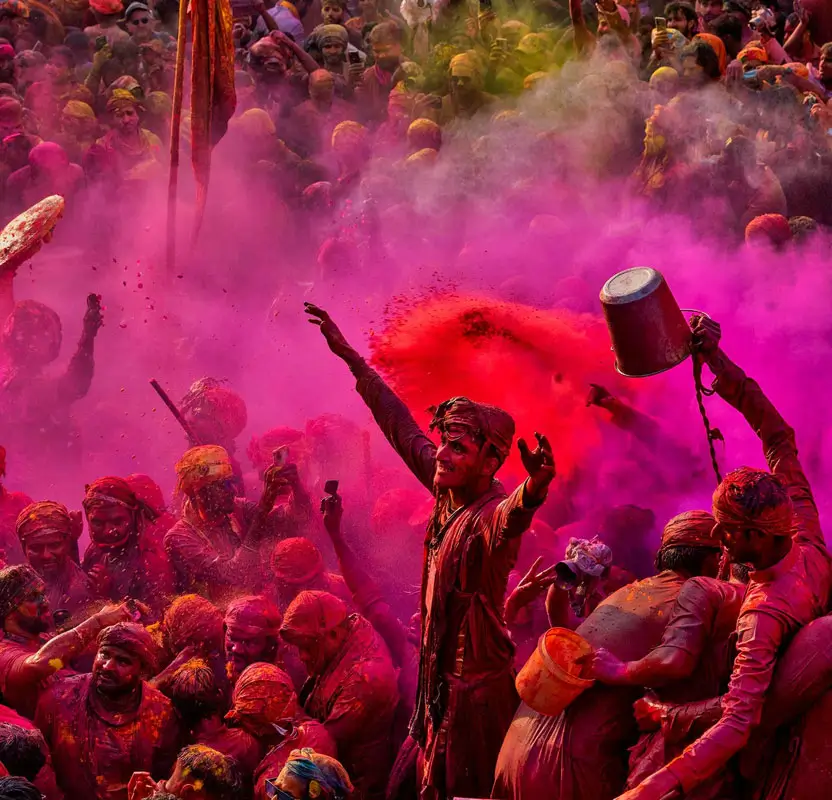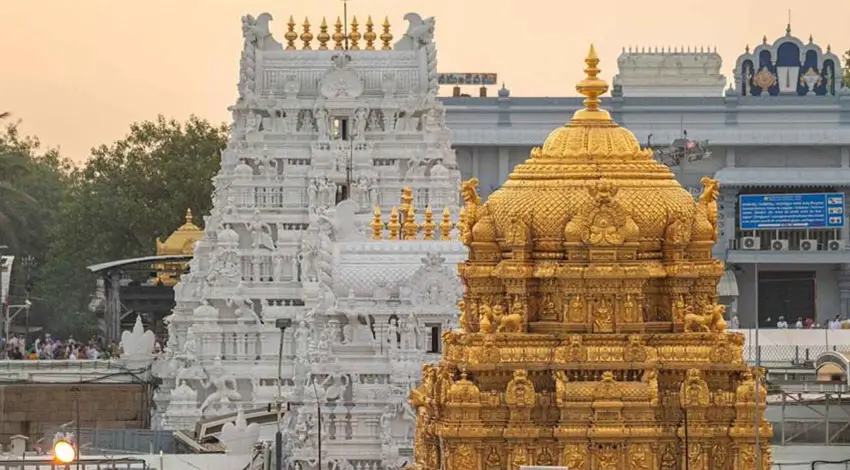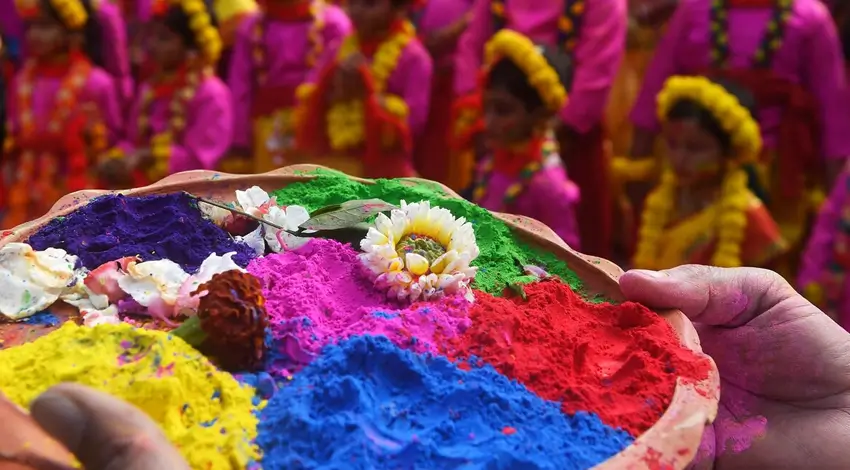
Holi is often described globally as the “festival of colors,” but that description barely scratches the surface of what actually unfolds across India each spring. In reality, Holi is not a single, uniform celebration. It is a collective name for dozens of regional traditions shaped by geography, history, mythology, and local identity.
Across India, the meaning of Holi shifts from playful to spiritual, from musical to martial, from deeply symbolic rituals to vibrant public gatherings. Some regions celebrate Holi through flowers, some through fire, some through song, and others through ceremonies that may appear unfamiliar—even startling—to outsiders. Yet all of these expressions are rooted in the same core ideas: renewal, transition, and the release of social boundaries.
Understanding this diversity is essential for travelers. Experiencing Holi without context can feel overwhelming or confusing, while understanding why it is celebrated differently in each region transforms the festival into a deeply meaningful cultural encounter.
At its heart, Holi marks a moment of transition. It signals the end of winter and the arrival of spring, a shift that has held agricultural, spiritual, and emotional significance for centuries. This seasonal change is one reason Holi is celebrated with such intensity—it represents renewal, abundance, and the chance to begin again.
The festival is also tied to powerful mythological narratives that vary in emphasis from region to region. Stories of devotion, love, resilience, and moral triumph form the philosophical backbone of Holi. These narratives are not merely retold; they are reenacted through rituals, processions, music, and community participation.
What makes Holi particularly unique is that it temporarily dissolves social hierarchies. Age, status, profession, and background fade into the background as people engage with one another on equal footing. This social openness is one of the reasons Holi feels so emotionally charged—and why it holds such fascination for visitors.
India’s vast geography plays a decisive role in how Holi is observed. Climate, landscape, and regional history all influence local customs.
In northern and central regions, where winters are more pronounced, Holi often arrives with an explosion of outdoor energy. Celebrations spill into streets and public spaces, accompanied by music, movement, and collective participation.
In eastern regions, Holi often takes on a refined, artistic expression. Music, poetry, and structured performances become central, reflecting the region’s cultural traditions and intellectual heritage.
In western India, Holi frequently blends community rituals with celebratory processions, while coastal and southern regions tend to observe the festival in quieter, more ritual-focused ways, often within specific communities or temple spaces.
These variations are not incidental. They reflect centuries of localized tradition and community values, making each Holi celebration a cultural fingerprint rather than a repetition of a national template.
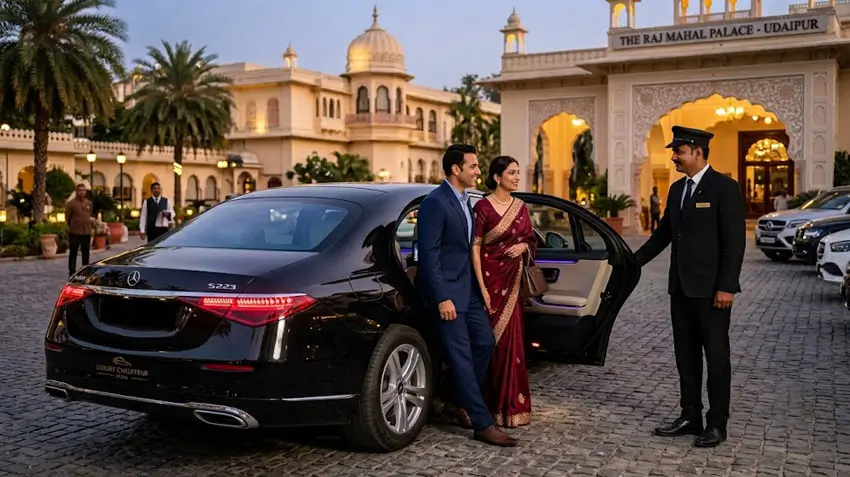
From the spiritual Holi of Mathura & Vrindavan to royal Holi in Rajasthan - plan your personalized Holi tour with local experts and luxury comfort.
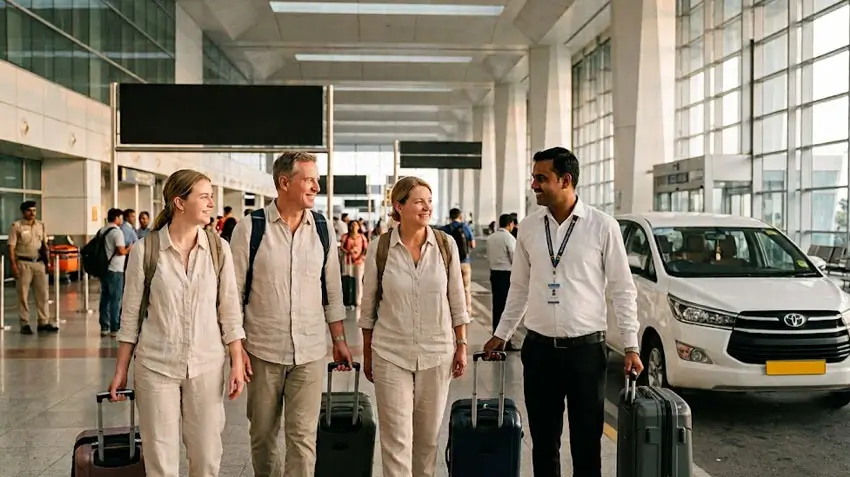
100% Custom Tours | Private Driver | Local Travel Experts
Unlike many festivals that follow a fixed ceremonial format, Holi is highly adaptive. Communities have shaped the festival to reflect their social structures, belief systems, and historical experiences.
In some regions, Holi emphasizes devotion and surrender. In others, it celebrates bravery, discipline, or artistic expression. There are places where Holi unfolds over several days or even weeks, while elsewhere it is concentrated into a single, powerful day.
This adaptability is what has allowed Holi to remain relevant across centuries. Rather than remaining frozen in tradition, it evolves with each region, generation, and social context.
For travelers, this means there is no single “best” Holi celebration—only the one that aligns most closely with their interests, comfort level, and desire for cultural immersion.
For visitors, especially those traveling from outside India, Holi can be both exhilarating and disorienting. The same festival can feel joyful and intimate in one location, yet overwhelming and chaotic in another.
Some Holi celebrations are best suited for travelers seeking cultural depth, storytelling, and ritual significance. Others appeal to those drawn to spectacle, movement, and high-energy environments. Certain celebrations are family-friendly and structured, while others require a higher tolerance for crowds and unpredictability.
Understanding these distinctions is essential for meaningful travel planning. Rather than treating Holi as a single event to “tick off,” informed travelers choose experiences that match their personal travel style.
This approach not only enhances enjoyment but also fosters respectful engagement with local communities, ensuring that participation feels welcome rather than intrusive.
Holi is not a festival that fits neatly into a rigid travel schedule. Transportation disruptions, altered business hours, and shifting daily rhythms are all part of the experience. Cities may feel quieter one moment and overwhelmingly lively the next.
Travelers who plan Holi thoughtfully—choosing the right location, allowing flexibility, and understanding local customs—often find it becomes one of the most memorable moments of their journey. Those who approach it without preparation may struggle to navigate its intensity.
This is why Holi is best experienced as a designed highlight within a broader itinerary, rather than an accidental stop along the way.
Holi is often described globally as the “festival of colors,” but that description barely scratches the surface of what actually unfolds across India each spring. In reality, Holi is not a single, uniform celebration. It is a collective name for dozens of regional traditions shaped by geography, history, mythology, and local identity.
Across India, the meaning of Holi shifts from playful to spiritual, from musical to martial, from deeply symbolic rituals to vibrant public gatherings. Some regions celebrate Holi through flowers, some through fire, some through song, and others through ceremonies that may appear unfamiliar—even startling—to outsiders. Yet all of these expressions are rooted in the same core ideas: renewal, transition, and the release of social boundaries.
Understanding this diversity is essential for travelers. Experiencing Holi without context can feel overwhelming or confusing, while understanding why it is celebrated differently in each region transforms the festival into a deeply meaningful cultural encounter.
At its heart, Holi marks a moment of transition. It signals the end of winter and the arrival of spring, a shift that has held agricultural, spiritual, and emotional significance for centuries. This seasonal change is one reason Holi is celebrated with such intensity—it represents renewal, abundance, and the chance to begin again.
The festival is also tied to powerful mythological narratives that vary in emphasis from region to region. Stories of devotion, love, resilience, and moral triumph form the philosophical backbone of Holi. These narratives are not merely retold; they are reenacted through rituals, processions, music, and community participation.
What makes Holi particularly unique is that it temporarily dissolves social hierarchies. Age, status, profession, and background fade into the background as people engage with one another on equal footing. This social openness is one of the reasons Holi feels so emotionally charged—and why it holds such fascination for visitors.
India’s vast geography plays a decisive role in how Holi is observed. Climate, landscape, and regional history all influence local customs.
In northern and central regions, where winters are more pronounced, Holi often arrives with an explosion of outdoor energy. Celebrations spill into streets and public spaces, accompanied by music, movement, and collective participation.
In eastern regions, Holi often takes on a refined, artistic expression. Music, poetry, and structured performances become central, reflecting the region’s cultural traditions and intellectual heritage.
In western India, Holi frequently blends community rituals with celebratory processions, while coastal and southern regions tend to observe the festival in quieter, more ritual-focused ways, often within specific communities or temple spaces.
These variations are not incidental. They reflect centuries of localized tradition and community values, making each Holi celebration a cultural fingerprint rather than a repetition of a national template.
Unlike many festivals that follow a fixed ceremonial format, Holi is highly adaptive. Communities have shaped the festival to reflect their social structures, belief systems, and historical experiences.
In some regions, Holi emphasizes devotion and surrender. In others, it celebrates bravery, discipline, or artistic expression. There are places where Holi unfolds over several days or even weeks, while elsewhere it is concentrated into a single, powerful day.
This adaptability is what has allowed Holi to remain relevant across centuries. Rather than remaining frozen in tradition, it evolves with each region, generation, and social context.
For travelers, this means there is no single “best” Holi celebration—only the one that aligns most closely with their interests, comfort level, and desire for cultural immersion.
For visitors, especially those traveling from outside India, Holi can be both exhilarating and disorienting. The same festival can feel joyful and intimate in one location, yet overwhelming and chaotic in another.
Some Holi celebrations are best suited for travelers seeking cultural depth, storytelling, and ritual significance. Others appeal to those drawn to spectacle, movement, and high-energy environments. Certain celebrations are family-friendly and structured, while others require a higher tolerance for crowds and unpredictability.
Understanding these distinctions is essential for meaningful travel planning. Rather than treating Holi as a single event to “tick off,” informed travelers choose experiences that match their personal travel style.
This approach not only enhances enjoyment but also fosters respectful engagement with local communities, ensuring that participation feels welcome rather than intrusive.
Holi is not a festival that fits neatly into a rigid travel schedule. Transportation disruptions, altered business hours, and shifting daily rhythms are all part of the experience. Cities may feel quieter one moment and overwhelmingly lively the next.
Travelers who plan Holi thoughtfully—choosing the right location, allowing flexibility, and understanding local customs—often find it becomes one of the most memorable moments of their journey. Those who approach it without preparation may struggle to navigate its intensity.
This is why Holi is best experienced as a designed highlight within a broader itinerary, rather than an accidental stop along the way.
In many parts of India, Holi is not primarily about color play. Instead, it is a deeply ritualistic event rooted in devotion, symbolism, and community memory. These celebrations often feel quieter, more intentional, and profoundly spiritual—making them especially meaningful for travelers seeking cultural depth rather than spectacle.
Lathmar Holi – A Ritual of Playful Defiance (Uttar Pradesh)
In the towns of Barsana and Nandgaon, Holi unfolds as a dramatic reenactment of myth rather than a casual celebration. Known as Lathmar Holi, this tradition reverses conventional roles through playful confrontation. Women symbolically “chase away” men using wooden sticks, while the men shield themselves and sing devotional songs.
This ritual is not aggressive or chaotic. It is carefully staged, culturally understood, and deeply rooted in local storytelling traditions connected to Krishna and Radha. The atmosphere blends humor, devotion, and collective memory, creating a Holi experience that feels theatrical yet reverent.
For travelers, this celebration offers rare insight into how mythology is lived rather than merely remembered. However, it is best experienced with local guidance, as the cultural cues and boundaries are important to respect.
Not all Holi celebrations focus on joy and playfulness. In some regions, the festival becomes an expression of strength, discipline, and historical identity.
Hola Mohalla – The Warrior’s Holi (Punjab)
Celebrated shortly after the main day of Holi, Hola Mohalla transforms the festival into a powerful display of Sikh martial tradition. Instead of colors, the focus shifts to physical skill, courage, and community service.
Participants demonstrate traditional combat techniques, horseback riding, and mock battles, accompanied by devotional music and collective meals served to all visitors. The energy is intense but grounded, celebratory yet disciplined.
Hola Mohalla reflects a different dimension of Holi—one that honors resilience and shared responsibility. For travelers, it offers an opportunity to witness Holi through the lens of heritage and honor rather than festivity alone.
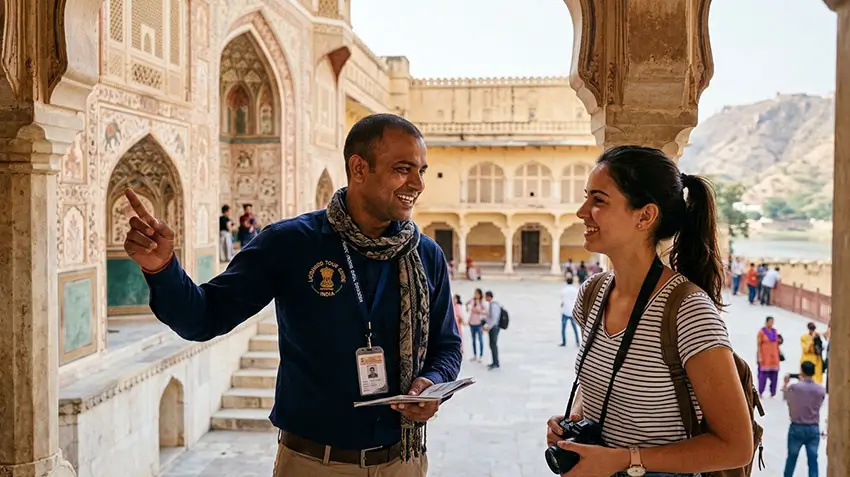
Luxury Private Tours of India presents exclusive Holi travel experiences, curated with authentic local celebrations, private guides, and luxury stays across India’s most iconic destinations.
Trusted by international travelers | Tailor-Made Holi Tours | Private & Safe
In some regions, Holi becomes a cultural performance where sound, poetry, and movement take precedence over color.
Kumaoni Holi – A Musical Festival (Uttarakhand)
In the hill towns of Uttarakhand, Holi unfolds over weeks rather than days. Known as Kumaoni Holi, this tradition emphasizes classical music, poetry, and community gatherings.
Participants dress in simple white clothing and gather in homes or public spaces to sing devotional and folk songs accompanied by traditional instruments. The mood is reflective and celebratory, centered around shared expression rather than exuberant play.
For travelers interested in India’s musical heritage, Kumaoni Holi offers an intimate, non-commercial experience that feels worlds apart from the crowded street celebrations often associated with the festival.
In eastern and northeastern India, Holi aligns closely with the arrival of spring and the rhythms of agricultural life.
Basanta Utsav – Holi as Cultural Renewal (West Bengal)
In Shantiniketan, Holi takes the form of Basanta Utsav, or the Spring Festival. Rooted in artistic traditions, this celebration emphasizes dance, music, and coordinated performances rather than spontaneous revelry.
Participants wear traditional attire in soft shades of yellow and white, symbolizing renewal and harmony. Colors are used sparingly and intentionally, enhancing the aesthetic rather than overpowering it.
Basanta Utsav appeals to travelers who appreciate structured cultural events and artistic expression. It feels curated, graceful, and deeply connected to intellectual and creative traditions.
Some Holi celebrations in India step far outside what most travelers expect. These are not mass-participation festivals or casual color fights. They are deeply symbolic, sometimes intense, and often misunderstood without context. Experiencing them responsibly requires sensitivity, planning, and local knowledge—but for the right traveler, they offer unmatched cultural insight.
Phoolon Wali Holi – When Flowers Replace Color (Uttar Pradesh)
In the temple towns of Mathura and Vrindavan, Holi takes on a softer, almost poetic form known as Phoolon Wali Holi, or the “Holi of Flowers.” Instead of powdered pigments, priests shower devotees with fresh flower petals—roses, marigolds, and lotus blossoms—inside sacred temple spaces.
This celebration is devotional rather than playful. The atmosphere is fragrant, serene, and emotionally charged, especially inside historic temples like Banke Bihari. Music, chanting, and floral offerings replace loud music and water guns.
For travelers seeking a spiritual Holi experience, this is one of the most visually beautiful and culturally respectful ways to witness the festival.
Royal Holi – A Regal Affair of Tradition (Rajasthan)
In Rajasthan, Holi retains its royal legacy. Cities like Udaipur host carefully choreographed celebrations that reflect centuries-old palace traditions. The event often begins with ceremonial bonfires, followed by stately processions featuring decorated horses, royal musicians, and traditional performances.
Unlike street celebrations, Royal Holi is structured and dignified. It offers a glimpse into how India’s former royal families preserved ritual while adapting to modern times.
For luxury travelers, Royal Holi aligns seamlessly with palace stays and private cultural experiences, creating a version of Holi that feels exclusive, immersive, and refined.
Masan Holi – Where Celebration Meets Mortality (Varanasi)
Perhaps the most intense Holi celebration in India, Masan Holi takes place in Varanasi, one of the world’s oldest continuously inhabited cities. Celebrated at cremation grounds along the Ganges, this ritual confronts life and death directly.
Participants smear ash from funeral pyres on their bodies, symbolizing impermanence and spiritual liberation. Music, chanting, and color coexist with the constant presence of fire and smoke.
This is not a tourist spectacle. It is a religious expression meant for devotees of Lord Shiva. Travelers who encounter Masan Holi should do so only with deep respect and guidance, observing rather than participating.
Yaosang – Holi with Dance, Sport & Community (Manipur)
In Northeast India, Holi appears in an entirely different form known as Yaosang. Celebrated over several days, Yaosang blends religious ritual, folk dance, sports competitions, and community gatherings.
Instead of focusing solely on color, Yaosang emphasizes movement and collective participation. Traditional dances, athletic events, and musical performances dominate the festival landscape.
This version of Holi reflects the region’s distinct cultural identity and offers travelers exposure to India’s diversity beyond the well-known northern circuits.
Not every Holi celebration suits every traveler. Some are energetic and social, others deeply spiritual or symbolic. Choosing the right experience depends on comfort level, cultural interest, and travel style.
Travelers seeking joyful participation may prefer city-based or private Holi events. Those interested in heritage and ritual should look toward regional or temple-centered celebrations. Luxury travelers often benefit from curated experiences that balance access with comfort and safety.
Working with experienced planners allows travelers to witness Holi in environments that are meaningful, respectful, and well-organized—without unnecessary risk or overwhelm.
Holi is not a single festival - it is hundreds of celebrations sharing a common theme but expressing it in radically different ways. From flowers and music to fire and ash, from royal courts to village streets, Holi reflects India’s extraordinary cultural range. Understanding these differences transforms Holi from a photo opportunity into a lived cultural experience.
For travelers who approach the festival with curiosity, humility, and preparation, Holi becomes more than a celebration - it becomes a profound encounter with India itself.
Holi varies by region due to local history, mythology, and cultural traditions. Each state interprets the festival uniquely through rituals, music, attire, and symbolism.
No. While colors are common, many regions focus on flowers, music, devotion, martial arts, or spiritual rituals instead of color play.
Notable destinations include Barsana, Vrindavan, Varanasi, Udaipur, Shantiniketan, Manipur, and parts of Kerala and Punjab.
Lathmar Holi is celebrated in Barsana and Nandgaon, Uttar Pradesh, where women playfully chase men with sticks as part of a traditional ritual linked to Krishna lore.
Royal Holi is a regal celebration hosted by former royal families, featuring ceremonial bonfires, palace processions, traditional music, and heritage customs.
Phoolon Wali Holi is celebrated in Vrindavan and Mathura using flower petals instead of colors, creating a devotional and visually graceful experience.
Masan Holi is a deeply spiritual ritual held at cremation grounds in Varanasi. Tourists should observe respectfully and avoid participation unless guided by knowledgeable locals.
In Manipur, Holi is celebrated as Yaosang, combining dance, sports, religious rituals, and community events over several days.
Yes. In Kerala, Holi appears as Ukuli or Manjal Kuli, focusing on temple rituals and turmeric rather than color play.
Yes. Many destinations offer curated Holi experiences in controlled environments such as heritage hotels, private courtyards, and palace venues.
Holi usually falls in March, based on the lunar calendar. Planning should begin several months in advance for accommodations and curated experiences.
While rooted in Hindu mythology, Holi today is a cultural festival enjoyed by people across religions and communities in many parts of India.
Travelers should use organic colors, protect skin and eyes, avoid crowded public spaces, and choose guided or private celebrations for safety.
Absolutely. Many Holi celebrations focus on music, rituals, flowers, or symbolic acts rather than physical participation with colors.