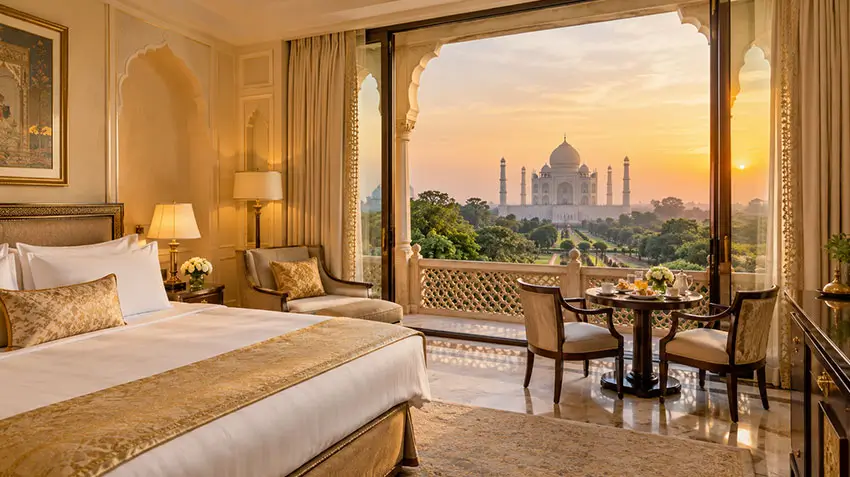
Most hotels in Agra sell a bed near the Taj Mahal. Oberoi Amarvilas Agra sells something different: the monument stays in front of you after the gates close, at dinner, at midnight and again when the first light turns the marble pink. Since the hotel stands only a short distance from the Taj, almost every guest arrives expecting a view. The real question is how much of that view you want, where you want to be when you look at it, and how much time your itinerary will actually give you in the room.
This guide is written for travellers who have already decided on Amarvilas and now face the category page. We look at what each Taj-view room gives you in physical terms, how a balcony changes your day, why the position of the room matters at different hours, and when it makes sense to spend more. The aim is simple: help you pay for the version of Amarvilas you will use.
It is worth saying early that there is no single right answer. A photographer, a honeymoon couple and a family of four with a packed Golden Triangle schedule will all get something different from the same hotel. What they share is the need to match the room to the hours they will actually spend in it, and to book with clear written details rather than general promises about a great view.
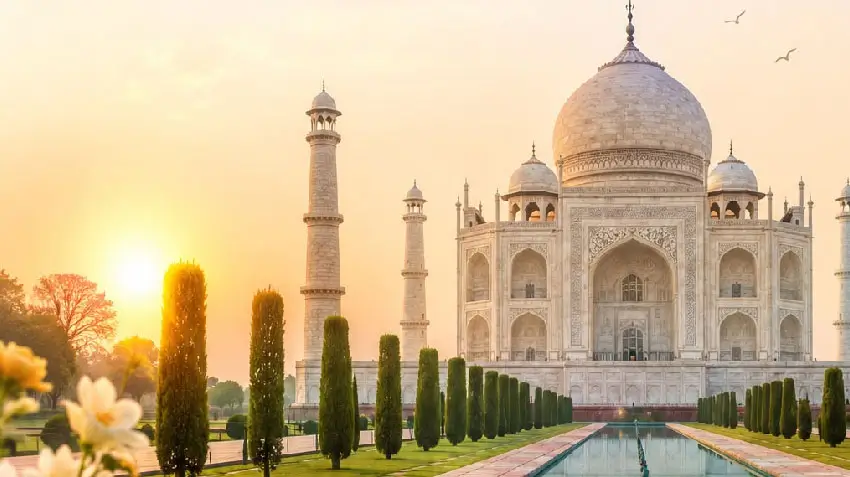
In most cities, a view is a pleasant bonus you notice while unpacking. In Agra, at this hotel, it is the reason the room costs what it does. Guests are paying to keep the Taj Mahal within sight from morning to night, which is something a ticket to the monument cannot give. You may spend two or three hours inside the complex, but you could spend fifteen hours looking at it from your room if the itinerary allows.
The category that most travellers compare is the Premier Room with Balcony. The published details are useful to keep in mind: roughly 42 sqm of interior space and about 65 sqm in total once the balcony is counted, an uninterrupted view of the Taj Mahal, a choice of king or twin beds and a butler on call. These figures tell you what you are buying before words like romantic or royal start shaping the decision. They also help when you compare the balcony room with a standard Premier Room, where the view is through glass rather than from open air.
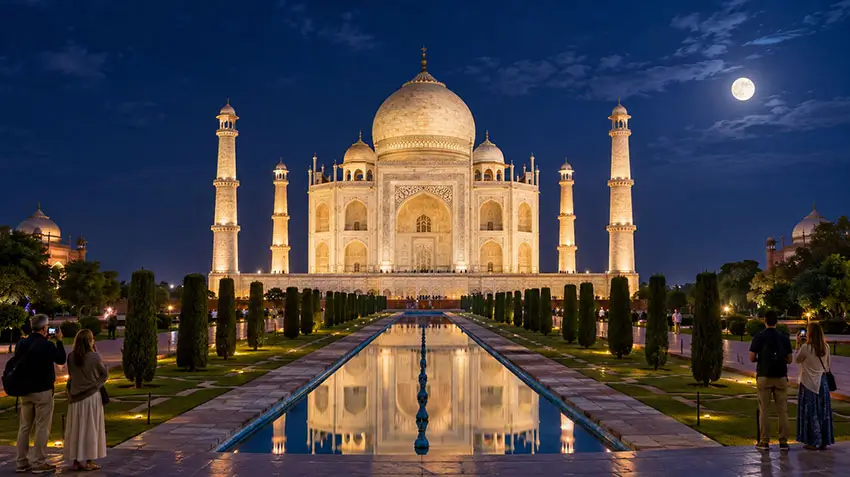
Think about the moments when the view matters most. The first is sunrise, when the Taj changes colour quickly and the air is often still. The second is late afternoon, when the light softens and the gardens below the hotel fill with shadow. The third is after dark, when the monument is a pale shape across the trees. A room that lets you see all three from bed, sofa and balcony is doing something that no other hotel in the city can match so directly.
This is also why the lowest Taj-view category can still be a very good purchase. If your plan is to visit the monument at dawn, spend the day at Agra Fort and Fatehpur Sikri, and return only for dinner, a well-positioned Premier Room gives you the essential Amarvilas experience. You wake up to the view, you see it at night, and you do not pay for outdoor space you will not use.
Compare room options, enjoy stunning Taj Mahal views, and plan your luxury experience at Oberoi Amarvilas.
The more time you plan to spend in the hotel, the more the upgrade starts to justify itself. That link between hours in the room and value of the room will come up again and again in this guide, because it is the most reliable way to judge any category at a property like this one.
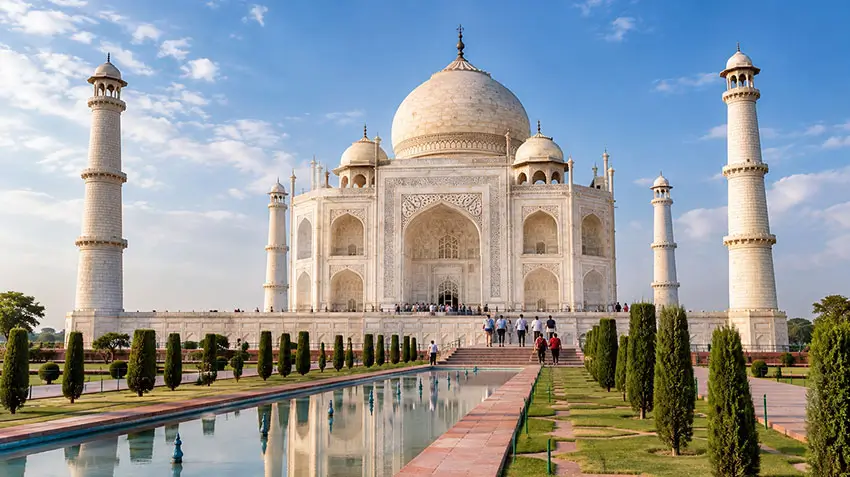
It also helps to compare Amarvilas with the alternatives honestly. Several good hotels in Agra advertise Taj views, but most of them look at the monument from a greater distance, often across rooftops or from a single side of the building. Amarvilas is closer, the view is lined up with the design of the hotel, and the gardens between you and the Taj are green rather than urban. That closeness is what the premium pays for, and it is why many travellers decide that one night here is worth more than two nights somewhere with a distant glimpse.
The practical access to the monument is another part of the value. Guests are close enough that the trip to the gate is short, and the hotel usually helps with transport toward the entrance. On a morning when you want to be in the queue at opening time, those saved minutes mean more sleep and less stress, which matters on a trip where every other day may begin with a long drive.
The public spaces carry the view as well, which is worth knowing before you decide how much to pay for the room itself. The hotel was designed with terraced lawns, reflecting pools and fountains that lead the eye toward the monument, and the bar, the restaurants and the pool deck all make use of that line of sight. A guest in the entry-level Taj-view category is therefore not shut away from the experience. They simply share it with other residents when they are outside the room, rather than owning a private piece of it.
That is a useful way to frame the whole decision. The standard view room gives you the Taj from inside your own space and from the common areas. The balcony room gives you a private outdoor spot as well. The suites add living space, and in some cases larger terraces, on top of that. Each step up buys a little more privacy with the same monument, and the question is how much privacy your trip really needs.
A window frames the Taj. A balcony lets you sit with it. That sounds like a small difference on paper, but in practice it changes how guests spend their time. People with a balcony tend to take morning tea outside, read there in the afternoon and return to it after dinner. People without one tend to look, take a photograph and move on.
The outdoor space adds roughly 23 sqm to the room, based on the published interior and total figures. For two people, that is enough for a proper seating area rather than a narrow ledge. It gives you fresh air, the sound of birds in the gardens and a sense of the distance between the hotel and the monument. Photographers also appreciate a balcony because glass reflections and window frames disappear from the shot.
Weather plays a part here. In the cooler months from roughly November to February, mornings can be crisp and afternoons pleasant, which makes the balcony a real living space. In April, May and June, midday heat keeps most guests indoors, so the balcony becomes a dawn and late evening feature. During the monsoon, humidity and passing showers make it less predictable but often very atmospheric, with washed skies after the rain.
Privacy is another factor worth asking about. Balconies at a large hotel sit alongside other balconies, so you should ask the reservations team how screened each one is and whether upper floors feel more secluded. A guest planning a quiet anniversary breakfast outside will care about this more than a family that simply wants a place to step out for photographs.
If you already know you are an early riser, or you plan to leave one afternoon free, the balcony is probably worth pricing. If your group will be out of the hotel from dawn until late evening, a standard Premier Room with a good outlook may serve you just as well and leave money for other parts of the trip.
Couples sometimes ask whether they would be better off with a balcony room for two nights or a suite for one night at a similar total cost. In most cases the balcony room for two nights wins. It gives you two sunrises instead of one, a full day at a relaxed pace and a much better chance of clear weather. The suite for one night gives you more space, but you will spend much of that night asleep and much of the next morning at the monument.
A realistic balcony day in winter might look like this. Tea outside at 6.30 while the Taj appears through the mist, a visit to the monument at opening time, breakfast on the balcony after you return, an afternoon at Agra Fort, and a drink outside again as the light fades. In that one day the balcony has been used four times, each time for something that could not happen through a window in quite the same way.
Before you pay, ask the hotel a few practical questions about the outdoor space. How much furniture is on the balcony, and is it suitable for eating a meal? Can breakfast be served outside? How screened is it from neighbouring rooms? Clear answers turn a vague upgrade into something you can picture, and they stop you from paying for a feature that looks larger in photographs than it feels in person.
Two rooms in the same category can feel quite different because of floor level and angle. A higher room may clear the treetops and give a cleaner line to the dome, while a lower room may feel closer to the gardens and pool. Neither is wrong, but you should know which one you prefer before you arrive, because changing rooms on a one-night stay is rarely practical.
Agra has a haze problem that visitors should understand in advance. From late autumn into winter, fog and pollution can soften the view, especially early in the morning. On some days the Taj appears as a faint outline until the sun burns through. This is not something the hotel controls, and it does not mean the room has failed. It does mean that guests who stay only one night are gambling on a single morning, while guests who stay two nights double their chances of a clear sunrise.
Night views need a word too. The Taj is not floodlit in the way many people imagine, so after dark it tends to appear as a pale shape rather than a glowing monument. On clear nights, and especially around a full moon, it can be very beautiful. On hazy nights it may be hard to see at all. A balcony helps here because you can step outside and let your eyes adjust, which is difficult through glass with room lights behind you.
When you book, put your preferences in writing. A request such as "higher floor, clearest possible line to the Taj, quiet position away from service areas" is specific enough for the hotel to act on. Ask whether the request is noted or confirmed, because those are two different things. A noted request depends on availability at check-in, while a confirmed request means the hotel has already assigned or blocked something for you.
It also helps to know that the Taj Mahal is closed to general visitors on Fridays. If your one night at Amarvilas falls on a Thursday, you will want to plan your visit for Thursday afternoon or reconsider the dates, because the Friday morning visit many people expect will not be possible.
Photography from the room is easier than many guests expect. A phone will capture the scene well at sunrise and sunset, but a camera with a modest zoom lens will bring the dome and minarets much closer and show the details of the marble. A small tripod or even a folded towel on the balcony rail helps in low light. If photography matters to you, mention it when you book, because the reservations team may be able to suggest rooms with a cleaner line.
Noise is the last factor worth checking. Some rooms sit closer to service areas, lifts or the pool terrace, which can be lively in the evening. Travellers who sleep lightly should ask for a position away from these spots. It is a small request, but on a short stay where you want to be up before dawn, a quiet room is part of the value you are paying for.
Discover luxury rooms at The Oberoi Amarvilas and choose the perfect Taj-view stay for your Agra trip.
The best way to decide on a category is to write down your time in Agra hour by hour. Include the drive from Delhi or Jaipur, the check-in time, the monument visit, meals and the next departure. If the plan shows only six or seven waking hours at the hotel, most of them spent sleeping or at dinner, a large upgrade will not give you much return. If it shows a free afternoon, a relaxed breakfast and time for the spa or pool, then extra space and a balcony become part of the holiday.
Rates at Amarvilas move with demand. The cooler months, holiday periods and wedding season can push prices well above what you would pay on a quieter date for the same room. For that reason it is better to ask for a live quote than to rely on a figure seen online months ago. When you compare categories, multiply the nightly difference by the number of nights and add taxes. A ₹30,000 gap per night becomes ₹60,000 over two nights before tax, which could pay for a private guide, a better car for the whole Golden Triangle or a special dinner in Jaipur.
The upgrade makes sense when its main feature sits at the centre of your plans. A couple celebrating a proposal, a milestone birthday or a honeymoon may find that a balcony breakfast facing the Taj is the moment they remember most from the whole trip. A family on a tight schedule may be happier in a standard room with the view and a budget kept for experiences elsewhere.
Think about who is travelling. Older guests may care more about a short walk from the lift and an easy bathroom than about outdoor space. Families might need twin beds or an extra bed, and should check how the hotel handles a third guest in each category. Photographers will want the balcony and a high floor. Once you know which of these matters most, the choice between categories becomes much easier.
When you work with a private tour operator, the category decision can be linked to the rest of the day. Luxury Private Tours Of India can time your arrival so that you reach the hotel in daylight, plan the Taj visit around the Friday closure and the best light, and hold back a free afternoon if you choose a balcony room. That way the room is used as intended, and the money you spend on it shows up in the experience.
Before you pay, read the confirmation line by line. It should name the exact category, the bed type, the number of guests, the meal plan, taxes, cancellation terms and any special requests with their status. If something you discussed on the phone is missing, ask for it to be added. At a hotel of this price, a clear confirmation is part of the service, and it protects you if there is any confusion at check-in.
Timing the arrival is the easiest way to get more from any category. Most travellers reach Agra by road from Delhi, and the expressway drive takes around three to four hours depending on traffic and where in Delhi you start. Leaving Delhi early means you can check in by early afternoon, rest, and watch the late light from your room before dinner. Leaving after lunch often means arriving in darkness, which wastes the first evening of a room you chose specifically for its view. The same logic applies if you are coming from Jaipur, where the drive is longer and a mid-route stop at Fatehpur Sikri or the Abhaneri stepwell can easily push arrival into the evening.
If you are unsure, ask for a quote on both categories for your exact dates and put the difference next to what else it could buy. Seeing the numbers side by side usually makes the choice obvious within a few minutes.
A simple comparison helps many travellers decide. On a one-night stay with a late arrival and an early departure, the standard Taj-view room is usually enough. On a one-night stay with an afternoon arrival and a relaxed morning, the balcony starts to pay its way. On a two-night stay with a free afternoon, the balcony is often the best value upgrade at the hotel. Suites make most sense for longer stays, celebrations or families who need space to spread out.
The hotel is known for giving its rooms a view of the Taj, but the angle, floor and distance vary. Ask for a written note of the view type for your specific category.
It is worth it if you will be in the room at sunrise or have a free evening. If you arrive late and leave early, the balcony may see very little use.
Published details give about 42 sqm of interior space and around 65 sqm in total including the balcony.
Yes. Make the request in writing when you book and ask whether it is confirmed or only noted for check-in.
Not always. Winter fog and haze can hide the monument in the early morning. A second night improves your chances of a clear sunrise.
No. It is closed to general visitors on Fridays, so plan your Amarvilas dates around that closure.
No. Prices change with season, holidays, weddings and demand. Always ask for a current quote for your exact dates.
The Premier Room with Balcony lists a butler on call. Confirm what that service covers when you book.
For a short stay, a strong view and outdoor space often matter more than a separate living room. Suites suit longer stays and special occasions.
Yes. A private tour operator can book the room and plan your transfers, guide and Taj visit around it, while the hotel's own terms still apply.