India's story is written in stone, and nowhere is that more visible than in its forts. Built by Rajput kings, Mughal emperors, and Deccan sultans across a thousand years, these structures were never meant to be pretty - they were meant to hold. Yet centuries later, it's precisely their scale, their engineering, and their battle-scarred history that make them some of the most famous historical forts to visit in India today.
If you're planning a trip built around India's royal past, this guide covers the ten best forts in India worth prioritising - complete with their history, exact location, visiting timings, entry fees, and the specific tourist attractions inside each one that are easy to miss if you don't know to look for them. Several of these forts sit directly on the Golden Triangle and Rajasthan tour circuits, which is why they tend to top every serious India itinerary, and each entry below also includes a practical insider tip drawn from how these forts are actually best experienced on the ground, not just how they read on a map.
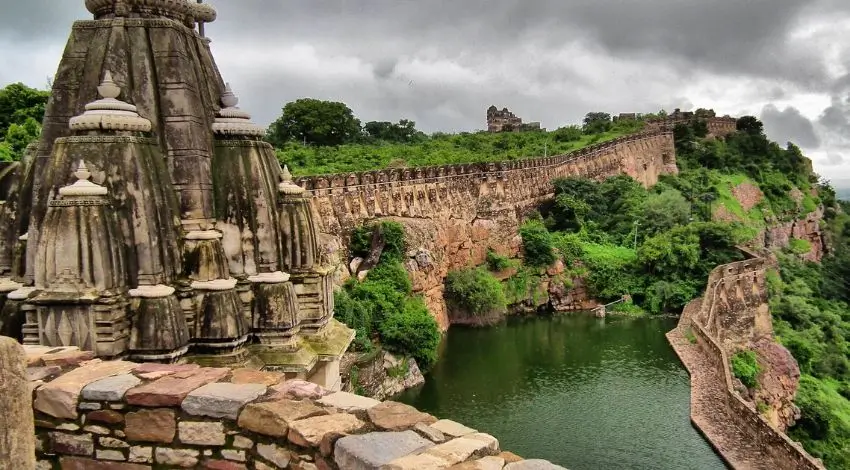
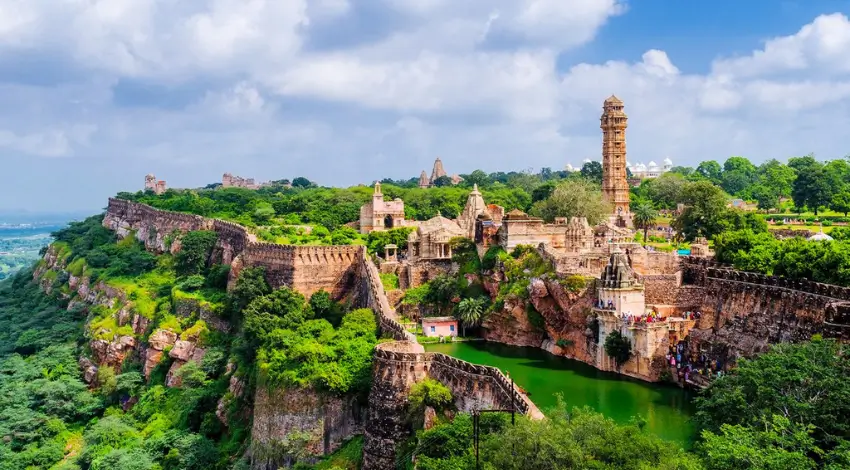
History: Chittorgarh is widely regarded as the biggest fort in India, spread across more than 700 acres atop a hill 590 feet high. Built primarily in the 7th century and expanded by generations of Mewar rulers, it was the capital of the Sisodia Rajputs and witnessed three of the bloodiest sieges in Indian history, including the legendary self-sacrifice of Rani Padmini rather than surrender to invading forces.
Location: Chittorgarh district, southern Rajasthan, about 185 km from Udaipur and 310 km from Jaipur.
Timings: 9:30 AM to 6:30 PM, open all seven days.
Entry Fee: Nominal fee for Indian nationals; higher fee for foreign nationals, with separate charges for still and video cameras.
Top Tourist Attractions: The Vijay Stambh (Victory Tower), Kirti Stambh (Tower of Fame), Rani Padmini's Palace, Meera Temple, and the Fateh Prakash Palace museum. Chittorgarh is part of the UNESCO World Heritage Site "Hill Forts of Rajasthan," a distinction shared with several other entries on this list.
Best Time to Visit: October to March, since the long walk across the complex is far more comfortable in cooler weather.
Insider Tip: Hire a licensed guide at the entrance - Chittorgarh's history is dense with names and battles that aren't well explained on the site's signage, and a guide can walk you straight to the lesser-visited stepwells that most day-trippers skip entirely.
Discover India's Majestic Forts in Luxury
Explore India's most iconic forts and royal citadels with a luxury private tour designed exclusively for you. Travel in a premium chauffeur-driven vehicle, enjoy personalized itineraries, and uncover centuries of history, magnificent architecture, and breathtaking landscapes in complete comfort.
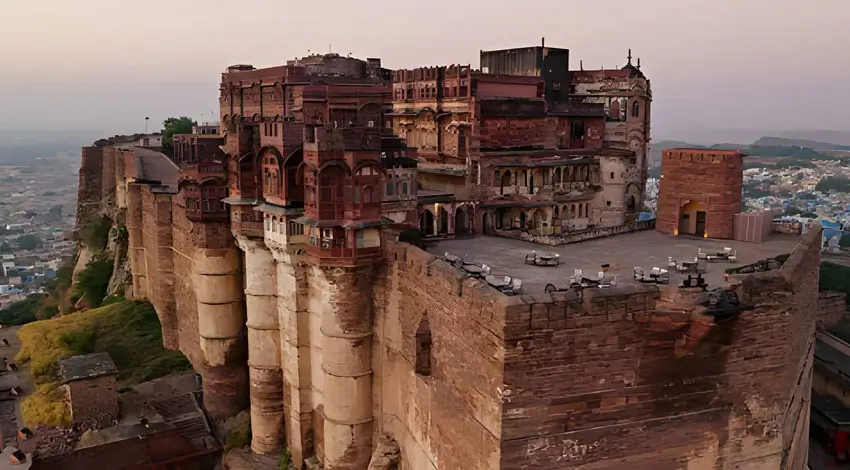
History: Rising 410 feet above Jodhpur's Blue City, Mehrangarh Fort is one of the most photographed forts in India. Commissioned in 1459 by Rao Jodha, founder of Jodhpur, its honey-gold sandstone ramparts appear to grow directly out of the rock. The fort's museum holds one of the finest royal collections in the country - palanquins, weaponry, and Rajput miniature paintings.
Location: Jodhpur, Rajasthan, roughly 335 km from Jaipur.
Timings: 9:00 AM to 5:00 PM daily, with last entry at 4:30 PM.
Entry Fee: Charged separately for the museum, fort complex, and camera use; audio guides are available in multiple languages.
Top Tourist Attractions: Moti Mahal, Sheesh Mahal, Phool Mahal, the zip-lining course over the fort's ramparts, and panoramic views over Jodhpur's blue-painted rooftops from the fort's terraces.
Best Time to Visit: October to February - the exposed stone terraces get intensely hot by late morning in summer.
Insider Tip: Book the audio guide even if you rarely use them elsewhere - Mehrangarh's is genuinely excellent, narrated with first-person accounts from the former royal family that bring the palace rooms to life in a way generic signage can't.
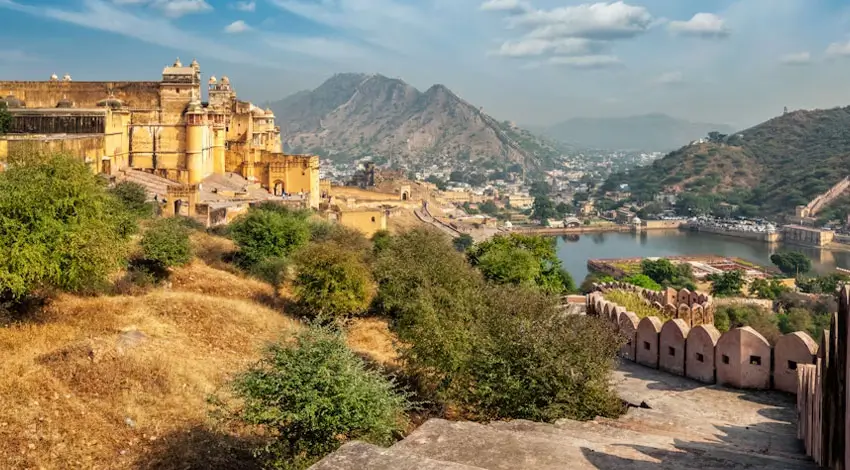
History: Amber Fort (also spelled Amer Fort) is arguably the single most recognisable stop on any Golden Triangle tour of India. Built in 1592 by Raja Man Singh I and expanded by his successors, it blends Rajput and Mughal architecture in a way few Indian monuments manage, with courtyards opening into mirrored halls.
Location: Amer, about 11 km from central Jaipur.
Timings: 8:00 AM to 5:30 PM; the fort also hosts an evening sound-and-light show around 6:30 PM (winter) and 7:00 PM (summer).
Entry Fee: Standard entry ticket, with a separate combined ticket available covering other Jaipur monuments; elephant and jeep rides up to the fort entrance cost extra.
Top Tourist Attractions: Sheesh Mahal (Mirror Palace), Diwan-i-Aam, Diwan-i-Khas, Sukh Niwas, and the view over Maota Lake from the fort ramparts.
Best Time to Visit: October to March; arriving right at opening time avoids both the heat and the tour-bus crowds.
Insider Tip: Skip the elephant ride up to the entrance if you're short on time or concerned about animal welfare - the jeep option is faster and the walk itself, through the Suraj Pol gate, is one of the more dramatic entrances of any fort on this list.
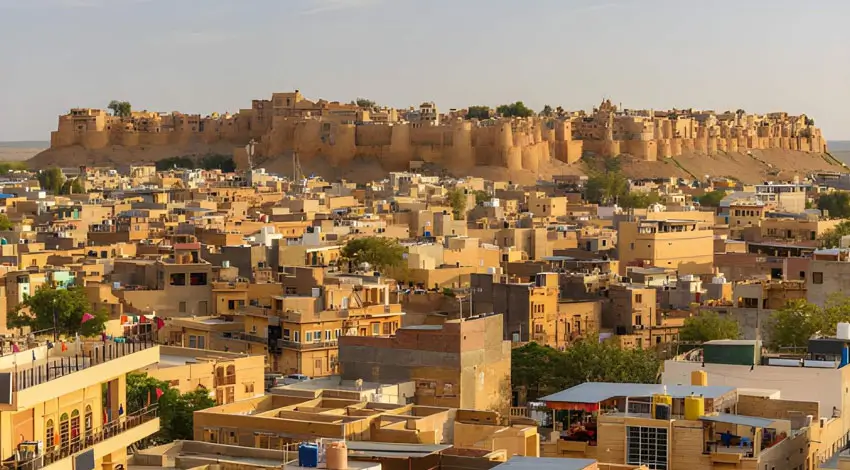
History: Jaisalmer Fort holds a distinction none of the other famous forts in India share - it is a living fort. Nearly a quarter of Jaisalmer's old city population still resides within its golden sandstone walls. Built in 1156 by the Bhati Rajput ruler Rawal Jaisal, the fort glows amber at sunset, which is how Jaisalmer earned its nickname, the Golden City.
Location: Jaisalmer, western Rajasthan, close to the Pakistan border.
Timings: The fort itself, being a living settlement, is accessible through the day; the Jaisalmer Fort Palace Museum inside keeps timings of roughly 9:00 AM to 6:00 PM.
Entry Fee: Charged for the Fort Palace Museum and the Jain temple complex inside the fort; the fort's streets and markets are otherwise freely walkable.
Top Tourist Attractions: The intricately carved Jain temples, Raj Mahal (Fort Palace), Patwon Ki Haveli nearby, and sunset views from the fort ramparts over the Thar Desert.
Best Time to Visit: November to February; summer temperatures here regularly cross 45°C.
Insider Tip: Because the fort is still inhabited, water and sewage infrastructure inside its walls has come under real strain in recent years. Choosing a homestay or restaurant just outside the fort rather than directly within it is a small choice that helps protect a monument that's still someone's actual home.
Experience India's Royal Heritage with a Private Luxury Tour
Step into India's glorious past as you visit magnificent hill forts, royal palaces, ancient citadels, and UNESCO World Heritage sites. Travel in a luxury private vehicle with a professional chauffeur and enjoy a tailor-made itinerary that blends history, culture, and first-class comfort.
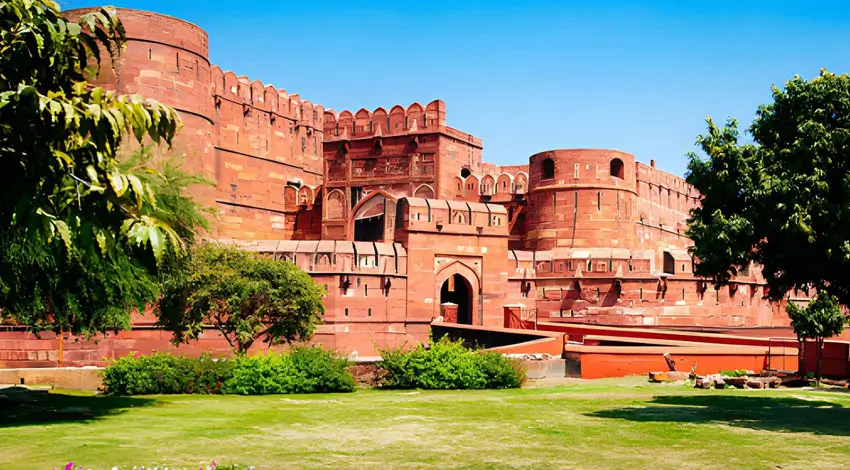
History: Two kilometres from the Taj Mahal stands Agra Fort, the principal Mughal residence before Shah Jahan shifted the capital to Delhi. Built largely by Akbar from 1565 and expanded by his successors, the fort is where Shah Jahan himself spent his final years imprisoned by his son Aurangzeb, gazing at the very monument he had built for his late wife.
Location: Agra, Uttar Pradesh, roughly 230 km from Delhi.
Timings: Sunrise to sunset, approximately 6:00 AM to 6:00 PM, open all days.
Entry Fee: Standard ASI (Archaeological Survey of India) ticket, with a discounted combined ticket available for same-day entry to the Taj Mahal.
Top Tourist Attractions: Jahangir Palace, Khas Mahal, Sheesh Mahal, Diwan-i-Am, and Musamman Burj - the octagonal marble tower from which Shah Jahan reportedly watched the Taj Mahal in his final years.
Best Time to Visit: October to March; most itineraries pair it with a sunrise Taj Mahal visit the same morning.
Insider Tip: Most travellers rush Agra Fort to make time for the Taj Mahal, but the view of the Taj from Musamman Burj is genuinely one of the best in the city - worth slowing down for rather than treating the fort as a quick add-on.
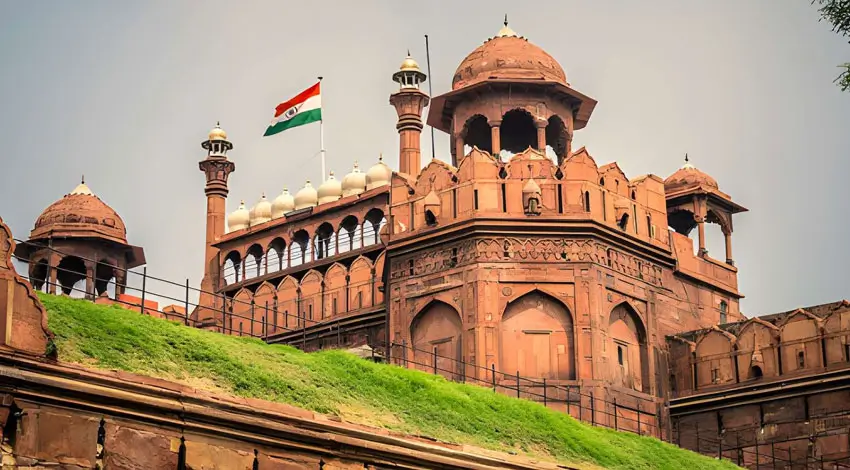
History: The Red Fort - Lal Qila - was the seat of Mughal power for nearly 200 years after Shah Jahan moved his capital to Delhi in 1648. Spread across 254 acres and built entirely from red sandstone, its Lahori Gate is where India's Prime Minister delivers the Independence Day address every year, giving the fort a symbolic weight that extends well beyond its Mughal origins.
Location: Old Delhi.
Timings: 9:30 AM to 4:30 PM; closed on Mondays. An evening sound-and-light show runs most days.
Entry Fee: Standard ASI ticket; audio guide available separately.
Top Tourist Attractions: Diwan-i-Aam, Diwan-i-Khas (once home to the fabled Peacock Throne), Rang Mahal, and the Chhatta Chowk covered bazaar just inside the entrance.
Best Time to Visit: October to March; as the traditional starting point of the Golden Triangle tour, most travellers visit on their arrival day in Delhi.
Insider Tip: Security lines can be long, especially on weekends and around Independence Day. Arriving close to opening time and carrying minimal bags speeds up entry considerably.
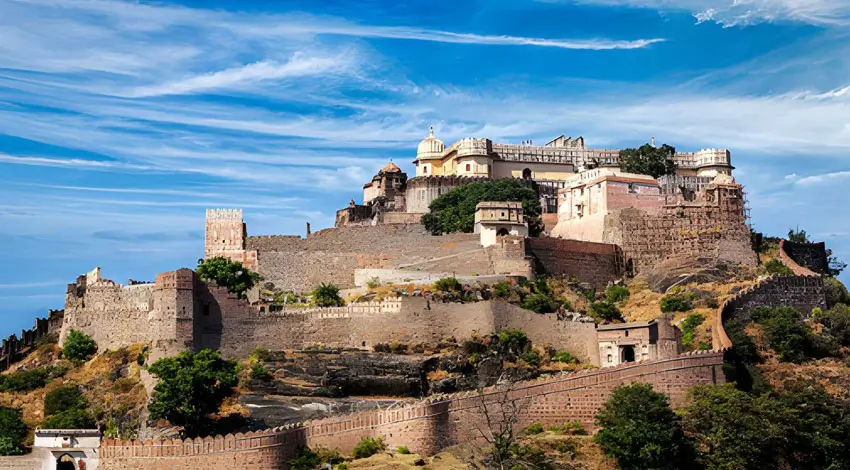
History: Kumbhalgarh's defining feature is its wall - at roughly 36 kilometres, it is the second-longest continuous wall in the world after the Great Wall of China, wide enough for eight horses to ride abreast. Built in the 15th century by Rana Kumbha, the fort sits over 3,600 feet up in the Aravalli hills and fell to enemy forces only once in its history, and even then only due to a shortage of drinking water rather than a breach of its defences. It was also the birthplace of Maharana Pratap, one of Rajasthan's most celebrated warrior kings.
Location: Rajsamand district, roughly 82 km from Udaipur.
Timings: 9:00 AM to 6:00 PM; a sound-and-light show is held in the evening, typically around 6:30 PM.
Entry Fee: Standard entry fee, with an additional charge for the evening show.
Top Tourist Attractions: The Badal Mahal (Cloud Palace), the 36-km fort wall itself, over 360 temples scattered within the complex, and sweeping views of the Aravalli range.
Best Time to Visit: September to March, when the surrounding landscape is at its greenest.
Insider Tip: Kumbhalgarh is often visited as a rushed half-day stop from Udaipur, but the wall alone deserves at least two to three hours on foot. If your schedule allows it, staying overnight nearby lets you catch the fort in early morning light before day-trip crowds arrive.
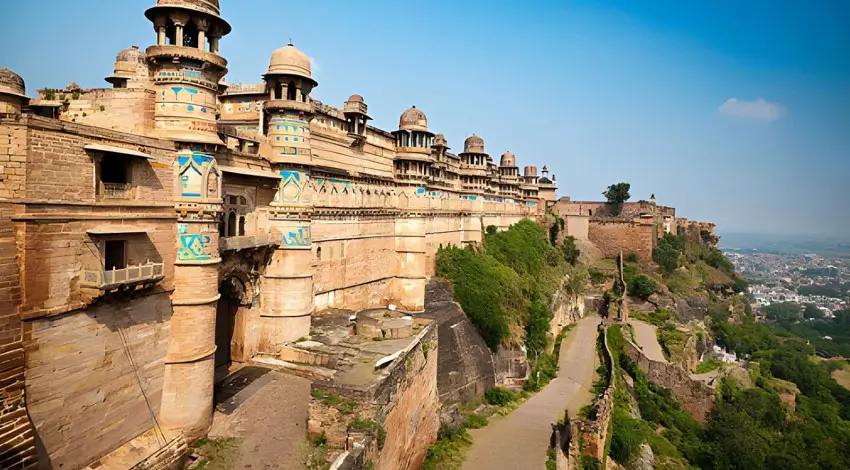
History: Mughal emperor Babur once called Gwalior Fort "the pearl amongst fortresses in India." Perched on an isolated sandstone hill 300 feet above the city, its origins trace to the 8th century, though most of the surviving structure dates to the 15th-century reign of Raja Man Singh Tomar, whose Man Mandir Palace remains the fort's centrepiece, faced with turquoise-tiled friezes of elephants, tigers, and peacocks.
Location: Gwalior, Madhya Pradesh.
Timings: Fort grounds open 8:00 AM to 6:00 PM; Man Mandir Palace and the on-site museum keep timings of roughly 10:00 AM to 5:00 PM.
Entry Fee: Separate tickets for the fort complex and the Man Mandir Palace museum.
Top Tourist Attractions: Man Mandir Palace, Gujari Mahal (archaeological museum), Teli ka Mandir, Sas-Bahu Temples, and the evening sound-and-light show narrating the fort's succession of rulers.
Best Time to Visit: October to March.
Insider Tip: Gwalior Fort sees far fewer international visitors than its Rajasthan counterparts, which makes it one of the more peaceful hilltop forts on this list to explore at your own pace, even during peak season.
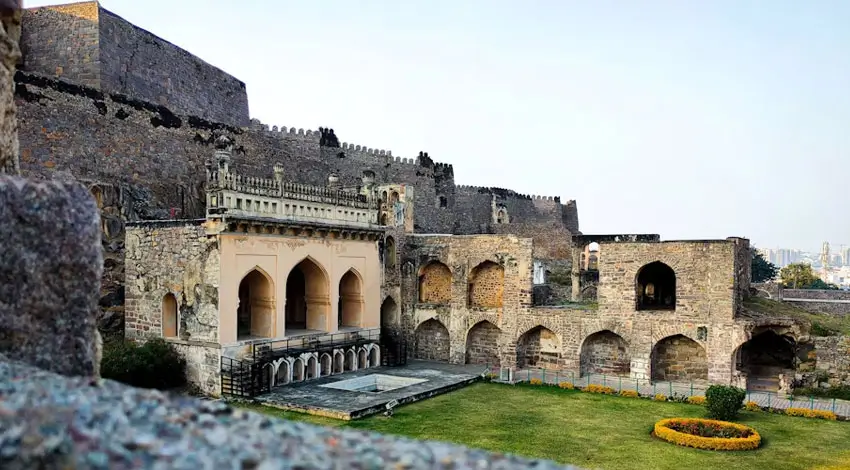
History: Golconda Fort represents the south's contribution to this list, and it earns its place through engineering ambition. Originally a mud fort built by the Kakatiya dynasty in the 12th century, it was rebuilt in granite over the 16th century by the Qutb Shahi rulers, who controlled the world's most productive diamond mines of the era - the source of legendary stones including the Koh-i-Noor.
Location: Hyderabad, Telangana.
Timings: 9:00 AM to 5:30 PM daily; the sound-and-light show runs in the evening, around 6:45 PM in winter and 7:30 PM in summer.
Entry Fee: Standard entry ticket; the sound-and-light show is ticketed separately.
Top Tourist Attractions: The famous acoustic gate, where a single hand clap at the entrance can be heard nearly a kilometre away at the highest pavilion, along with the Rani Mahal, Durbar Hall, and the nearby Qutb Shahi Tombs.
Best Time to Visit: November to February, ahead of Hyderabad's hot summer months.
Insider Tip: Test the acoustic gate yourself -- stand at the base near the entrance and have someone clap at the top pavilion. It's one of the few "party trick" features at any fort on this list that genuinely lives up to the story.
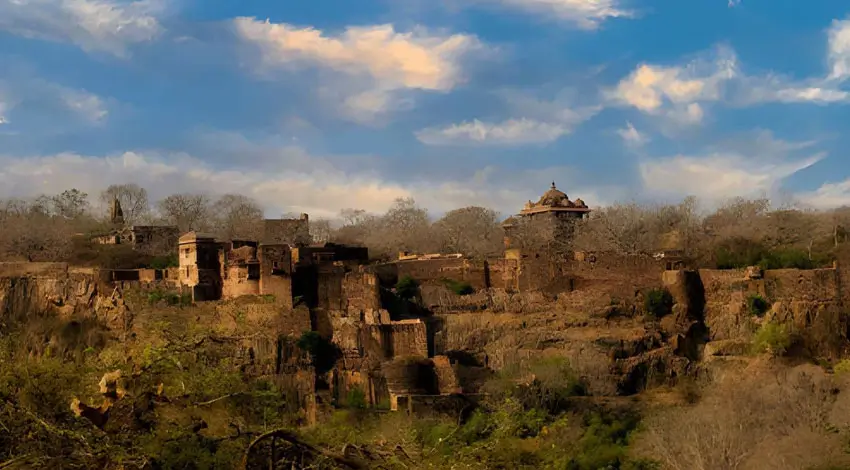
History: Ranthambore Fort earns its place on this list for a reason none of the others share - it sits inside a working tiger reserve. Built in the 10th century and later held by the Chauhan Rajputs, the fort overlooks Ranthambore National Park, and it's not unusual for safari guides to spot tigers resting near its ancient walls.
Location: Sawai Madhopur, Rajasthan.
Timings: The fort is generally accessible from sunrise to sunset, approximately 6:00 AM to 6:00 PM, aligned with the national park's gate timings.
Entry Fee: Included within Ranthambore National Park's safari or entry permit in most cases, since the fort sits inside the reserve.
Top Tourist Attractions: The Ganesh Temple - one of the few temples in India where letters simply addressed to "Ganesh Ji, Ranthambore" arrive and are read aloud by resident priests - along with Jogi Mahal and panoramic views over the park's lakes.
Best Time to Visit: October to June, aligned with the safari season; the park closes during the July–September monsoon.
Insider Tip: Most visitors see the fort only in passing during a tiger safari. If heritage sightseeing matters as much to you as wildlife, ask your guide in advance for a route that allows more time at the fort itself rather than prioritising safari zones exclusively.
Journey Through India's Legendary Forts & Royal Kingdoms
Discover the stories behind India's magnificent forts with an exclusive private journey. Wander through grand gateways, ancient battlefields, impressive palaces, and centuries-old architecture while enjoying luxury transportation, expert travel planning, and personalized experiences crafted around your interests.
Seven of the ten forts on this list -- Amber, Jaisalmer, Chittorgarh, Kumbhalgarh, Ranthambore, and, by extension, Agra Fort on the Golden Triangle route - sit within Rajasthan or its immediate neighbourhood, which is why the state remains the best base for building an itinerary around India's historical forts. A well-paced trip can realistically cover four or five of these forts across ten to twelve days, moving between Delhi, Agra, Jaipur, Jodhpur, Jaisalmer, and Udaipur.
Most of these forts are best experienced early in the morning, both for the softer light and for the relative absence of crowds. Timings can also shift seasonally around festivals or maintenance closures, so it's worth confirming the current schedule with the local tourism office or your tour operator shortly before visiting rather than relying solely on posted hours online.
Several forts, including Mehrangarh, Amber, and Jaisalmer, sit close to heritage hotels and palace properties - many converted from former royal residences - that let travellers extend the experience of Rajput and Mughal architecture well beyond the day's sightseeing. A night in a heritage haveli near Jaisalmer Fort, or a palace stay within view of Mehrangarh, tends to leave a stronger impression than the fort visit alone.
For travellers with more time, build in a rest day between fort-heavy cities. Chittorgarh and Kumbhalgarh in particular each deserve several unhurried hours on foot, and combining both with a long transfer on the same day tends to shortchange one or the other.
It's also worth thinking about pacing across the whole trip rather than just each individual fort. Ten forts in ten days sounds achievable on paper, but the hilltop climbs at Mehrangarh, Chittorgarh, Kumbhalgarh, and Jaisalmer add up physically, especially in warmer months. Most seasoned India travellers find that alternating a heavy fort day with a lighter city day - a market visit, a cooking class, or simply a slower morning - keeps the trip enjoyable rather than exhausting by the halfway point.
Chittorgarh Fort in Rajasthan is the biggest fort in India by area, spanning more than 700 acres.
Six forts - Chittorgarh, Kumbhalgarh, Amber, Jaisalmer, Ranthambore, and Gagron - are collectively inscribed as the "Hill Forts of Rajasthan" UNESCO World Heritage Site. Agra Fort and Red Fort are separately listed UNESCO sites.
Most forts open between 8:00 AM and 9:30 AM and close between 5:00 PM and 6:30 PM, though a few, like Agra Fort and Jaisalmer Fort, keep sunrise-to-sunset hours. Several forts, including Red Fort, are closed on specific weekdays, so it's worth checking before planning your visit.
October through March is ideal for most forts in India, particularly those in Rajasthan and Delhi, where summer temperatures can exceed 45°C. Forts in the Aravalli hills, such as Kumbhalgarh, are pleasant slightly earlier, from September.
Yes. A private tour covering Delhi, Agra, and Rajasthan can realistically include five to six of the forts on this list within a ten to twelve day itinerary.
It varies. Agra Fort and Red Fort have relatively level pathways, while hilltop forts such as Mehrangarh, Chittorgarh, Kumbhalgarh, and Jaisalmer involve considerable walking on uneven stone. Mehrangarh and Amber Fort both offer vehicle or elephant transfers partway up for travellers who need them.