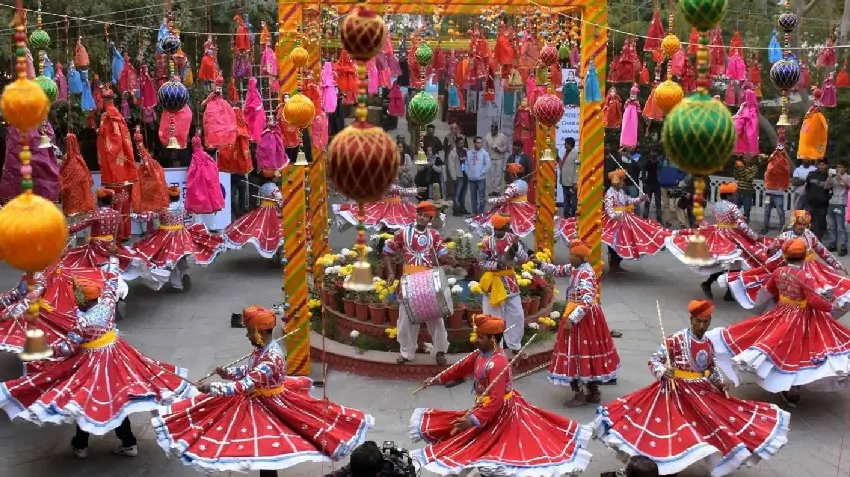
Every January, the Pink City turns into something close to a moving conversation. Writers, historians, poets, scientists, politicians and readers from more than seventy countries arrive in Jaipur, and for five days the city hums with talks, debates, readings and music. The Jaipur Literature Festival has grown from a small gathering of a few writers in 2006 into the largest free literary festival on earth, drawing hundreds of thousands of attendees each year.
For a traveller who values both intellect and comfort, this festival is rare. It places Nobel laureates, Booker winners and the sharpest contemporary minds within arm's reach, with no barrier between the celebrated author and the curious reader. And it does so in Rajasthan, a region that has perfected the art of royal hospitality over centuries. The result is a journey that feeds the mind in the morning and rewards the senses in the evening.
This guide is written for travellers who want the festival done properly. It covers the Jaipur Literature Festival 2027 dates, the venue, the programme, the speakers, the registration categories, and most importantly, where to stay and how to travel so that five intense days of ideas never feel like five tiring ones. A festival of this calibre deserves a setting and a plan of equal quality, and that is exactly what this guide, and a well-arranged private tour, can give you.
The Jaipur Literature Festival 2027 marks the twentieth edition of the festival, a genuine milestone. The dates have been officially announced: the festival runs from 14 January to 18 January 2027, a five-day Thursday-to-Monday window, at Hotel Clarks Amer in Jaipur.
This mid-January timing is consistent with the festival's long-held pattern, and it is no accident. January is the heart of Rajasthan's cool, dry winter. Daytime temperatures are mild and pleasant, the skies are clear, and the evenings carry a crispness that suits both the festival's open-air format and the wider pleasure of travelling through the state. The twentieth edition is expected to be the largest and most international yet, with two decades of reputation behind it.
A point worth making early: five days sounds generous, but the festival fills every hour of them. Sessions begin around nine in the morning and continue into the early evening, with several talks running in parallel across multiple stages. You will not see everything. The travellers who enjoy the festival most are the ones who accept this at the outset and plan accordingly.
Discover Jaipur's Most Inspiring Cultural Experience
Combine the excitement of the Jaipur Literature Festival with private heritage tours, luxury hospitality, and authentic royal experiences.
Plenty of cities host literary events. Very few host anything like this. Understanding what sets the Jaipur Literature Festival apart helps you decide why it deserves a place at the centre of a Rajasthan journey.
A Truly Democratic Festival
The festival's defining principle is open access. General registration is effectively free, and there is no velvet rope separating the famous speaker from the ordinary attendee. A Nobel laureate and a first-time reader may end up in the same conversation over coffee on the lawn. This openness is the festival's great gift, and it is the reason the event feels alive rather than ceremonial.
The Sheer Range of Ideas
The programme is not limited to fiction and poetry. Over five days the festival moves across history, science, politics, economics, the environment, religion, mythology, film, theatre, journalism, technology and translation. Recent editions have run sessions on artificial intelligence, digital storytelling, graphic novels, manga, mathematics and the reinterpretation of historical narratives. Whatever your intellectual curiosity, the festival will have a session that meets it, and several that will surprise you.
A Multilingual Heart
The festival celebrates literature in English alongside Hindi and a wide range of Indian regional languages, with translation as a recurring theme. Books and conversations span more than twenty languages. For an international visitor this is a window into the depth of India's literary culture that no bookshop or museum could offer.
The Setting
The festival takes place in Jaipur, a UNESCO World Heritage city of pink-washed buildings, palaces, forts and bazaars. The cultural backdrop is part of the experience. You step out of a session on world history and into a city that has been making history for three hundred years. Few festivals anywhere can claim a setting of this richness.
Music, Performance and the Festival Bazaar
The festival is not only talks. Early mornings and late evenings bring music concerts and dance performances drawing on Rajasthan's deep traditions. A festival bazaar offers hand-tooled leather goods, traditional Rajasthani textiles such as Bandhani and block print, artisanal jewellery and literary merchandise. There is also Jaipur BookMark, the festival's professional publishing platform, for those with an industry interest.
The Jaipur Literature Festival began in 2006 as a small literary segment within a larger heritage festival. It was curated by the Indian writer Namita Gokhale and the Scottish historian William Dalrymple, and in its first years it gathered only a handful of writers. The festival found its early home at Diggi Palace, a heritage property in the centre of Jaipur, where sessions filled the Hall of Audience and the surrounding gardens.
Word spread quickly. Within a few years the festival had become a fixture on the global literary calendar, and attendance grew into the hundreds of thousands. The intimate courtyards of Diggi Palace could no longer hold the crowds, and from 2025 the festival moved to the larger Hotel Clarks Amer. Twenty editions on, it is organised by Teamwork Arts and the Jaipur Virasat Foundation, and its name carries weight from London to Sydney through the JLF International series of satellite festivals.
For most travellers, the speakers are the reason to attend. The Jaipur Literature Festival has, across its editions, hosted an extraordinary roll call of literary and intellectual figures.
Past editions have welcomed Margaret Atwood, the Booker Prize-winning author of The Handmaid's Tale; Salman Rushdie, one of the most celebrated novelists of the modern era; Stephen Fry, the writer, actor and broadcaster; and Yuval Noah Harari, the historian behind Sapiens. Nobel laureates, including the activist Malala Yousafzai, have shared the festival's stages. Pulitzer Prize journalists, Booker shortlisted novelists, leading historians, scientists and economists appear year after year.
What makes the speaker list special is the balance. The festival deliberately places globally famous names alongside emerging voices, regional-language writers and first-time authors. A traveller's day might move from a session with an internationally bestselling novelist to a poetry reading by a writer they had never heard of and will never forget. The full programme and speaker list for the Jaipur Literature Festival 2027 is published on the official festival website in the weeks before the event, and reviewing it in advance is the single most useful piece of preparation you can do.
The festival is held at Hotel Clarks Amer, on Jawaharlal Nehru Marg in the southern part of Jaipur. The venue was chosen to accommodate the festival's vast scale, and it suits the purpose well.
The grounds offer wide lawns, several large tented auditoriums and indoor halls. This layout matters more than it might sound. With multiple sessions running at once, the ability to move quickly and comfortably between stages is what allows an attendee to build a personal programme across the day. Between sessions, the grounds hold food courts, bookshops, the festival bazaar and art installations. The open design invites attendees to settle on the grass, browse new releases or simply watch the festival's remarkable cross-section of humanity pass by.
The venue sits roughly twenty to thirty minutes by car from most of Jaipur's premium hotels, depending on traffic. During festival week the surrounding roads are busy, which is one of several reasons a private car and driver, arranged in advance, transforms the experience.
The Jaipur Literature Festival remains free to attend in its general form, which is remarkable given its global stature. General registration carries only a small nominal fee, and there are student categories at an even lower rate. Registration is completed online through the official festival website, and it opens in the weeks before the event.
For travellers who want a more comfortable experience, the festival has historically offered premium delegate passes. These typically include access to a dedicated delegate lounge, priority seating at popular sessions, and delegate lunches served in a calmer setting away from the main food courts. For a luxury traveller, this category is worth the modest cost. Popular sessions fill quickly, and the ability to be seated without queuing changes the texture of the entire day. Evening music concerts are usually ticketed separately and tend to sell out, so early booking is wise.
A practical recommendation: complete your registration well before you travel rather than on arrival, and confirm the exact categories and prices for the 2027 edition on the official website, as these are announced closer to the event.
Plan Your Exclusive Jaipur Literature Festival Journey
From premium stays and private sightseeing to personalized festival planning, we create a stress-free luxury experience tailored just for you.
This is where your festival experience is genuinely shaped, and Jaipur is one of India's finest cities for luxury stays. The city offers a remarkable range of palace hotels, heritage properties and countryside retreats. Here are the categories worth considering.
Palace Hotels
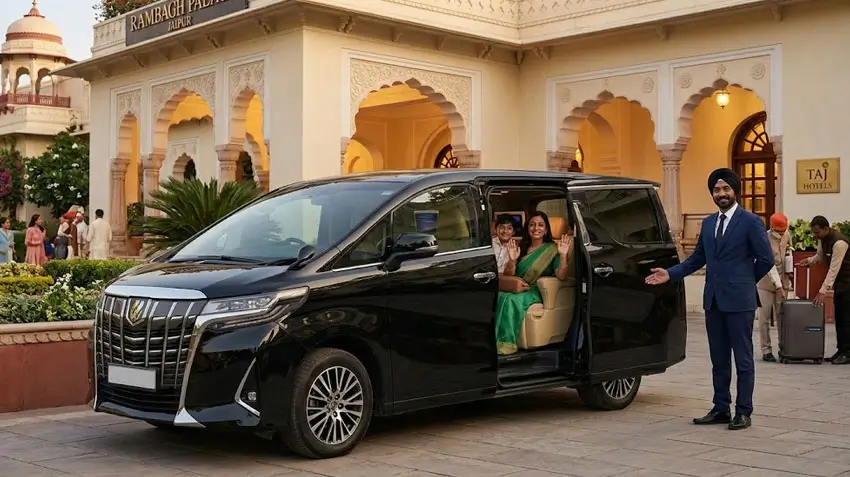
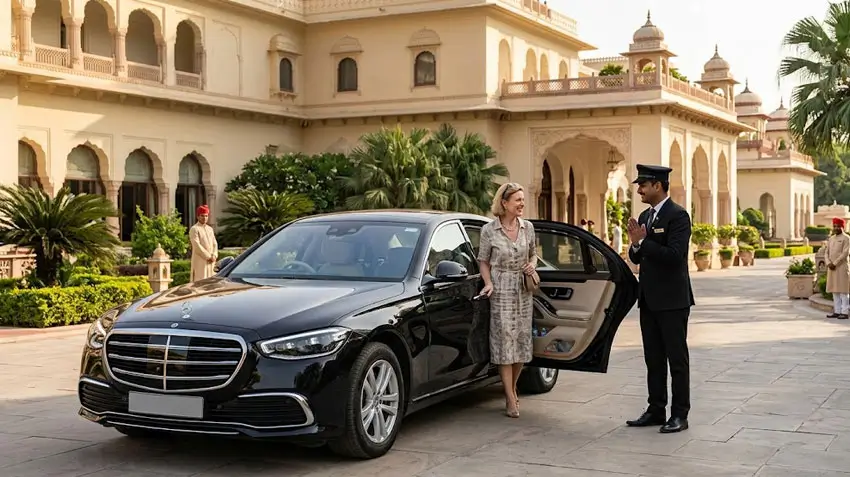
Jaipur's palace hotels are destinations in their own right. The Rambagh Palace, once the residence of the Maharaja of Jaipur, offers the full experience of royal Rajasthan: marble corridors, manicured gardens, peacocks on the lawns and a standard of service refined across generations. The SUJÁN Rajmahal Palace and the Raj Palace sit in a comparable tier. Choosing one of these properties means each festival day is bracketed by genuine grandeur, and the contrast between a morning of sharp debate and an evening in a former royal residence is one of the quiet pleasures of attending JLF in style.
These hotels are in very high demand during festival week. Rooms should be reserved several months ahead, and the finest suites go earlier still.
Heritage Boutique Properties
For travellers who prefer something more intimate, Jaipur has an excellent selection of smaller heritage hotels and restored havelis. These properties offer character, attentive personal service and a quieter atmosphere, often built around courtyards with rooftop dining. They suit travellers who want refinement and authenticity without the scale of a grand palace hotel.
Countryside Retreats
A growing number of festival visitors choose to stay just outside the city. Countryside properties within a thirty to forty minute drive of the venue offer fresh air, quiet nights and a real sense of retreat after the intensity of a festival day. Several of these retreats arrange complimentary transfers to and from the venue, which removes the single biggest logistical concern of the week. After a day of crowds and conversation, returning to open country and clean air has obvious appeal.
Choosing the Right Base
Your choice comes down to how you want your evenings to feel. A city palace hotel keeps you close to Jaipur's restaurants, bazaars and monuments. A countryside retreat trades that proximity for calm. Both are excellent. What matters most is booking early, because festival week is one of the busiest periods in the entire Jaipur calendar.
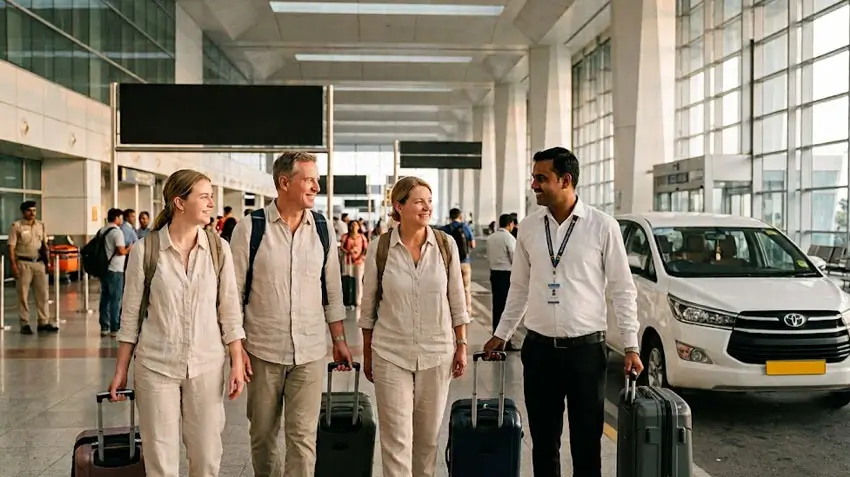
Jaipur International Airport receives domestic flights from across India and a number of international routes. Delhi is the most common gateway, connected to Jaipur by a comfortable train of around four to five hours or a road journey of similar length on a good highway. Many travellers arrive into Delhi, spend a day or two there, and continue to Jaipur as the opening leg of a Rajasthan journey.
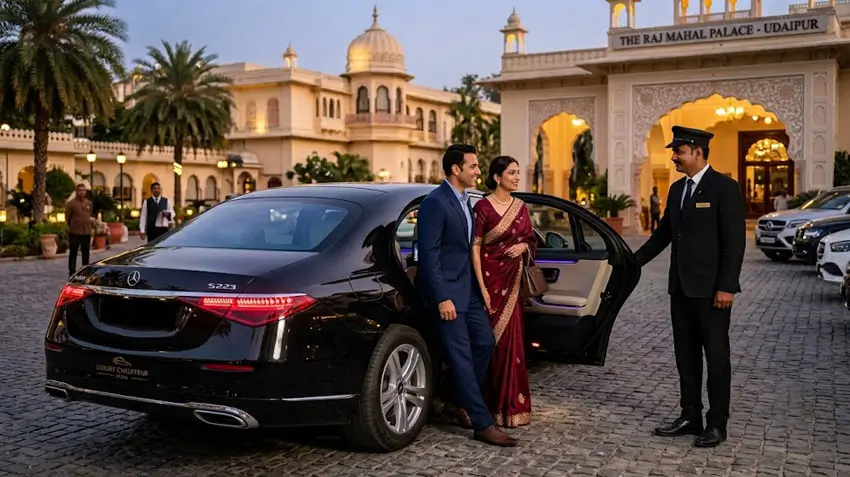
Within the city, the most comfortable option for a festival visitor is a private car with a dedicated driver for the full duration of the stay. This provides flexibility around the festival's unpredictable timings, removes any concern about parking near the busy venue, and allows you to slip away for a meal or a monument visit without negotiating transport each time. A reputable private tour operator arranges this as a matter of course.
The Jaipur Literature Festival is free and open, but the experience around it is yours to design, and this is where a well-planned private tour earns its place. The festival itself is gloriously unstructured. The logistics surrounding it should not be.
A private tour built around JLF 2027 handles the elements that otherwise consume your attention. It secures the right hotel before the city sells out. It provides a car and driver who understand the festival's rhythm and the city's festival-week traffic. It can arrange a knowledgeable local guide for the days you step away from the venue to see Jaipur's forts and palaces. It can build the festival into a longer Rajasthan itinerary so that the literary days sit at the heart of a richer journey. And it removes the friction, the queuing, the route-finding and the uncertainty, so that your five days are spent on ideas and conversation rather than arrangements.
For travellers coming from abroad, this matters even more. A private tour means you arrive into a journey that is already organised, with someone accountable for every transfer, booking and detail. You attend the world's greatest literary festival, and someone else carries the planning.
This is precisely the kind of journey we design. A private, tailored tour with the Jaipur Literature Festival 2027 as its intellectual centrepiece, surrounded by the palaces, forts and landscapes of royal Rajasthan, arranged entirely around how you wish to travel.
A few habits separate a smooth festival from a hectic one. Read the programme the night before and mark two or three sessions you genuinely want, rather than attempting a packed schedule. Arrive at the venue with time to spare for popular talks, which fill early. Carry a light layer, as January mornings and evenings in Jaipur are cool even when the afternoons are mild. Stay hydrated, eat well, and treat the lawn time between sessions as part of the experience rather than a gap in it.
Above all, leave room for the unplanned. The finest moments at the festival are rarely the ones on your schedule. They are the chance exchange with an author over coffee, the session you wandered into on a whim, the regional-language poet you had never heard of, the bookshop find that follows you home.
January is one of the finest months to travel anywhere in Rajasthan, and the Jaipur Literature Festival pairs naturally with a longer journey. Many travellers add a few days in Jaipur itself for the Amber Fort, the City Palace and the Hawa Mahal, then continue to Jodhpur, Udaipur, Pushkar or the quieter towns of the region.
A private, well-planned itinerary lets the festival sit at the centre of a two-week journey through royal Rajasthan, with the literary days as an intellectual core between palaces, forts, lakes and desert landscapes. This is the approach we recommend for travellers who want the festival to be memorable rather than merely attended. Treat it as one chapter of a richer story, let a private tour carry the logistics, and keep your attention where it belongs: on the ideas, the conversations and the comfort of a journey arranged with genuine care.
The twentieth edition of the festival runs from 14 January to 18 January 2027, a five-day Thursday-to-Monday window. The dates have been officially announced by the festival organisers.
The festival takes place at Hotel Clarks Amer on Jawaharlal Nehru Marg in Jaipur, Rajasthan. It moved to this venue from its original home at Diggi Palace to accommodate growing attendance.
General registration is free apart from a small nominal fee. Premium delegate passes and evening music concerts carry additional charges. Registration is completed online before the event.
Registration is done through the official Jaipur Literature Festival website, which opens in the weeks before the event. It is best to register before you travel rather than on arrival.
A delegate pass typically includes a dedicated lounge, priority seating and delegate lunches. For travellers who value comfort and want to avoid queues for popular sessions, it is worth the modest additional cost.
Past editions have hosted figures such as Margaret Atwood, Salman Rushdie, Stephen Fry, Yuval Noah Harari and Malala Yousafzai, alongside emerging and regional-language writers. The full 2027 speaker list is published on the official website before the event.
Jaipur's palace hotels, such as Rambagh Palace and SUJÁN Rajmahal Palace, offer the grandest experience. Heritage boutique properties and countryside retreats are excellent alternatives depending on your preference.
Most premium city hotels are a twenty to thirty minute drive from Hotel Clarks Amer. Countryside retreats are typically thirty to forty minutes away and often provide complimentary transfers.
A city hotel keeps you close to restaurants, bazaars and monuments. A countryside retreat offers quiet and clean air after a busy festival day. Both work well, so choose based on how you want your evenings to feel.
Festival week is one of the busiest periods in Jaipur. Book luxury hotels several months in advance, and even earlier for the best suites.
Jaipur has an international airport with domestic and some international flights. Delhi is the most common gateway, connected by a four to five hour train or road journey.
A private car with a dedicated driver for the duration of your stay is the most comfortable option, given the busy festival-week roads and the festival's unpredictable session timings.
Comfortable clothing with a light layer is ideal. January mornings and evenings in Jaipur are cool, while afternoons are mild and pleasant.
Yes, the festival is open to all ages and usually includes a dedicated children's zone, along with student registration categories for school and university groups.
The festival runs for five days. Most travellers attend three to five days and pair the visit with additional time in Jaipur and a wider Rajasthan itinerary.
Yes. A private tour can handle hotel bookings, transfers, a car and driver, local guides and a wider Rajasthan itinerary, placing the festival at the centre of a tailored journey so you can focus entirely on the experience.