Among India’s countless artistic expressions, Indian Classical Dance holds a place of divine reverence. It is not merely performance or entertainment — it is rhythm woven into spirituality, storytelling expressed through grace, and devotion manifested through movement. Rooted in sacred texts and nurtured in temples and royal courts, these dances form the living pulse of India’s cultural identity.
The ancient sages of India described dance as “Natya,” a complete art form that blends music, poetry, drama, and movement. The Natya Shastra, written by Bharat Muni thousands of years ago, lays down the grammar of this art — from facial expressions and hand gestures to rhythm patterns and emotional moods. Today, whether it is the geometric precision of Bharatanatyam, the lyrical elegance of Kathak, or the spiritual ecstasy of Odissi, every style mirrors a different facet of India’s heart.
Every classical dance in India finds its roots in devotion. Long before theatres and auditoriums, dancers performed in temples as offerings to deities. Movements represented hymns, stories, and prayers — transforming the stage into a sacred space.
The earliest forms of dance were dedicated to gods like Shiva as Nataraja, the cosmic dancer, and Krishna, whose playful grace inspired generations. Over centuries, regional styles evolved — influenced by language, architecture, and local traditions — yet bound by the same spiritual thread.
When a dancer steps onto the stage, the performance begins not with applause but with a silent invocation to the divine, symbolizing humility before art itself. This ritual defines why Indian classical dance continues to be worshipped, not just performed.
Each region of India developed its own vocabulary of rhythm, gesture, and storytelling — forming a mosaic of eight recognized classical dances: Bharatanatyam, Kathak, Kathakali, Mohiniyattam, Kuchipudi, Odissi, Manipuri, and Sattriya.
Bharatanatyam – The Geometry of Devotion
Originating in Tamil Nadu, Bharatanatyam is often called the most ancient classical dance of India. Known for its crisp footwork, symmetrical lines, and expressive storytelling, it embodies discipline and grace. Traditionally performed by temple dancers known as Devadasis, it narrates stories of gods and goddesses through codified gestures called mudras and facial expressions known as abhinaya.
Every Bharatanatyam performance unfolds through precise sequences — from Alarippu (pure rhythm) to Varnam (narrative storytelling) — creating a visual poetry that fuses music, sculpture, and devotion.
Kathak – The Dance of Storytellers
From the courtyards of North India emerged Kathak, where every spin and glance tells a tale. Derived from the word Katha (story), Kathak evolved under both Hindu temples and Mughal courts, blending rhythm with grace. Its hallmark lies in fast footwork (tatkar), intricate spins (chakkars), and delicate expressions that convey divine love, especially the eternal bond between Krishna and Radha.
Performed to live tabla and sitar, the dance transitions seamlessly between spiritual and royal elegance, making Kathak the bridge between classical devotion and courtly sophistication.
Odissi – The Dance of Sculpture and Soul
From the temples of Odisha comes Odissi, known for its lyrical fluidity and sculpturesque poses inspired by temple carvings. Each movement seems to echo the waves of the Bay of Bengal — soft, circular, and continuous. Dancers often portray the verses of poet Jayadeva’s Gita Govinda, bringing divine romance alive through gentle curves and expressive eyes.
Its unique posture, tribhangi (three bends of the body), gives Odissi its visual distinctiveness — a rhythm that feels both earthly and divine.
Kathakali – The Theatre of Gods
From Kerala’s lush landscapes rises Kathakali, India’s most dramatic dance form. Dancers wear elaborate headgear, vivid makeup, and painted faces to depict mythological epics like the Mahabharata and Ramayana.
Unlike other classical styles, Kathakali combines dance, drama, and martial arts. The expressive eyes, symbolic gestures, and thunderous drums immerse the audience into a world of divine warfare and cosmic storytelling.
Kuchipudi – The Dance of Storytellers from Andhra
Hailing from Andhra Pradesh, Kuchipudi balances devotion with drama. Traditionally performed by male troupes, it later evolved into a refined solo form. It stands out for its graceful footwork, quicksilver expressions, and playful dialogues. Dancers often perform while balancing a pot on their head or dancing upon a brass plate — a testimony to their skill and control.
Mohiniyattam – The Feminine Grace of Kerala
Known as the “Dance of the Enchantress,” Mohiniyattam celebrates soft, rounded movements and feminine grace. The name derives from Mohini, the female avatar of Lord Vishnu. Performed solo, it expresses emotions through subtle glances and flowing white costumes with golden borders — reflecting Kerala’s serene beauty and temple traditions.
Manipuri – The Dance of Serenity
From the hills of Manipur comes Manipuri, characterized by smooth, floating movements and spiritual devotion to Lord Krishna. Dancers wear circular skirts and soft expressions; their movements are continuous and gentle, symbolizing the harmony between body and soul.
Sattriya – The Monastic Dance of Assam
Founded by the saint Srimanta Sankardev in the monasteries (Satras) of Assam, Sattriya was initially performed by monks to spread messages of devotion. It combines rhythmic storytelling, graceful hand gestures, and expressive narration drawn from the Bhagavata Purana.
Unlike Western dance forms that emphasize technique, Indian classical dance focuses on emotional depth. Each gesture and expression carries meaning. The dancer must internalize bhava (emotion) to evoke rasa (mood) in the audience.
The ancient theory of Navarasas — nine emotions — forms the foundation of expression: love, joy, compassion, anger, courage, fear, disgust, wonder, and peace. A skilled dancer transitions effortlessly between these moods, communicating stories without words.
This ability to express the inner landscape of human emotion through the body’s language is what makes Indian dance timeless and universal.
Dance and music in India are inseparable. The beats of tabla, mridangam, and pakhawaj guide every movement, while melodies of veena, flute, or sarangi shape emotional flow.
Each dance form follows specific rhythmic cycles (taal) and melodic frameworks (raga). A dancer’s synchronization with live musicians reflects years of discipline and communion with rhythm. When the body aligns perfectly with music, the performance transcends physicality — becoming meditation in motion.
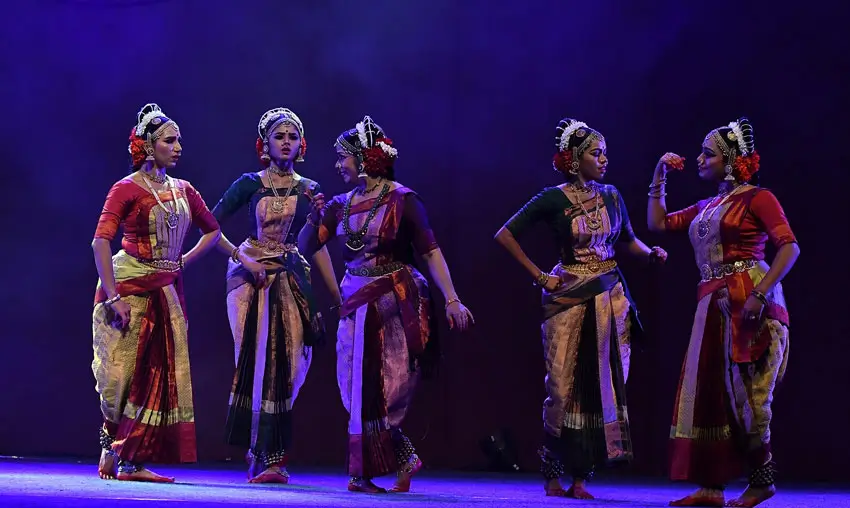
The elegance of Indian classical dance costumes lies in their symbolism. Silks and gold threads represent divinity, while anklets (ghungroo) mark rhythm and discipline. Every dancer wears hundreds of tiny bells that announce the beat of devotion.
Makeup and jewelry amplify expression — eyes outlined in kohl to accentuate abhinaya, ornaments representing cosmic energy, and flowers symbolizing purity. Each element carries meaning, turning the performer into a living embodiment of art and faith.
Modern India continues to celebrate and preserve its dance heritage through academies, festivals, and government initiatives. Institutes like Kalakshetra (Chennai) and Kathak Kendra (Delhi) uphold rigorous training traditions.
Abroad, countless schools in the USA, UK, and Europe teach Bharatanatyam, Odissi, and Kathak, connecting second-generation Indians to their roots. Global stages such as the Kennedy Center and Lincoln Center regularly host performances that celebrate these living traditions.
Through these efforts, Indian classical dance continues to inspire not just Indians but art lovers worldwide — transcending boundaries of language, religion, and geography.
Even in an age of digital entertainment, Indian classical dance remains deeply relevant. It reminds modern audiences of balance, patience, and devotion. Every form teaches discipline and grace — qualities that ground the performer amid today’s rush.
More importantly, it keeps India’s intangible heritage alive — ensuring that every generation continues to feel the rhythm of its ancestors. When a dancer performs, time slows down, the stage becomes sacred, and the audience experiences the soul of India.
It is this synthesis of art, devotion, and identity that makes Indian classical dance not just performance — but prayer in motion.
Bharatanatyam is considered the oldest, with origins tracing back over 2000 years in Tamil Nadu’s temples.
There are eight officially recognized forms: Bharatanatyam, Kathak, Kathakali, Mohiniyattam, Odissi, Kuchipudi, Manipuri, and Sattriya.
It is both — rooted in spirituality but also celebrated for its artistic discipline and storytelling.
Yes, many prominent male dancers perform Bharatanatyam, Kathak, and Kathakali professionally across India and abroad.
Mudras are symbolic hand gestures used to convey meaning, emotions, and divine symbols in storytelling.
Cities like Chennai, Delhi, Jaipur, and Kochi host regular performances at cultural centers and festivals.
They require years of training and devotion, but beginners can start under trained gurus or short cultural workshops.
The ghungroos emphasize rhythm and help synchronize movements with live percussion instruments.
Classical forms are codified, spiritual, and traditional, while Bollywood blends modern, folk, and western influences.
Its depth of expression, precision of movement, and spiritual philosophy make it one of the world’s most refined performing arts.