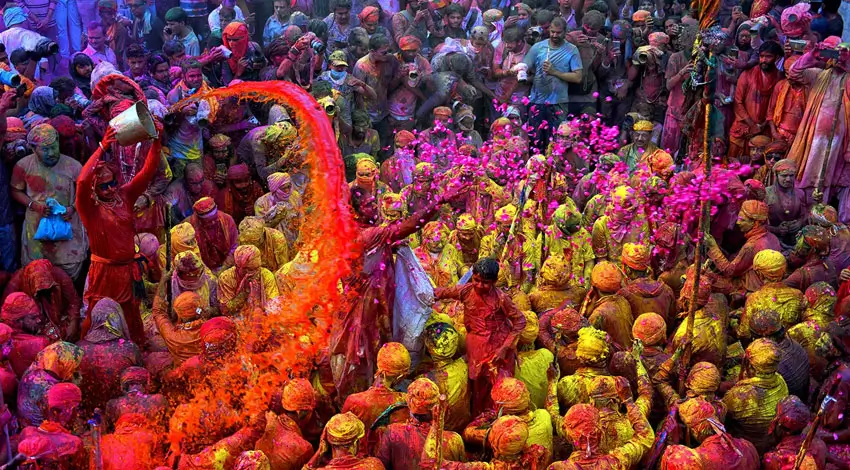
Few countries in the world celebrate life the way India does. Every month brings new rituals, colors, and collective joy. From the sacred chants of temple bells to streets filled with music and lights, India’s festivals form the rhythm of its soul. They unite people across faiths and regions, reminding every traveler that this land’s greatest treasure is its ability to celebrate the divine in everyday life.
For anyone planning a cultural journey through India, timing your visit around the festival calendar can turn a regular tour into an unforgettable experience. The energy of Diwali, the spirit of Holi, and the devotion of Durga Puja or Pushkar Fair add dimensions to travel that go beyond sightseeing.
This guide covers major festivals and cultural celebrations taking place between August 2026 and July 2027. It includes indicative dates, the best destinations, cultural highlights, expected crowds and practical travel advice.
Date note: Many Hindu, Buddhist, Jain and Sikh festivals follow lunar or lunisolar calendars. Islamic festival dates depend on moon sighting. Dates and local programmes should therefore be reconfirmed before booking flights, hotels or festival experiences.
|
Festival |
Date |
Recommended Destination |
| Independence Day | 15 August | Delhi |
| Onam (Thiruvonam) | 26 August | Kerala |
| Raksha Bandhan | 28 August | Nationwide |
| Janmashtami | 4 September | Mathura, Vrindavan, Dwarka |
| Ganesh Chaturthi | 14 September | Mumbai, Pune |
| Navratri | October (Regional schedule varies) | Ahmedabad, Vadodara |
| Durga Puja | October (Regional schedule varies) | Kolkata |
| Dussehra | 20 October | Mysuru, Kullu, Varanasi |
| Diwali | 8 November | Jaipur, Varanasi, Udaipur |
| Pushkar Camel Fair | 17–24 November | Pushkar |
| Hornbill Festival | Usually 1–10 December | Kisama, Nagaland |
| Christmas | 25 December | Goa, Kerala |
| Makar Sankranti / Pongal | 15 January | Ahmedabad, Jaipur, Tamil Nadu |
| Republic Day | 26 January | New Delhi |
| Basant Panchami | 11 February | Kolkata, Punjab, Rajasthan |
| Jaisalmer Desert Festival | 18–20 February | Jaisalmer |
| Maha Shivaratri | 6 March | Varanasi, Ujjain |
| Eid al-Fitr | Around 10 March* | Delhi, Hyderabad, Lucknow |
| Holi | 22 March | Mathura, Vrindavan, Jaipur |
| Good Friday | 26 March | Goa, Kerala |
| Easter | 28 March | Goa, Kerala, Mumbai |
| Ugadi / Gudi Padwa | 7 April | Karnataka, Hyderabad, Maharashtra |
| Baisakhi | Around 14 April | Amritsar, Punjab |
| Ram Navami | 15 April | Ayodhya, Varanasi |
| Buddha Purnima | May (Date to be reconfirmed) | Bodh Gaya, Sarnath |
| Eid al-Adha | Around 17 May* | Delhi, Hyderabad, Lucknow |
| Hemis Festival | June/July (Official dates awaited) | Ladakh |
| International Yoga Day | 21 June | Rishikesh |
| Rath Yatra | 5 July | Puri, Odisha |
| Mount Abu Summer Festival | Official programme to be confirmed | Mount Abu |
*Islamic festival dates may shift according to moon sighting.
The 2026 and 2027 holiday dates should be periodically checked against the National Portal of India and relevant state tourism departments.
Festivals in India are not events - they are living traditions passed through centuries. Each festival blends mythology, community, and nature’s cycles. The agricultural harvests, monsoon changes, lunar months, and ancient epics all shape how people celebrate.
In every corner of India, you’ll find that a festival is more than worship - it’s storytelling through rituals, colors, food, and music. Villages, towns, and cities transform into vibrant stages, where devotion and artistry merge.
For travelers, festivals are the most intimate way to understand India’s diversity, warmth, and emotional depth.
August brings monsoon landscapes, national celebrations and some of India’s most meaningful family and harvest traditions. Kerala appears fresh and green, while North India remains busy with monsoon pilgrimages and religious observances.
Best place: New Delhi
Festival type: National celebration
India marks its independence on 15 August with flag-hoisting ceremonies, patriotic performances and community events. The Prime Minister’s address from the Red Fort is the principal national ceremony, while schools, residential communities and public institutions organise local programmes across the country.
Travellers in Delhi can experience the patriotic atmosphere around central parts of the city, although security restrictions and road closures may affect access near the Red Fort and government buildings.
Travel advice: Do not plan a tightly scheduled Old Delhi sightseeing tour on the morning of 15 August. Carry identification and confirm road access with your chauffeur.
Best places: Kochi, Thrissur, Thiruvananthapuram and Alleppey
Festival type: Harvest and cultural festival
Onam is Kerala’s most recognised cultural celebration. It honours the legendary King Mahabali and represents prosperity, unity and the return of a beloved ruler to visit his people.
Celebrations include elaborate floral arrangements known as pookalam, traditional dance, music, Pulikali performances, boat races and the Onam Sadhya - an extensive vegetarian meal served on a banana leaf. The number and selection of dishes vary between homes, restaurants and ceremonial feasts.
International visitors can combine Onam celebrations with a private Kerala backwater journey, a heritage stay or a guided culinary experience.
Travel advice: Boat races and major public programmes may not occur on the same day as Thiruvonam. Check the official Kerala event programme before creating the itinerary.
Best places: Celebrated nationwide
Festival type: Family and cultural celebration
Raksha Bandhan celebrates affection, responsibility and protection within families. Traditionally, a sister ties a decorated thread known as a rakhi around her brother’s wrist. Families exchange sweets and gifts and gather for a celebratory meal.
Although Raksha Bandhan is primarily a family occasion rather than a public spectacle, travellers staying with an Indian host family may be invited to observe its intimate customs.
Travel advice: Markets selling rakhis and sweets become particularly colourful during the week before the festival, making it a good time for guided market photography.
September is an excellent month for travellers interested in devotional music, temple ceremonies and large community celebrations.
Best places: Mathura, Vrindavan and Dwarka
Festival type: Hindu religious festival
Janmashtami celebrates the birth of Lord Krishna. Temples are decorated with flowers and lights, while devotees sing devotional songs, enact scenes from Krishna’s life and remain awake until midnight - the traditional hour associated with his birth.
Mathura and Vrindavan offer the most spiritually intense celebrations. In Maharashtra, the related Dahi Handi tradition features teams forming human pyramids to reach a suspended earthen pot.
Travel advice: Temple queues can be several hours long. Arrange a knowledgeable local guide, avoid carrying large bags and keep the following morning relatively free.
Best places: Mumbai, Pune and Hyderabad
Festival type: Hindu religious and community festival
Ganesh Chaturthi celebrates Lord Ganesha, associated with wisdom, prosperity and the removal of obstacles. Families and neighbourhood associations install Ganesha idols in homes and elaborately decorated temporary pavilions known as pandals.
Mumbai’s public celebrations range from historic neighbourhood mandals to artistic contemporary installations. The festival concludes with processions and ceremonial immersion of the idols.
Travel advice: The immersion day brings dense crowds and traffic diversions. Visitors should observe processions from a pre-arranged location and avoid entering unmanaged crowd corridors.
October brings dance, devotion, public art and dramatic performances based on the Ramayana. Navratri, Durga Puja and Dussehra are connected culturally but offer very different travel experiences.
Best places: Ahmedabad and Vadodara
Festival type: Nine-night devotional and dance festival
Navratri celebrates divine feminine energy through nine nights of worship, music and community dancing. Gujarat is particularly famous for Garba and Dandiya Raas events, where participants wear colourful traditional clothing and dance in circular formations.
Large ticketed events offer impressive production and scale, while residential and heritage venues provide a more intimate experience.
Travel advice: Some venues require advance registration and traditional dress. Confirm whether foreign visitors need identity documents at entry.
Best place: Kolkata
Festival type: Religious, artistic and community celebration
Durga Puja commemorates Goddess Durga’s victory over Mahishasura and celebrates the triumph of good over evil. Kolkata transforms into an enormous open-air art exhibition, with neighbourhoods building themed pandals and sculptural installations.
Pandal hopping often continues late into the night. Travellers can experience traditional household pujas, community dining, artistic displays and the emotional farewell rituals associated with the immersion of the goddess.
Travel advice: Do not attempt to cover the entire city in one evening. Select a North Kolkata or South Kolkata route and use local guidance wherever vehicle access is restricted.
Best places: Mysuru, Kullu and Varanasi
Festival type: Religious and cultural festival
Dussehra symbolises the victory of good over evil, but its traditions differ across India. Mysuru is known for royal pageantry and its illuminated palace, Kullu begins an extended gathering of local deities, and many North Indian cities stage Ramlila performances based on the Ramayana.
In some destinations, large effigies of Ravana are burned during public gatherings. These events combine storytelling, theatre, faith and community participation.
Travel advice: Choose the destination according to your interest - royal heritage in Mysuru, Himalayan traditions in Kullu or Ramayana performances in North India.
November is one of the best months for a cultural tour of North India. The weather becomes more comfortable, while Diwali and the Pushkar Fair create two very different experiences.
Best places: Jaipur, Varanasi and Udaipur
Festival type: Festival of lights
Diwali celebrates the triumph of light over darkness, wisdom over ignorance and hope over despair. Homes are cleaned and decorated, oil lamps are lit, rangoli patterns appear at entrances and families exchange sweets and gifts.
Jaipur’s illuminated markets offer a royal urban atmosphere. Varanasi provides a more spiritual setting along the Ganges, while Udaipur combines lakes, palaces and festive dining.
Diwali is not a single-day event. Traditions may include Dhanteras, the principal Diwali night, Govardhan Puja and Bhai Dooj.
Travel advice: Air quality can deteriorate because of seasonal pollution and fireworks. Travellers with respiratory sensitivities should discuss precautions with their doctor and consider quieter heritage properties.
Best place: Pushkar, Rajasthan
Festival type: Livestock, pilgrimage and cultural fair
The Pushkar Camel Fair brings livestock traders, pilgrims, performers, craftspeople and travellers to the desert town of Pushkar. Decorated camels, folk performances, competitions, market stalls and religious ceremonies create one of Rajasthan’s most recognisable visual events.
The fair has two overlapping identities. Its earlier phase traditionally focuses more on livestock trading and rural activity, while the final days lead towards sacred bathing and ceremonies associated with Kartik Purnima.
Travellers can stay in desert camps or heritage hotels and combine Pushkar with Jaipur, Jodhpur or Udaipur.
Travel advice: Ask the organiser whether the itinerary prioritises livestock activity, photography, cultural programmes or pilgrimage ceremonies, as the experience changes during the fair. Rajasthan Tourism publishes fair information through its official tourism portal.
Expected period: Usually 1–10 December
Best place: Kisama Heritage Village, Nagaland
Festival type: Tribal and cultural festival
The Hornbill Festival introduces visitors to the traditions of Nagaland’s different communities through music, dance, indigenous sports, cuisine, crafts and ceremonial performances.
Most major events take place at Kisama Heritage Village near Kohima. The festival provides a convenient introduction to Naga culture, but visitors should remember that it is a curated cultural gathering rather than a replacement for respectfully visiting individual communities.
Travel advice: Accommodation around Kohima is limited. Book early and check the latest permit requirements before travelling to Nagaland.
Best places: Goa, Kerala, Mumbai and Northeast India
Festival type: Christian religious and cultural celebration
Christmas in India blends church traditions with regional food, music and community gatherings. Goa is known for illuminated churches, midnight Mass and festive coastal dining. Kerala offers historic Christian communities and peaceful celebrations, while cities such as Mumbai combine church services with cosmopolitan events.
Travel advice: Goa experiences exceptionally high demand between Christmas and New Year. Hotels, private cars and restaurants should be reserved several months in advance.
Best places: Ahmedabad, Jaipur and Tamil Nadu
Festival type: Harvest and solar festival
Makar Sankranti marks the sun’s transition into Makara and is associated with seasonal change and harvest traditions. In Gujarat, the celebration is closely connected with kite flying. Ahmedabad’s sky fills with brightly coloured kites, while rooftops become spaces for family gatherings.
In Tamil Nadu, Pongal is celebrated across several days with thanksgiving for the harvest, decorated homes, traditional dishes and respect for cattle and agricultural life.
Travel advice: Rooftop access should only be arranged through a trusted host or organiser. Loose kite strings can cause injuries, so travellers should avoid riding open vehicles during peak kite-flying hours.
Best place: New Delhi
Festival type: National celebration
Republic Day commemorates the adoption of India’s Constitution. New Delhi hosts the country’s principal ceremonial parade, featuring military contingents, cultural tableaux and official performances.
This is one of India’s most formal national events and requires advance planning because access is controlled and central Delhi faces significant security restrictions.
Travel advice: Do not purchase parade tickets or passes from unauthorised sellers. Confirm official availability and leave additional time for security screening.
Best places: Kolkata, Punjab and parts of North India
Festival type: Spring and religious festival
Basant Panchami welcomes spring and honours Goddess Saraswati, associated with learning, knowledge, music and the arts. Yellow clothing, food and flower decorations reflect the colour of flowering mustard fields.
In West Bengal, schools, colleges and cultural institutions organise Saraswati Puja. In Punjab and parts of North India, the season may also be marked through outdoor gatherings and kite flying.
Travel advice: This is generally a quieter and more accessible celebration than Holi or Diwali, making it suitable for families and travellers who prefer smaller community events.
Best place: Jaisalmer, Rajasthan
Festival type: Cultural and tourism festival
The Jaisalmer Desert Festival showcases Rajasthan’s desert traditions through folk music, dance, camel events, processions, handicrafts and performances against the dramatic backdrop of the Thar Desert.
The programme generally combines city-based events with activities near the sand dunes. It can be paired with Jaisalmer Fort, traditional havelis and an overnight desert stay.
Travel advice: February evenings in the desert can be cold despite warm afternoons. Carry layers and reconfirm the official venue schedule before travel. Rajasthan Tourism currently lists the 2027 Desert Festival for 18–20 February on its festival portal.
Best places: Varanasi, Ujjain and Rishikesh
Festival type: Hindu religious festival
Maha Shivaratri is dedicated to Lord Shiva and is observed through fasting, meditation, temple worship and night-long prayer. Varanasi offers an intense devotional atmosphere around the Kashi Vishwanath Temple, while Ujjain draws pilgrims to Mahakaleshwar Jyotirlinga.
Rishikesh can provide a quieter experience through ashram ceremonies, meditation and rituals beside the Ganges.
Travel advice: Major Shiva temples may implement timed entry, special queues or security controls. Travellers should not rely on ordinary sightseeing schedules during the main worship period.
Best places: Delhi, Hyderabad and Lucknow
Festival type: Islamic religious festival
Eid al-Fitr marks the end of Ramadan, the Islamic month of fasting. The day begins with congregational prayers and continues with family gatherings, charitable giving and festive meals.
Old Delhi, Hyderabad and Lucknow are known for atmospheric markets and regional cuisine during Ramadan and Eid. However, prayers and family traditions should be observed respectfully rather than treated solely as tourist attractions.
Travel advice: The date depends on moon sighting. Ask permission before photographing worshippers and avoid obstructing entrances to mosques.
Best places: Mathura, Vrindavan, Barsana and Jaipur
Festival type: Spring and colour festival
Holi celebrates spring, renewal, divine love and the victory of good over evil. Public celebrations involve coloured powders, music, dancing and community gatherings, while Holika Dahan takes place the preceding evening in many regions.
The Braj region - including Mathura, Vrindavan, Barsana and Nandgaon - hosts several distinctive celebrations before the main Holi date. Jaipur offers more controlled hotel and heritage-property events suitable for travellers seeking comfort and organised participation.
Travel advice: Use skin-safe colours, protect the eyes, avoid unmanaged street crowds and keep phones and cameras in waterproof covers. Travellers who do not want to participate should avoid walking through busy celebration zones.
Best places: Goa, Kerala and Mumbai
Festival type: Christian religious observance
Good Friday is a solemn commemoration of the crucifixion of Jesus Christ, while Easter celebrates his resurrection. Historic churches in Goa, Kerala and Mumbai hold special services and community gatherings.
Good Friday should not be described as a festival of entertainment. Visitors should maintain silence, dress appropriately and follow local church protocols.
Travel advice: Check service timings directly with the church and arrive early without interrupting regular worshippers.
Best places: Karnataka, Telangana, Andhra Pradesh and Maharashtra
Festival type: Regional New Year
Ugadi marks the traditional New Year in Karnataka, Telangana and Andhra Pradesh, while Gudi Padwa is observed in Maharashtra. Homes are cleaned and decorated, families prepare festive dishes and communities celebrate renewal and new beginnings.
In Maharashtra, a decorated gudi is displayed outside homes. Ugadi traditions include a symbolic mixture of different flavours representing the varied experiences of life.
Travel advice: These are primarily family and community celebrations. A homestay or locally hosted culinary experience offers more meaningful access than ordinary sightseeing.
Best places: Amritsar and rural Punjab
Festival type: Harvest and Sikh religious festival
Baisakhi celebrates the spring harvest in Punjab and holds major significance in Sikh history because it commemorates the formation of the Khalsa in 1699.
The Golden Temple in Amritsar receives large numbers of devotees. Processions, devotional music, community service and shared meals reflect the religious importance of the occasion.
Travel advice: Cover the head, remove footwear and follow the instructions of volunteers when entering a gurdwara. Avoid positioning cameras between worshippers and the sacred areas.
Best places: Ayodhya and Varanasi
Festival type: Hindu religious festival
Ram Navami celebrates the birth of Lord Rama. Temples hold prayers, devotional recitations and processions, while Ayodhya becomes the principal pilgrimage destination.
The celebration attracts substantial crowds and may affect road access, hotel availability and local sightseeing.
Travel advice: Book accommodation early and use an experienced local operator familiar with pilgrimage-day traffic arrangements.
Best places: Bodh Gaya, Sarnath and Kushinagar
Festival type: Buddhist religious observance
Buddha Purnima commemorates important events associated with the life of Gautama Buddha. Buddhist monasteries and pilgrimage centres hold meditation sessions, prayers, teachings and charitable activities.
Bodh Gaya, where Buddha is believed to have attained enlightenment, offers the most internationally diverse experience. Sarnath is associated with his first sermon, while Kushinagar is connected with his Mahaparinirvana.
Travel advice: Maintain silence around meditation areas and reconfirm the locally observed date before booking.
Best places: Delhi, Lucknow and Hyderabad
Festival type: Islamic religious festival
Eid al-Adha is associated with devotion, sacrifice, charity and sharing with family and people in need. Congregational prayers are followed by household and community observances.
For travellers, the most appropriate experiences include learning about local traditions, visiting markets before the festival and exploring regional cuisine respectfully.
Travel advice: The date may change according to moon sighting. Religious practices should not be photographed without clear permission.
Best place: Hemis Monastery, Ladakh
Festival type: Buddhist monastic festival
The Hemis Festival honours Guru Padmasambhava, who played an important role in establishing and spreading Vajrayana Buddhism in Tibet. Masked Cham dances, ceremonial music and colourful costumes fill the courtyard of Hemis Monastery.
The monastery lies outside Leh and attracts both local worshippers and international visitors. The combination of Buddhist tradition and Himalayan scenery makes it one of Ladakh’s most distinctive cultural experiences.
Travel advice: Spend at least two days acclimatising in Leh before travelling to crowded events at higher altitude. The official 2027 dates should be confirmed before booking.
Best place: Rishikesh
Festival type: International cultural and wellness observance
International Yoga Day brings together yoga schools, ashrams, wellness centres and practitioners for classes, demonstrations and educational programmes. Rishikesh is an especially suitable destination because of its longstanding association with yoga and meditation.
Travel advice: Choose a recognised school or experienced teacher. Travellers with medical concerns should seek appropriate health advice before joining strenuous sessions.
Best place: Puri, Odisha
Festival type: Hindu pilgrimage festival
Rath Yatra is one of India’s largest religious processions. The deities Jagannath, Balabhadra and Subhadra are ceremonially brought from the Jagannath Temple and placed on enormous wooden chariots pulled through Puri.
The event attracts an exceptionally large number of pilgrims. Even travellers who cannot enter the temple can observe aspects of the public procession, subject to crowd-control arrangements.
Travel advice: This festival is unsuitable for casual, unplanned attendance. Use authorised accommodation, follow police instructions and agree on an emergency meeting point with your guide.
Best place: Mount Abu, Rajasthan
Festival type: Cultural tourism festival
The Mount Abu Summer Festival celebrates Rajasthan’s folk heritage through music, dance, competitions, handicrafts and activities around Nakki Lake. The hill station’s higher elevation offers a cooler setting than much of Rajasthan.
Because tourism-event dates can be revised, the 2027 programme should be confirmed with Rajasthan Tourism before including it in a fixed itinerary.
Beyond mainstream celebrations, India offers rare festivals that reveal its cultural depth.
Each of these events allows travelers to experience regional diversity while staying connected to India’s timeless traditions.
|
Traveller's Interest |
Recommended Festival |
Best Destination |
| Colours and celebration | Holi | Mathura, Vrindavan, Jaipur |
| Lights and heritage | Diwali | Jaipur, Varanasi, Udaipur |
| Photography | Pushkar Camel Fair | Pushkar |
| Public art | Durga Puja | Kolkata |
| Traditional dance | Navratri | Ahmedabad, Vadodara |
| Food and harvest traditions | Onam | Kerala |
| Spirituality | Maha Shivaratri | Varanasi, Ujjain |
| Buddhist culture | Hemis Festival | Ladakh |
| Tribal culture | Hornbill Festival | Nagaland |
| Desert traditions | Jaisalmer Desert Festival | Jaisalmer |
| Large pilgrimage procession | Rath Yatra | Puri |
| National ceremony | Republic Day | New Delhi |
Rajasthan Festival Route
Jaipur - Pushkar - Jodhpur - Jaisalmer - Udaipur
This route is particularly suitable around Diwali, the Pushkar Camel Fair or the Jaisalmer Desert Festival. It combines major celebrations with forts, palaces, desert landscapes, heritage hotels and traditional cuisine.
North India Spiritual Route
Delhi - Mathura - Vrindavan - Agra - Varanasi
This itinerary works especially well for Holi, Janmashtami, Diwali and Maha Shivaratri. Travellers should allow additional days because festival crowds can affect driving times and monument visits.
South India Cultural Route
Kochi - Alleppey - Kumarakom - Madurai
This route is suitable for Onam, Christmas and regional temple traditions. It can include backwater stays, culinary experiences, heritage walks and local performances.
Eastern India Cultural Route
Kolkata - Bhubaneswar - Puri
This journey connects Durga Puja in Kolkata with the temples and heritage of Odisha. In July, it can be adapted around the Rath Yatra, subject to crowd and accommodation planning.
Traveling during festivals transforms your journey into cultural immersion. You don’t just see India - you feel it. The streets come alive with light, laughter, and devotion. Every region tells a story, every ritual carries emotion, and every meal becomes part of celebration.
By joining Luxury Private Tours of India, travelers enjoy exclusive access to authentic experiences - temple visits with local guides, heritage dinners during Diwali, or front-row seats to cultural performances.
This thoughtful blend of comfort and culture ensures travelers connect with India’s living heritage without hassle or crowds.
Every Indian festival, whether loud or serene, carries a shared message - gratitude, unity, and joy. These celebrations remind travelers that India’s beauty lies not only in its monuments but in its moments of togetherness.
From the quiet light of a single Diwali lamp to the echo of drums in a Kerala temple, each festival reveals a part of India’s soul - ancient yet ever-renewing.
For those who wish to travel deeper, India’s festival calendar is not just a schedule - it’s a spiritual journey through the country’s most colorful traditions.
Diwali, Holi, Durga Puja, Onam, and Pushkar Fair are among the most celebrated.
Between October and March, when weather is pleasant and most major events occur.
Yes, with guided tours and local hosts, travelers can safely join traditional rituals and celebrations.
With professional tour operators and private drivers, it’s perfectly safe and enjoyable.
Comfortable, modest clothes — often traditional kurtas or cotton outfits are ideal.
Rajasthan, Gujarat, and Kerala are known for their vibrant and community-based celebrations.
They are a blend of both — celebrating faith, nature, and community life.
Yes, but advance booking is recommended, especially in popular destinations.
Through curated packages by Luxury Private Tours of India, which include chauffeur services and exclusive experiences.
Because they reflect India’s philosophy of finding joy in every aspect of life — turning spirituality into celebration.