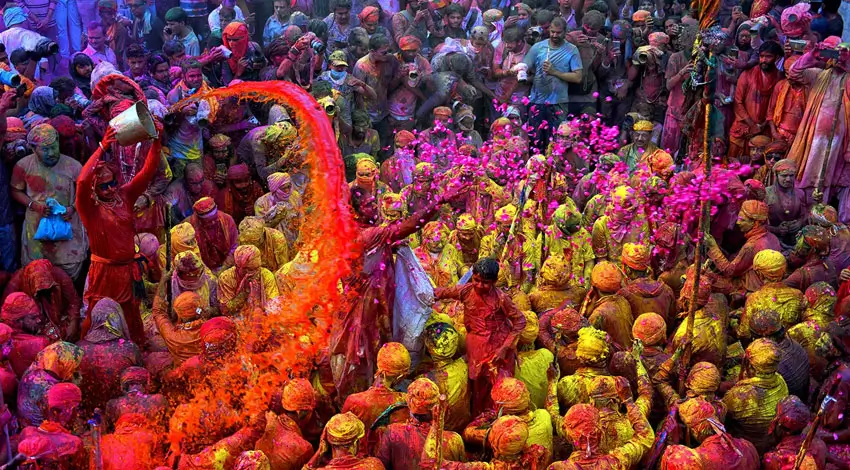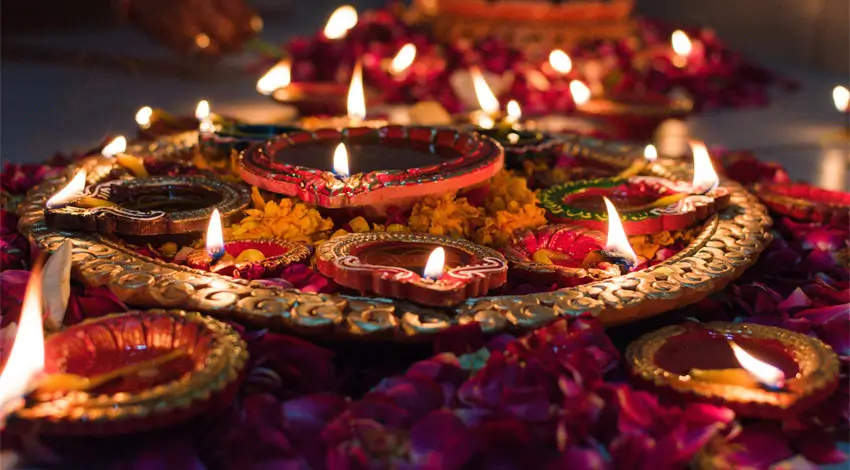
Some travel experiences are difficult to describe to anyone who has not lived them. Diwali in India is one of them. For a few nights each autumn, the entire country glows. Homes are outlined in tiny oil lamps, courtyards are patterned with coloured rangoli, palaces and bazaars compete in displays of light, and the air carries the warmth of celebration from one street to the next. To witness Diwali in the country of its origin is to understand light and joy on a scale that photographs cannot convey.
For a foreign traveller, experiencing Diwali as a tourist is among the most rewarding ways to encounter India. It is not a spectacle staged for visitors. It is a deeply felt national celebration, and to be welcomed into it, even as a guest, is genuinely moving. The festival also coincides with one of the loveliest times to travel in India, as the heat of summer has faded and the cool, clear season is beginning.
This guide explains what Diwali 2026 involves, the best places to experience it, the luxury experiences worth seeking out, and why Diwali in Jaipur in particular is one of the finest festival experiences a traveller can have anywhere in India. It also outlines how a thoughtfully planned private journey turns the festival into the centrepiece of an unforgettable trip.
Diwali 2026 falls on Sunday, 8 November, the main day of the festival, when Lakshmi Puja is performed in homes across the country. Diwali is not a single day but a five-day celebration, running from 6 November to 10 November 2026, with each day carrying its own meaning and rituals.
The festival follows the Hindu lunar calendar, which is why its date shifts each year, generally falling between mid-October and mid-November. The timing is part of its appeal for travellers. Early November in much of India, particularly the north and Rajasthan, brings warm, pleasant days and cool, comfortable evenings, ideal weather for both the festival and wider sightseeing.
Because Diwali draws travellers from around the world alongside Indians travelling within the country, it is one of the busiest periods on the calendar. Hotels, flights and experiences should be booked well in advance, several months ahead for the finest properties, and longer still for the most sought-after palace hotels in Rajasthan.
See India Shine During the Festival of Lights
From glowing temples and illuminated palaces to colorful bazaars and joyful celebrations, Diwali transforms India into a magical destination.
Part of appreciating Diwali in India is understanding that it unfolds across five distinct days, each with its own character.
The first day, Dhanteras, is associated with prosperity and the buying of gold, utensils and new household items. Markets are vibrant and busy, and this is when the festive shopping energy begins to build. The second day, often called Choti Diwali or the small Diwali, sees homes thoroughly cleaned, decorated and prepared, with the first lamps lit. The third day is the main Diwali, when families perform Lakshmi Puja in the evening to invite prosperity, light long rows of diyas, and the night fills with light and, in many places, fireworks. The fourth day carries regional significance and is marked in different ways across the country, including Govardhan Puja and Annakut in some regions. The fifth day, Bhai Dooj, celebrates the bond between brothers and sisters.
A traveller need not track every ritual, but understanding this rhythm helps you appreciate what you are seeing and why the festival builds gradually, peaks on the main night, and softens warmly over its final days.
Diwali celebrates the victory of light over darkness, good over evil, and knowledge over ignorance. The most widely told story, drawn from the Ramayana, recalls the return of Lord Rama to Ayodhya after fourteen years of exile and his defeat of the demon king Ravana. The people of Ayodhya lit rows of lamps to welcome him home, and from that act the tradition of lighting diyas is said to have grown.
The festival carries meaning across Hindu, Jain and Sikh traditions, and different regions emphasise different stories and aspects. The worship of Goddess Lakshmi, who represents prosperity and wellbeing, is central to the main night across much of the country. For the traveller, this depth is part of the gift. The lights are beautiful in themselves, and they are also the visible expression of something that more than a billion people hold dear.
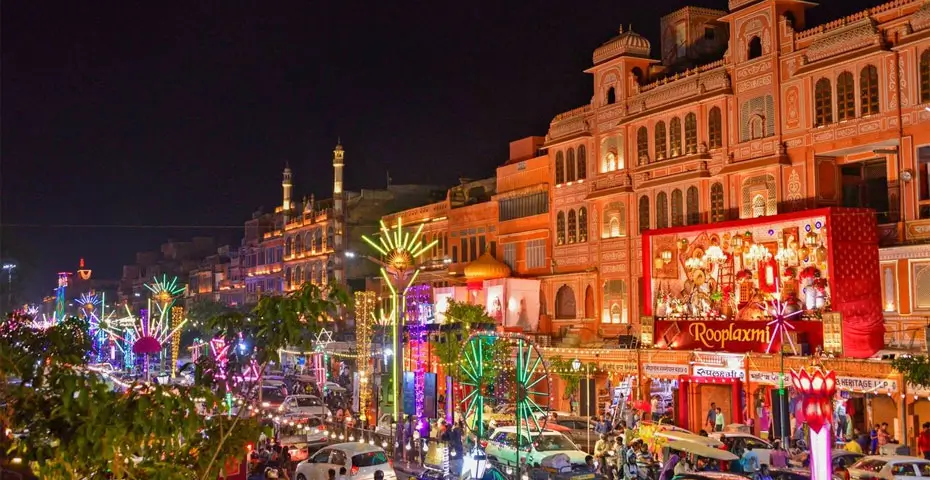
Of all the places to experience the festival, Diwali in Jaipur holds a special place, and for travellers drawn to Rajasthan, it is reason enough to time a journey around early November.
Jaipur does not simply observe Diwali. The city transforms. The Pink City is famous across India for its market illuminations, and during the festival this reputation is earned in full. Jaipur's traders take genuine pride in lighting their shops and streets, and the result is something close to a city-wide competition of light. Entire bazaars are draped, outlined and crowned in lamps and decorative lighting, turning ordinary shopping streets into glowing corridors. For many Indians, Jaipur's Diwali lighting is among the finest in the country, and travellers who have seen it tend to agree.
The setting amplifies everything. Jaipur is a city of palaces, forts, havelis and ornate architecture, and when this backdrop is lit for Diwali, the effect is unlike a modern city's celebrations. The festival's lamps meet centuries-old stone, carved facades and grand gateways, and the city feels as though it has been waiting all year for exactly this.
The heart of Diwali in Jaipur is its markets. The traditional bazaars of the old walled city become the stage for the festival's most spectacular displays. Streets known for jewellery, textiles, handicrafts and traditional goods are lit elaborately, and in the evenings these markets fill with families, shoppers and visitors moving through the light and colour. Walking through a Jaipur bazaar on a Diwali evening, with the lamps overhead, the festive crowds, the sweets stalls and the decorated shopfronts, is one of the most atmospheric urban experiences India offers.
For a luxury traveller, the ideal way to experience this is with a knowledgeable private guide. The markets are busy and full of life, and a guide allows you to move through them comfortably, understand what you are seeing, learn the significance of the decorations and rituals, and discover the finest displays without navigating the crowds alone.
Jaipur is one of India's great cities for heritage and palace hotels, and during Diwali these properties become destinations in themselves. The grand hotels of Jaipur celebrate the festival fully, with their courtyards and facades lit by countless lamps, intricate rangoli laid at entrances and in gardens, marigold decorations, festive menus drawing on Rajasthan's rich cuisine, and cultural performances of music and dance.
To stay in such a property during Diwali is to be inside the celebration. You return each evening not to a hotel that happens to be open during a festival, but to a place actively and beautifully marking it. The contrast of a lamp-lit palace courtyard, the scent of marigold, the sound of festive music, and the comfort of a luxurious heritage room is the essence of why Diwali in Jaipur suits the discerning traveller so well.
Diwali falls in early November, and Jaipur in this season is at its best for sightseeing. The fierce heat is gone, the skies are generally clear, and the light is soft and golden. The Amber Fort, the City Palace, the Hawa Mahal and the city's other landmarks are a pleasure to explore in this weather, and a festival journey to Jaipur naturally combines the celebration with the city's remarkable monuments. Some of Jaipur's forts and palaces are themselves illuminated during the festive season, adding another layer to an already glowing city.
For travellers who want to do more than witness the festival, Jaipur offers the chance to genuinely participate. A private Diwali celebration can be arranged at a heritage property, where a traveller takes part in the lighting of diyas, the laying of rangoli, traditional rituals explained by hosts who understand their meaning, and a festive dinner of seasonal Rajasthani dishes and sweets. This kind of warm, personal welcome into the festival, in the setting of a beautiful Jaipur property, is the sort of experience that defines a journey, and it is exactly what a well-connected private operator can arrange.
While Jaipur is the jewel, Rajasthan as a whole is wonderful at Diwali. Cities such as Udaipur, with its lake-side palaces, and Jodhpur, with the great Mehrangarh Fort rising above the blue city, each celebrate the festival in their own setting. A festival journey that begins in Jaipur for the main Diwali days and continues to another Rajasthan city offers both the grandest version of the celebration and a quieter, equally luxurious continuation.
Beyond Rajasthan, several places offer Diwali experiences that are especially memorable for a visitor.
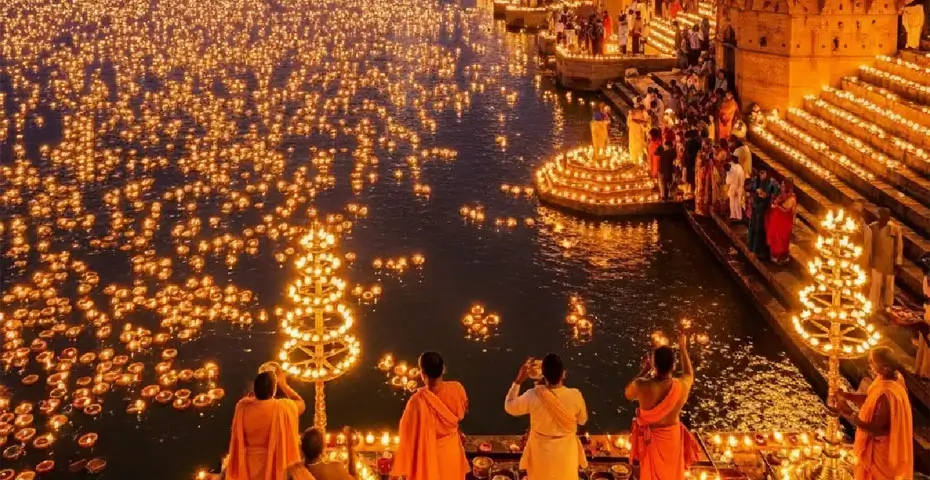
Varanasi, India's spiritual heart on the banks of the Ganges, offers a Diwali experience of profound atmosphere. The ancient city, its temples and its riverfront ghats take on a deep spiritual intensity during the festival. Varanasi is also home to Dev Deepawali, a separate and spectacular festival of lights that follows Diwali later in November, when the ghats along the river are lined with countless lamps and the entire waterfront glows. For travellers able to extend their journey, this is an extraordinary sight.
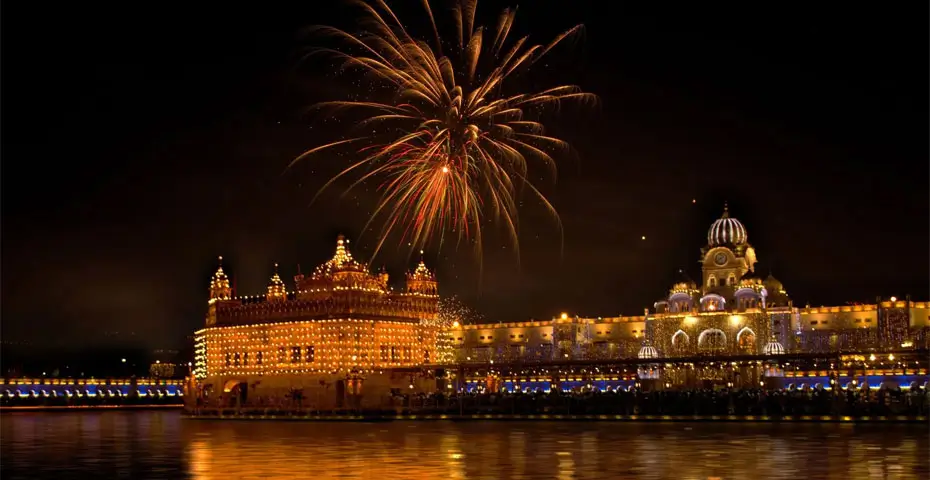
The Golden Temple in Amritsar is illuminated in a spectacular display during Diwali, and the festival holds particular significance in the Sikh tradition, marking the return of Guru Hargobind Ji to the city. The sight of the temple glowing above its sacred pool, mirrored in the still water, is unforgettable.
Delhi and much of northern India embrace Diwali fully, with decorated homes, lively markets and festive energy throughout the city. As a gateway to a wider Diwali journey through Rajasthan, Delhi works well, allowing a day or two of sightseeing as the festive mood gathers before continuing on.
The choice of where to base yourself shapes your festival. Rajasthan, and Jaipur above all, offers grandeur, heritage and the country's finest illuminations. Varanasi offers spiritual depth. A well-planned journey can combine more than one.
Beyond simply being present for the festival, certain experiences make a luxury Diwali journey genuinely special.
Staying in a palace or heritage hotel during Diwali means being inside the celebration rather than observing it, with the property's own lamps, decorations, rangoli, special menus and cultural performances. A private Diwali celebration arranged at a heritage property, with traditional rituals, lamp lighting and festive dining, allows a traveller to participate meaningfully and personally. A guided evening through Jaipur's illuminated bazaars, with someone to explain what you are seeing, turns a beautiful sight into an understood one. A festive Diwali feast, with the regional sweets and dishes prepared specially for the season, is a pleasure in itself. Witnessing a lamp-lit riverfront, whether in Varanasi or at a thoughtfully chosen location, stays with travellers for years.
These are not experiences a visitor easily arranges alone. They are the kind of access and insight a well-connected private operator provides.
Your Perfect Diwali Experience Starts Here
If you're visiting India during Diwali, make every moment unforgettable. Enjoy authentic festival celebrations, comfortable private transportation, expert local guidance.
For travellers drawn to the festival, here is the shape a dedicated Diwali tour of India might take, as an idea to build upon.
A journey of around ten to twelve days, timed around the five days of Diwali, could begin with arrival into Delhi for a day or two of gentle sightseeing as the city fills with festive energy. From there, the journey moves into Rajasthan, with several nights in Jaipur positioned over the main Diwali days, staying in a palace or heritage hotel where the festival is celebrated in style. The Jaipur portion would include a guided walk through the illuminated bazaars of the old city, a private Diwali celebration at the hotel with lamp lighting and traditional rituals, a festive feast of seasonal Rajasthani dishes, and time to explore the Amber Fort, the City Palace and the Hawa Mahal in the soft November light. The journey could then continue to Udaipur or Jodhpur for a quieter, equally luxurious finish, or extend towards Varanasi for those wishing to experience Dev Deepawali later in the month.
Throughout, the journey would be private and tailored: a personal guide, a comfortable car and driver, carefully chosen hotels, and every festival experience arranged in advance so the traveller simply arrives into the celebration. This is the kind of bespoke Diwali journey we design, shaped entirely around the traveller's interests, pace and dates.
A few practical points will help you enjoy the festival fully.
Book early. Diwali is one of India's busiest travel periods, so the finest hotels, flights and experiences should be reserved months in advance, and the best palace hotels in Jaipur fill very early. Expect crowds and a festive intensity, particularly in markets and on the main night, and treat this energy as part of the experience. Be aware that fireworks are part of Diwali in many places, and while spectacular, they bring noise and smoke on the main night; a well-chosen hotel and a sensibly planned evening keep this comfortable. Some shops and services keep different hours over the festival, so a planned itinerary helps. And if you wish to photograph people at prayer or religious ceremonies, always ask permission first, as a matter of courtesy.
Travelling during Diwali rewards a little planning, and a private journey removes the friction entirely.
Diwali is a family festival, deeply felt and locally rooted. For a foreign traveller, the difference between watching it from the edges and being warmly drawn into it is, very often, the quality of the journey behind them.
A private operator with strong local relationships can arrange genuine access: a heritage property in Jaipur that celebrates Diwali beautifully, an invitation into festive traditions, a guide who explains the meaning behind every lamp and ritual, a festive meal prepared with care. The operator handles the booking pressure of India's busiest season, secures the right hotels before they fill, and times the itinerary so the traveller is in the best place, ideally Jaipur, on the most important night. It paces the trip so the festival is savoured rather than rushed, and it manages the practical realities of crowds, hours and travel so none of them intrude.
The result is a Diwali that feels less like a festival you visited and more like one you were welcomed into. That welcome is the heart of what a thoughtfully designed private journey offers.
There are few sights in travel quite like India during Diwali, and few cities wear the festival as beautifully as Jaipur. The lamps, the colour, the warmth, the glowing bazaars and palace courtyards, the sense of an entire nation celebrating light and hope together, this is the festival at its source, in all its depth. For a foreign traveller, experiencing Diwali as a tourist is a rare privilege, and with a thoughtfully planned journey behind you, it becomes one of the defining memories of a lifetime of travel.
If you would like to experience Diwali in India in 2026, let us design a private, tailored journey around the festival for you. We arrange palace and heritage stays in Jaipur and across Rajasthan timed to the celebrations, private Diwali experiences, illuminated bazaar walks and festive dining, with every detail handled so you simply arrive into the festival of lights. Get in touch to begin planning a luxury Diwali journey through India.
Diwali 2026 falls on Sunday, 8 November, the main day of the festival. The full five-day celebration runs from 6 November to 10 November 2026.
Diwali follows the Hindu lunar calendar, so its date shifts annually, generally falling between mid-October and mid-November in the Gregorian calendar.
Jaipur is famous for its elaborate, competitive market illuminations, which turn entire bazaars into glowing corridors of light. Combined with its palaces and heritage hotels, this makes Jaipur one of India's finest festival cities.
Yes. Diwali is one of the most rewarding times to visit, with the country beautifully lit and pleasant weather in much of the north and Rajasthan. It is also one of the busiest periods, so book early.
The five days are Dhanteras, Choti Diwali, the main Diwali with Lakshmi Puja, a fourth day of regional significance, and Bhai Dooj, which celebrates the bond between siblings.
Diwali celebrates the victory of light over darkness, good over evil, and knowledge over ignorance. The best-known story recalls Lord Rama's return to Ayodhya after defeating Ravana.
The illuminated bazaars of the old walled city offer the most atmospheric experience, ideally explored with a private guide. Palace and heritage hotels also celebrate the festival beautifully.
Yes. A private Diwali celebration can be arranged at a heritage property, where travellers take part in lighting diyas, laying rangoli, traditional rituals and a festive Rajasthani dinner.
Dev Deepawali is a separate, spectacular festival of lights in Varanasi that follows Diwali later in November, when the ghats along the Ganges are lined with countless lamps.
A journey of around ten to twelve days, timed around the five days of Diwali, allows time for the festival itself plus wider sightseeing in Delhi and Rajasthan.
Several months in advance. Diwali is one of India's busiest travel periods, and the finest palace hotels in Jaipur and across Rajasthan fill very early.
Yes, fireworks are part of Diwali in many places, particularly on the main night. They are spectacular but bring noise and smoke, so a well-chosen hotel and planned evening keep things comfortable.
Early November in much of northern India and Rajasthan brings warm, pleasant days and cool evenings, making it ideal weather for both the festival and wider sightseeing.
Yes. A Diwali journey pairs naturally with a wider Rajasthan itinerary of forts and palaces, beginning in Jaipur and continuing to Udaipur or Jodhpur, and can extend to Varanasi for Dev Deepawali.
The festival is highly photogenic, but always ask permission before photographing people at prayer or during religious ceremonies, as a matter of courtesy.
A private operator arranges genuine festival access, secures the right hotels in India's busiest season, times the itinerary so you are in Jaipur for the main night, and provides a guide to explain the festival's meaning, so travellers are welcomed into the celebration rather than observing from the edges.