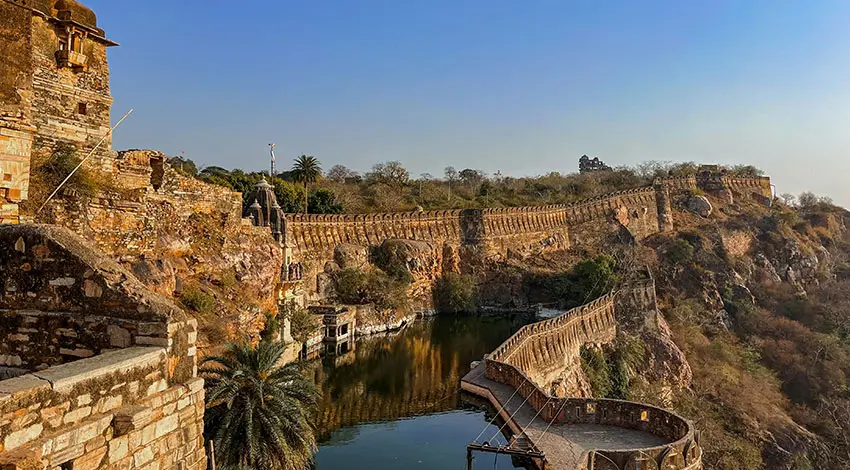
Chittorgarh Fort is one of India's most magnificent historical monuments and a symbol of Rajasthan's royal heritage, courage, sacrifice, and architectural brilliance. Spread across a massive hilltop area in southern Rajasthan, the fort represents centuries of Rajput history and remains one of the most important heritage destinations for travelers interested in India's royal past.
Located in the city of Chittorgarh, approximately 120 kilometers from Udaipur, the fort makes an excellent luxury day trip for travelers staying in Udaipur. The journey combines history, architecture, storytelling, and scenic landscapes, making it a valuable addition to a premium Rajasthan itinerary.
Unlike many forts that are remembered only for their architecture, Chittorgarh Fort carries powerful historical stories connected with the rulers, warriors, queens, and communities who lived within its walls. The fort witnessed several major battles and became associated with legendary figures such as Maharana Pratap's ancestors, Rani Padmini, Maharana Kumbha, and other important personalities of Mewar history.
For travelers exploring Rajasthan, Chittorgarh offers a deeper understanding of the region's royal identity. While Udaipur represents the later glory of the Mewar kingdom with its lakes and palaces, Chittorgarh represents the earlier period when the rulers of Mewar defended their independence from powerful invading armies.
A visit to Chittorgarh Fort Rajasthan is not simply a sightseeing experience. It is a journey through centuries of history where every palace, tower, temple, and gate has a story connected with the legacy of Mewar.
With Luxury Private Tours Of India, travelers can experience Chittorgarh through a comfortable private journey from Udaipur with an experienced guide, luxury transportation, and a carefully planned heritage itinerary.
The history of Chittorgarh Fort is deeply connected with the rise of the Mewar kingdom, one of Rajasthan's most respected royal dynasties. The fort served as the capital of Mewar for many centuries before the rulers eventually established Udaipur as their new centre.
The exact early origins of the fort are connected with various historical traditions, but the site became a major political and military centre because of its strategic location on a high hill surrounded by the plains of Rajasthan.
The fort's elevated position provided natural protection and allowed rulers to monitor approaching armies from a distance. Over time, successive rulers expanded the fort by constructing palaces, temples, towers, reservoirs, and defensive structures.
Chittorgarh became famous not only because of its military importance but also because of its cultural and spiritual significance. The fort housed magnificent temples dedicated to Hindu and Jain traditions, reflecting the diverse religious heritage of medieval Rajasthan.
The Mewar rulers developed a reputation for protecting their independence and maintaining their traditions even during periods of conflict. This spirit of resistance became a defining part of Chittorgarh's identity.
The fort witnessed three major sieges that became important chapters in Rajasthan's history. These battles involved powerful invading armies and resulted in stories of bravery, sacrifice, and determination.
The first major siege took place in the early 14th century when Alauddin Khilji attacked Chittorgarh. The second major conflict occurred during the rule of Bahadur Shah of Gujarat, and the third major siege was carried out by Mughal Emperor Akbar.
After Akbar captured Chittorgarh in the 16th century, the Mewar rulers shifted their capital to Udaipur, which later became the centre of the kingdom.
Today, Chittorgarh Fort stands as a reminder of the strength and cultural importance of the Mewar dynasty.
Discover the legendary history, grand palaces, victory towers, and temples of Chittorgarh Fort with a private luxury car and expert heritage guide. Enjoy a comfortable, flexible day trip from Udaipur.
The architecture of Chittorgarh Fort reflects the military planning, artistic excellence, and spiritual traditions of medieval Rajasthan.
Spread across approximately 700 acres, the fort complex is one of the largest fortified structures in India. The fort sits on a hill rising above the surrounding landscape, connected by a winding road that passes through several massive entrance gates.
The entrance route includes seven major gates known as pols. These gates were designed not only for controlling entry but also for defensive purposes during attacks.
Each gate has its own historical significance and architectural character. The strong stone construction, defensive walls, and strategic design demonstrate the importance of protecting the fort from invading armies.
Inside the fort complex, visitors find a remarkable collection of palaces, temples, towers, reservoirs, and courtyards. The size of the fort means that exploring it properly requires several hours.
The most famous structures include Vijay Stambh, Kirti Stambh, Rana Kumbha Palace, Padmini Palace, Meera Temple, and various Jain temples.
The combination of military architecture and artistic decoration makes Chittorgarh unique. While the outer walls represent strength and defence, the interiors reveal the cultural richness of the Mewar kingdom.
The fort also contains several water reservoirs, which were essential for survival during long periods of siege. These systems demonstrate the advanced planning of medieval fort construction.
For architecture lovers, Chittorgarh provides an opportunity to understand how Rajput rulers combined practical defence requirements with artistic expression.
Vijay Stambh, also known as the Victory Tower, is one of the most recognizable monuments inside Chittorgarh Fort.
Built by Maharana Kumbha in the 15th century, the tower was constructed to celebrate a military victory and represents the power and confidence of the Mewar kingdom.
The tower rises approximately 37 meters and contains multiple levels decorated with detailed carvings. The exterior walls feature sculptures, inscriptions, and artistic representations of Hindu deities and historical figures.
Visitors who climb the internal staircase are rewarded with panoramic views of the fort complex and surrounding countryside. The view from the top provides a clear understanding of the scale of Chittorgarh Fort.
The architectural detail of Vijay Stambh demonstrates the artistic achievements of Rajasthan during the medieval period. Every section of the tower reflects careful craftsmanship.
For photographers, the tower is one of the most impressive locations within the fort because it represents both historical importance and architectural beauty.
Kirti Stambh, or the Tower of Fame, is another important structure within Chittorgarh Fort.
Unlike Vijay Stambh, which represents military victory, Kirti Stambh is associated with Jain heritage and spiritual traditions.
Built by a Jain merchant, the tower is dedicated to Adinath, the first Jain Tirthankara. The structure contains detailed carvings depicting Jain figures and religious symbolism.
The tower reflects the religious diversity that existed within the Mewar kingdom. The presence of Hindu and Jain monuments inside the fort shows how different traditions contributed to Rajasthan's cultural identity.
Although smaller than Vijay Stambh, Kirti Stambh has great historical and architectural importance.
Rani Padmini Palace is one of the most visited attractions inside Chittorgarh Fort because of its connection with the legendary queen of Mewar.
The palace is associated with stories of Rani Padmini, whose beauty and courage became part of Rajasthan's historical traditions.
Located near a water body, the palace architecture reflects the lifestyle of royal women during that period. The structure includes courtyards, chambers, and views overlooking the surrounding area.
The stories connected with Rani Padmini have been passed through generations and remain an important part of Rajasthan's cultural identity.
Visitors often spend time learning about the legends associated with the palace while exploring its architecture.
However, travelers should understand that historical accounts and traditional stories sometimes differ, and many narratives connected with medieval history contain elements of legend and interpretation.
Step into the fascinating history of Mewar with a personalized Chittorgarh excursion from Udaipur. Travel in comfort with a private chauffeur, knowledgeable guide, and carefully planned heritage sightseeing.
Rana Kumbha Palace is one of the most historically significant structures inside Chittorgarh Fort and provides visitors with a glimpse into the royal lifestyle of the Mewar dynasty. Although much of the palace is now in ruins, the remaining architecture gives a strong impression of its former grandeur and importance.
The palace was constructed during the reign of Maharana Kumbha, one of the most influential rulers of Mewar. His period is considered one of the strongest phases in the history of the kingdom because of his contributions to military strength, architecture, literature, and cultural development.
The massive structure once included royal residences, courtyards, underground areas, private chambers, administrative spaces, and areas for royal ceremonies. The scale of the palace reflects the importance of Chittorgarh as the capital of Mewar before the establishment of Udaipur.
Walking through Rana Kumbha Palace allows travelers to understand how royal families lived during medieval Rajasthan. The remaining pillars, walls, passageways, and architectural details create a connection with the past.
The palace is also associated with some of the most emotional stories of Chittorgarh's history. Traditional accounts connect this location with the events surrounding the siege of Alauddin Khilji in the 14th century and the practice of Jauhar, where royal women chose sacrifice during periods of defeat.
For historians and heritage travelers, Rana Kumbha Palace is one of the most important places inside the fort because it represents both the political power and human stories of Mewar.
Visitors should spend enough time exploring the palace rather than treating it as a quick photo stop. The ruins require imagination, and a knowledgeable guide can help explain how the palace functioned during its active period.
Chittorgarh Fort is not only known for battles and royal history; it is also an important centre of spirituality. Among its many temples, Meera Temple holds a special place because of its connection with the famous poet and devotee Mirabai.
Mirabai was a respected spiritual figure known for her devotion to Lord Krishna. Her poetry and devotional songs became an important part of Indian spiritual traditions.
The temple reflects the deep connection between Rajasthan's royal families and religious traditions. Although Mirabai belonged to a royal family, her life was remembered mainly for her devotion rather than royal status.
The architecture of Meera Temple represents traditional Rajput temple design with carved pillars, artistic details, and spiritual symbolism.
For visitors interested in culture and spirituality, the temple provides a peaceful contrast to the fort's military structures. Standing inside this ancient temple allows travelers to experience another dimension of Chittorgarh's history.
Many travelers include Meera Temple in their visit because it shows that Chittorgarh was not only a place of warfare but also a centre of art, devotion, and cultural expression.
Because Chittorgarh Fort covers such a large area, visitors can discover many important structures beyond the most famous monuments.
The fort contains numerous temples dedicated to Hindu and Jain traditions, reflecting the religious diversity of medieval Mewar. These temples feature detailed stone carvings and architectural styles that demonstrate the craftsmanship of that period.
Gaumukh Reservoir is another significant attraction inside the fort. This natural water source was extremely important during periods of conflict because water security was essential for surviving long sieges.
The reservoir is connected with local legends and remains a peaceful location where visitors can appreciate the engineering knowledge of ancient fort builders.
The Fateh Prakash Palace, built during a later period, represents another chapter of Chittorgarh's history. It reflects changes in royal architecture and provides additional historical context for visitors.
The fort's massive walls and viewpoints also offer excellent views of the surrounding countryside. The elevated position allows travelers to understand why Chittorgarh was considered such a strategically important location.
A complete visit to Chittorgarh Fort requires time because the attraction is not a single monument but an entire historical city spread across a hilltop.
Chittorgarh Fort is generally open for visitors from morning until evening. The usual visiting hours are approximately from 9:30 AM to 5:30 PM, although timings can change due to official regulations, special events, or seasonal adjustments.
Travelers should ideally arrive in the morning because the fort area is large and exploring the major monuments requires several hours.
The entry ticket price for Indian visitors and international visitors differs according to government regulations. The approximate entry fee for foreign visitors is generally higher than domestic visitors, and additional charges may apply for cameras or specific services.
A guided visit is highly recommended because the fort's importance comes from its stories. Without historical explanation, many structures may appear as old ruins, but with a knowledgeable guide, every palace, tower, and temple becomes connected with a larger story.
The fort is spread across a large area, so comfortable footwear is strongly recommended. The terrain includes walking paths, stone surfaces, and slight climbs.
Luxury travelers usually prefer visiting with a private vehicle and professional guide because it allows flexible timing and a more comfortable experience.
Combine Udaipur’s royal elegance with the historic grandeur of Chittorgarh Fort. Enjoy private transportation, expert local guidance, flexible sightseeing, and a seamless heritage experience.
The ideal time to visit Chittorgarh Fort Rajasthan is during the cooler months when temperatures are comfortable for walking and outdoor exploration.
The period between October and March is generally preferred by travelers because Rajasthan weather is more pleasant. During these months, visitors can comfortably spend several hours exploring the fort complex.
Summer months in Rajasthan can become extremely hot, with daytime temperatures often making long outdoor visits challenging. Travelers visiting during this period should plan early morning or late afternoon visits and carry adequate water and sun protection.
Monsoon months bring some greenery to the surrounding landscape, creating attractive photography conditions. However, weather conditions may affect outdoor exploration.
For luxury travelers staying in Udaipur, winter months provide the most comfortable conditions for combining Chittorgarh with other Rajasthan destinations.
Chittorgarh Fort is one of the best heritage day trips from Udaipur because of its convenient distance and historical importance.
The distance between Udaipur and Chittorgarh is approximately 120 kilometers. A private car journey usually takes around two to three hours depending on traffic and road conditions.
A luxury day trip generally begins after breakfast from a Udaipur hotel or palace resort. Travelers can enjoy a comfortable private drive through Rajasthan's countryside before reaching Chittorgarh.
A well-planned visit usually requires three to five hours inside the fort because of its size. After exploring major attractions, travelers can return to Udaipur in the evening.
For guests staying at luxury properties such as The Oberoi Udaivilas, Taj Lake Palace, or The Leela Palace Udaipur, a private Chittorgarh excursion can be arranged with a luxury vehicle and expert heritage guide.
The journey can also be combined with other experiences depending on the itinerary. Some travelers prefer adding Chittorgarh between Udaipur and Jaipur rather than making it a separate return journey.
A heritage destination like Chittorgarh becomes more meaningful when experienced with proper planning and historical understanding.
Luxury Private Tours Of India can arrange customized heritage journeys connecting Udaipur, Chittorgarh, Jaipur, Jodhpur, and other Rajasthan destinations.
A premium experience may include private chauffeur-driven transportation, expert local guides, flexible sightseeing schedules, luxury hotel arrangements, and personalized cultural experiences.
For international travelers, having local assistance is particularly valuable because Rajasthan's history includes complex stories, traditions, and architectural details that require explanation.
Chittorgarh is not simply a fort visit. It is an opportunity to understand the values, struggles, artistic achievements, and cultural identity of Rajasthan.
The combination of Udaipur's royal elegance and Chittorgarh's historic legacy creates a powerful heritage journey for travelers interested in India's royal past.
Chittorgarh Fort is approximately 120 kilometers from Udaipur and usually takes around two to three hours by private vehicle.
A proper visit generally requires three to five hours because the fort complex is very large and includes many monuments.
The fort is generally open from around 9:30 AM to 5:30 PM, but visitors should confirm current timings before visiting.
Yes, Chittorgarh Fort is one of the most important heritage attractions near Udaipur and offers a deeper understanding of Rajasthan's history.
The cooler months between October and March are generally preferred because the weather is comfortable for exploring the large fort complex.
Yes, it is one of the most popular day trips from Udaipur and can comfortably be completed within a day.
Major attractions include Vijay Stambh, Kirti Stambh, Rana Kumbha Palace, Padmini Palace, Meera Temple, and Gaumukh Reservoir.
A guide is highly recommended because the fort's importance comes from its historical stories and cultural significance.
A private chauffeur-driven car is the most comfortable option for luxury travelers because it provides flexibility and convenience.
Yes, Chittorgarh can be included between Udaipur, Jaipur, Jodhpur, and other Rajasthan destinations as part of a customized luxury itinerary.