
Duration : 13 Nights / 14 Days
Place Covered : Delhi - Agra - Jaipur - Chennai - Madurai - Thanjavur - Mysuru
 Hotels
 Sightseeing
 Entry Tickets
 Meals
MealsIndia’s story cannot be understood through one region alone. This Golden Triangle Tour with South India Grand Circuit is designed to connect North India’s imperial monuments with South India’s ancient civilizations, temple cities, and royal capitals. The journey begins with the Mughal and Rajput heartlands before gradually transitioning into the classical cultures of the southern peninsula.
South India’s heritage is defined by continuity rather than conquest. Temples function as living institutions, cities follow ritual geometry, and dynasties such as the Cholas, Hoysalas, and Wodeyars shaped culture through patronage rather than imperial display. This itinerary allows travelers to experience that contrast clearly.
Covering Delhi, Agra, Jaipur, followed by , Chennai Madurai, Thanjavur, and Mysuru, this journey is designed for travelers who want historical depth rather than surface sightseeing.
Upon arrival in Delhi, you are met at the international airport and transferred privately to your hotel. The drive through New Delhi introduces ceremonial avenues, colonial-era architecture, and diplomatic quarters that reflect the city’s layered political history. Check-in is smooth, allowing you to rest immediately after travel.
The afternoon is kept entirely free to recover from jet lag and long-haul fatigue. This downtime is essential before beginning an itinerary that involves extensive cultural exploration and walking in the coming days.
In the evening, a short orientation drive around India Gate, Rashtrapati Bhavan, and Parliament House offers a calm introduction to modern India’s administrative core. The day concludes early.
After breakfast, the day begins with a guided visit to Humayun’s Tomb, a UNESCO World Heritage Site that introduced Persian garden-tomb design to India. The guide explains symmetry, charbagh planning, and Mughal funerary symbolism in detail.
Later, you visit Jama Masjid, followed by a walk through Chandni Chowk. The narrow lanes, spice markets, and historic havelis illustrate how faith, trade, and daily life have coexisted here for centuries.
In the afternoon, you drive past India Gate, Lodhi Road, and visit Lodhi Gardens, offering a quieter architectural counterpoint. The evening is free.
After breakfast, you depart Delhi for Agra by private vehicle using modern expressways. The journey is smooth, with planned rest stops to ensure comfort.
Upon arrival, you check into your hotel and rest briefly. Later, you visit Agra Fort, exploring Diwan-i-Am, Diwan-i-Khas, royal apartments, and river-facing terraces. The guide explains Mughal governance, court rituals, and imperial hierarchy.
The evening is free for rest or quiet dining.
The morning begins with a guided visit to the Taj Mahal, approached with focus on architectural balance, marble craftsmanship, Quranic calligraphy, and garden symbolism. Time is allocated generously to experience the monument without rush.
After returning to the hotel for breakfast, the afternoon is kept light. Optional visits to Itmad-ud-Daulah’s Tomb (Baby Taj) provide insight into early decorative experimentation in Mughal architecture.
The evening is free for reflection or leisure.
After breakfast, you depart Agra for Jaipur. En route, you stop at Fatehpur Sikri, the abandoned Mughal capital built by Emperor Akbar. You explore Buland Darwaza, Jama Masjid, royal courts, and palace complexes while learning about the city’s planned design and eventual abandonment.
The drive continues into Rajasthan’s semi-arid terrain, signaling a cultural shift from Mughal to Rajput dominance. Comfort breaks ensure relaxed travel.
By evening, you arrive in Jaipur and check into your hotel. No sightseeing is planned at night.
After breakfast, you are transferred to Jaipur Airport for your flight to Chennai. Airport assistance ensures smooth check-in and arrival.
Upon landing in Chennai, you are transferred to your hotel. The city’s coastal setting, Dravidian temples, and Tamil cultural identity immediately contrast with North India’s environment.
The evening is kept free to rest and prepare for intensive South India exploration.
After breakfast, you transfer to the airport for your flight to Madurai. Upon arrival, you are transferred to your hotel located near the historic temple precincts.
In the afternoon, your guide introduces Madurai’s role as the spiritual heart of Tamil Shaivism. You walk through traditional streets laid out according to temple geometry, observing flower markets, oil-lamp sellers, bronze workshops, and devotional commerce serving the temple ecosystem.
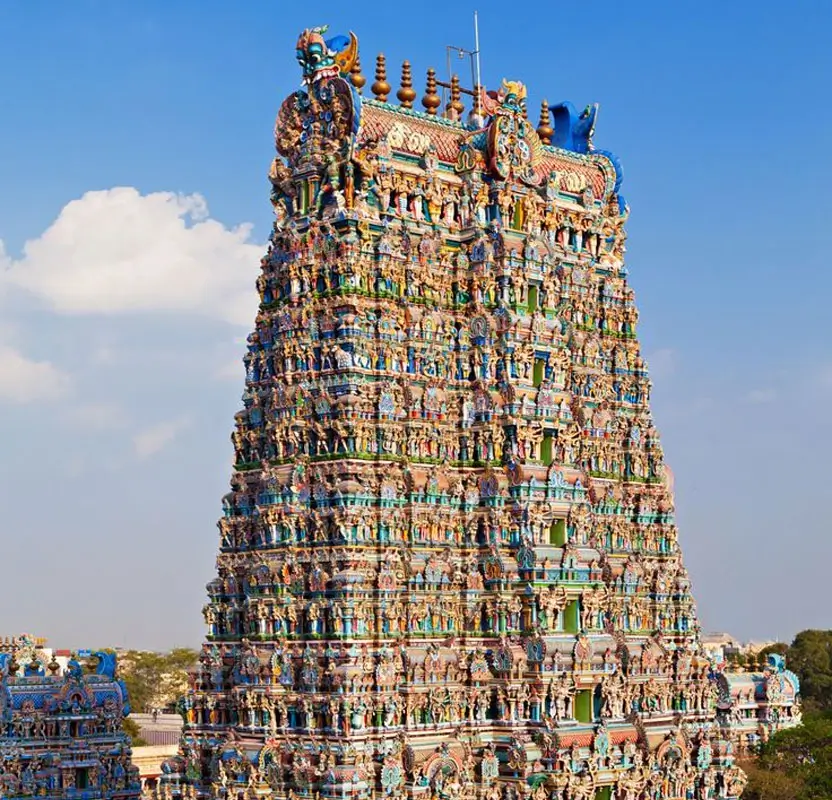
In the evening, you visit Meenakshi Amman Temple to witness the evening aarti and symbolic procession. Chanting, music, and ritual movement demonstrate how temple worship remains a living tradition rather than a historical reenactment.
After breakfast, you depart Chennai for Kanchipuram, one of Hinduism’s seven sacred cities. The drive passes through fertile plains, village shrines, and temple tanks, introducing the religious geography of Tamil Nadu where temples anchor daily life.
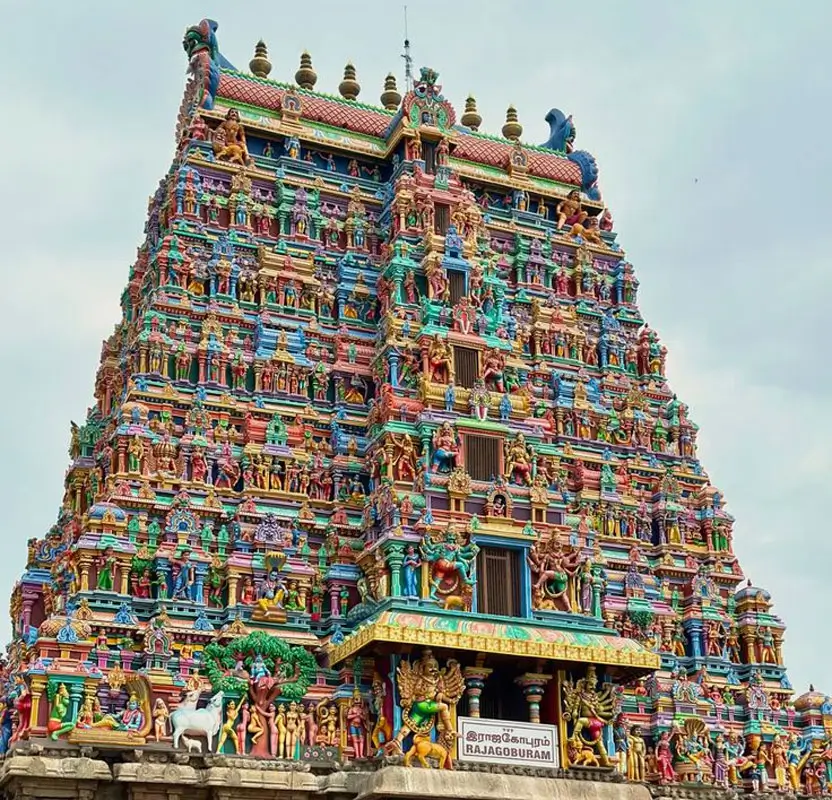
Your first visit is to Ekambareswarar Temple, dedicated to Lord Shiva as the earth element of the Pancha Bhoota. The guide explains the symbolism of the massive gopuram, sacred mango tree, and circumambulatory corridors that structure ritual movement.
Later, you visit Kamakshi Amman Temple, one of South India’s most important goddess temples. Time is given to observe priestly rituals, temple geometry, and devotional practices before checking into your hotel in Kanchipuram or returning to Chennai outskirts.
The morning begins early with a comprehensive guided exploration of Meenakshi Amman Temple when foot traffic is lighter. You visit the Hall of Thousand Pillars, sacred tanks, inner sanctums, and towering gopurams covered in thousands of sculpted deities.
The guide explains temple cosmology, marriage symbolism of Meenakshi and Sundareshwarar, and how architecture mirrors sacred geography. Time is given to observe daily rituals and devotees participating in worship cycles.
In the afternoon, you visit Thirumalai Nayakkar Palace, learning how temple aesthetics influenced royal architecture. The evening is free for rest or reflection.
After breakfast, you travel to Thanjavur, crossing the fertile Cauvery delta that sustained the Chola Empire. The journey introduces agrarian landscapes and temple towns that flourished under royal patronage.
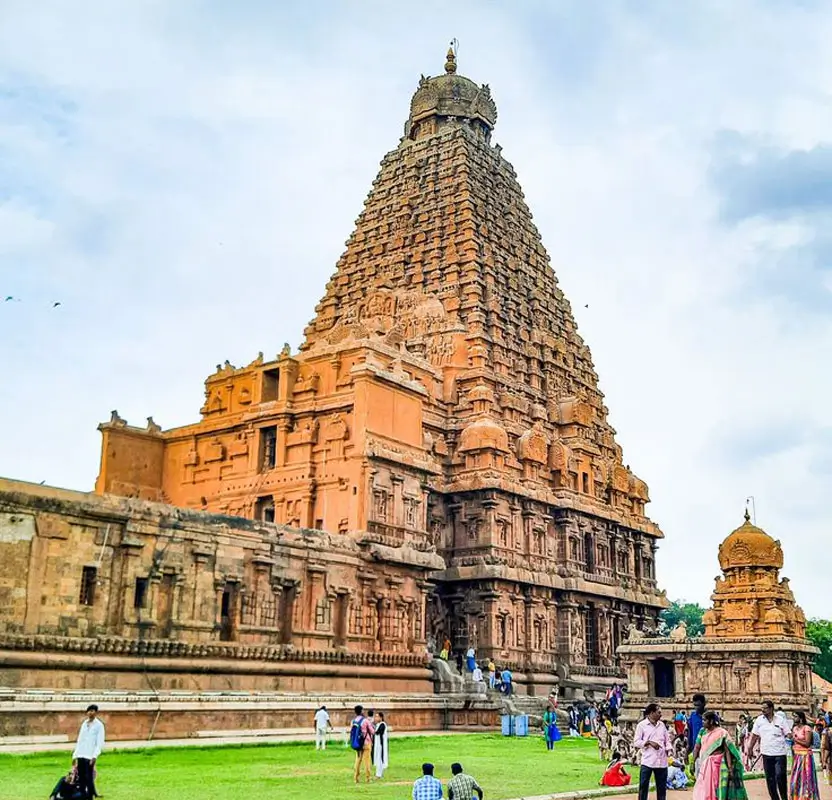
Upon arrival, you visit the UNESCO World Heritage Site Brihadeeswarar Temple, a masterpiece of Chola engineering built entirely of granite. The guide explains construction techniques, inscriptions, and the symbolic meaning of its towering vimana.
Time is allocated to study sculptures, fresco remnants, and courtyard layout, understanding how religion, governance, and art merged under Chola rule. The evening is free.
After breakfast, you transfer to the airport for your flight to Mysuru via a major hub. This transition marks a shift from Tamil temple culture to Karnataka’s royal heritage.
Upon arrival in Mysuru, you are transferred to your hotel and rest briefly. The city’s wide boulevards, green spaces, and palace-centered planning reflect Wodeyar royal aesthetics.
The remainder of the day is kept light with a short orientation drive introducing Mysuru’s cultural significance. The evening is free.
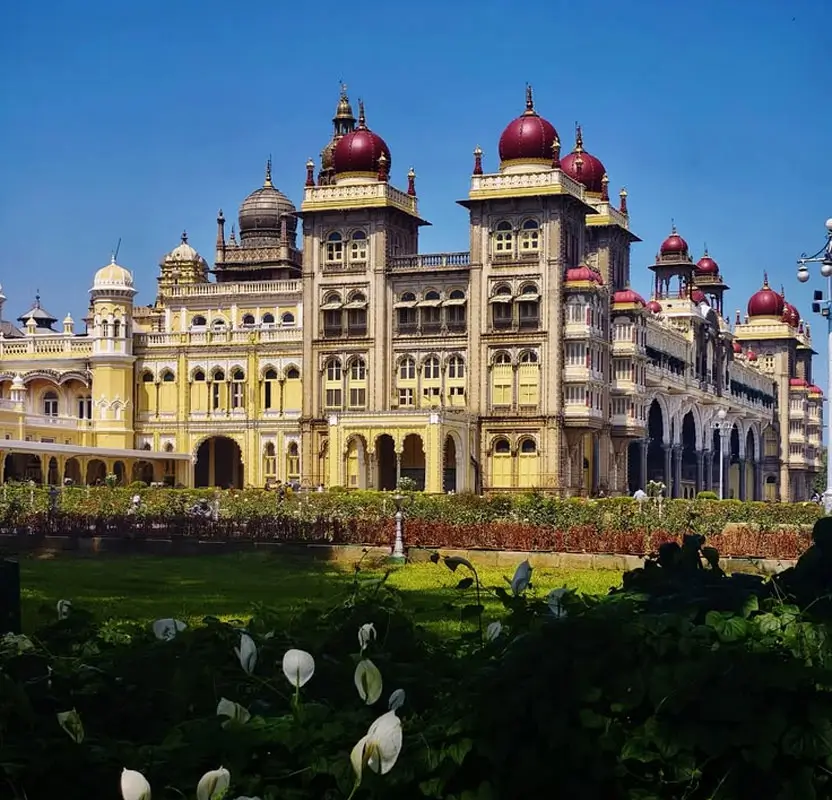
After breakfast, you visit Mysore Palace, exploring ceremonial halls, stained-glass corridors, and royal courtyards. The guide explains coronation rituals, Dasara celebrations, and palace symbolism.
Later, you ascend Chamundi Hill, home to the Chamundeshwari Temple. Views over the city provide perspective on royal town planning and religious geography.
In the afternoon, you may visit local markets or silk and sandalwood shops. The evening is free.
After breakfast, you drive to Bengaluru for your onward international or domestic flight. The journey offers time to reflect on the cultural arc traveled from North India’s imperial centers to South India’s ancient civilizations.
Upon arrival at the airport, assistance is provided throughout the departure process. The tour concludes with a deep understanding of India’s regional diversity, architectural evolution, and living traditions.