

Duration : 12 Nights / 13 Days
Place Covered : Delhi - Agra - Jaipur - Leh - Ladakh
 Hotels
 Sightseeing
 Entry Tickets
 Meals
MealsThis Itinerary is designed for travelers who want to combine India’s most iconic cultural route with one of the world’s most dramatic high-altitude regions. The Golden Triangle introduces Mughal grandeur and Rajput heritage at a comfortable pace, while the Ladakh extension offers stark landscapes, Buddhist monasteries, and mountain passes shaped by geography and isolation.
Ladakh requires careful acclimatization, route planning, and gradual exposure to altitude. This journey is structured to prioritize safety and comfort while still delivering a genuine adventure experience. Cultural immersion replaces speed, allowing travelers to understand Ladakh’s monastic life, nomadic traditions, and strategic mountain geography.
Covering Delhi, Agra, Jaipur, and the high-altitude region of Leh Ladakh, this tour blends heritage, adventure, and raw natural beauty in one carefully balanced itinerary.
Upon arrival in Delhi, you are met at the international airport and transferred privately to your hotel. The drive through New Delhi introduces wide boulevards, administrative districts, and colonial-era architecture that reflect the capital’s layered political history. Check-in is smooth, allowing immediate rest after long-haul travel.
The afternoon is kept completely free to recover from jet lag and travel fatigue. This rest period is important before beginning a multi-region itinerary that includes both urban sightseeing and high-altitude travel later in the journey.
In the evening, a short orientation drive around India Gate, Rashtrapati Bhavan, and Parliament House offers a gentle introduction to modern India. The day concludes early to ensure adequate rest.
After breakfast, the day begins with a guided visit to Humayun’s Tomb, a UNESCO World Heritage Site showcasing Persian-inspired garden architecture and early Mughal design principles. Time is given to explore the complex without rush, understanding symmetry and symbolism.
Later, you visit Jama Masjid, followed by a walk through Chandni Chowk, where narrow lanes, spice markets, and historic havelis reveal centuries of continuous urban life. The guide explains how religion, trade, and daily routines intersect in Old Delhi.
In the afternoon, you drive past Lodhi Road and visit Lodhi Gardens, offering a calm architectural contrast. The evening is free.
After breakfast, you depart Delhi for Agra by private vehicle using modern expressways. The journey is comfortable, with planned rest stops to maintain a relaxed pace.
Upon arrival in Agra, you check into your hotel and rest briefly. Later, you visit Agra Fort, exploring Diwan-i-Am, Diwan-i-Khas, royal apartments, and river-facing terraces. The guide explains Mughal governance, court hierarchy, and defensive planning.
The evening is free for rest or a quiet dinner.
The morning begins with a guided visit to the Taj Mahal, approached with emphasis on architectural balance, marble craftsmanship, Quranic calligraphy, and garden geometry. Time is allocated generously to experience the monument without crowd pressure.
After returning to the hotel for breakfast, the afternoon is kept light. Optional visits to Itmad-ud-Daulah’s Tomb (Baby Taj) provide insight into decorative experimentation that preceded the Taj Mahal.
The evening is free for reflection or leisure.
After breakfast, you depart Agra for Jaipur. En route, you stop at Fatehpur Sikri, the abandoned Mughal capital built by Emperor Akbar. You explore Buland Darwaza, Jama Masjid, and palace courtyards while learning about the city’s planned design and eventual abandonment.
The drive continues into Rajasthan’s semi-arid terrain, marking a cultural shift from Mughal authority to Rajput power. Comfort breaks ensure relaxed travel.
By evening, you arrive in Jaipur and check into your hotel. No sightseeing is planned at night.
After breakfast, you visit Amber Fort, exploring its hilltop ramparts, Sheesh Mahal, palace courtyards, and temple spaces. The guide explains Rajput warfare strategies, ceremonial life, and architectural defense systems.
Later, you visit City Palace, followed by Jantar Mantar, where massive astronomical instruments demonstrate scientific precision used for ritual calendars. A photo stop at Hawa Mahal completes the city tour.
The evening is free to rest and prepare for the upcoming adventure segment.
After breakfast, you are transferred to Jaipur Airport for your flight to Leh via Delhi. The dramatic aerial transition from plains to Himalayan ranges marks the beginning of the adventure phase.
Upon arrival in Leh, you are transferred to your hotel at a gentle pace. Due to the high altitude, the remainder of the day is reserved strictly for acclimatization. Walking is kept minimal, and hydration is encouraged.
The evening is spent resting indoors. No sightseeing is scheduled, ensuring your body adjusts safely to the altitude.
After breakfast, you are transferred to Jaipur Airport for your flight to Leh via Delhi. The dramatic aerial transition from plains to Himalayan ranges marks the beginning of the adventure phase.
Upon arrival in Leh, you are transferred to your hotel at a gentle pace. Due to the high altitude, the remainder of the day is reserved strictly for acclimatization. Walking is kept minimal, and hydration is encouraged.
The evening is spent resting indoors. No sightseeing is scheduled, ensuring your body adjusts safely to the altitude.
After a slow, restful morning, the day begins gently to continue altitude acclimatization. Following breakfast, you visit Shey Palace, the former summer capital of Ladakh. The guide explains Ladakhi royal history, Tibetan Buddhist influence, and how geography shaped political power in the region.
Later, you proceed to Thiksey Monastery, one of the largest and most architecturally impressive monasteries in Ladakh. Resembling the Potala Palace of Lhasa, the monastery houses prayer halls, statues, and living quarters for monks. Time is given to observe chanting sessions and daily monastic routines.
In the afternoon, you visit Leh Palace, offering panoramic views of Leh town and the Indus Valley. The evening remains calm with minimal walking, allowing further acclimatization.
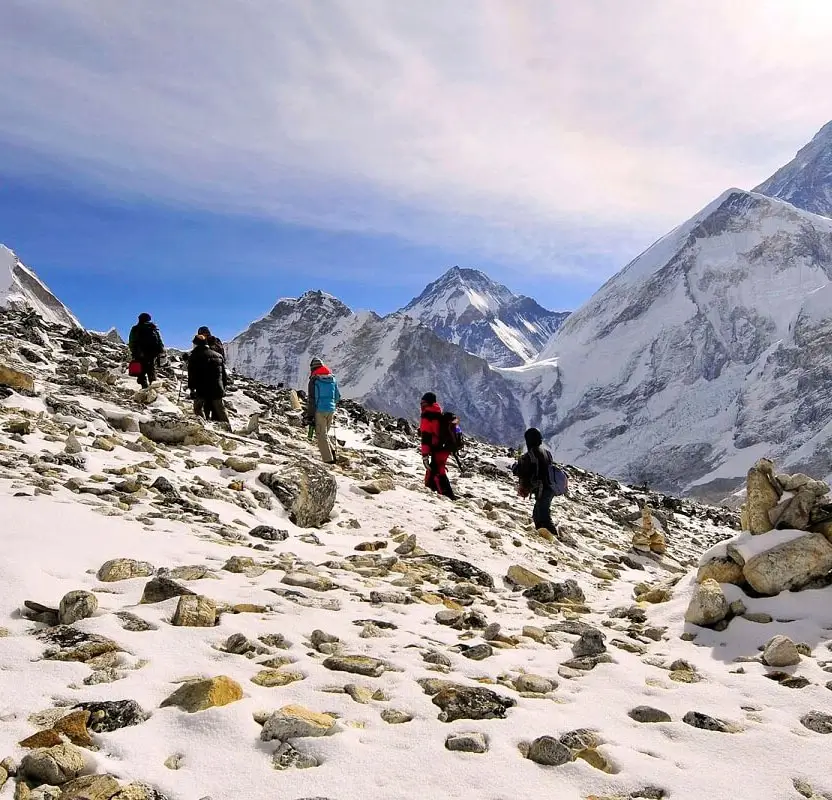
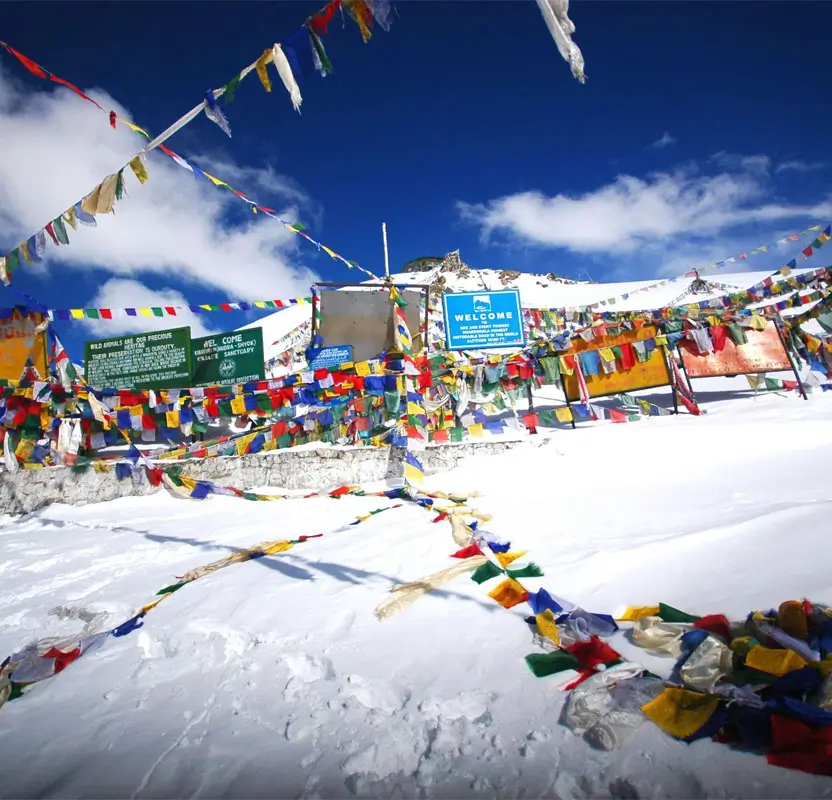
After an early breakfast, you begin the drive to Nubra Valley, traveling via Khardung La Pass. The ascent is gradual, with stops at viewpoints to acclimatize and hydrate. Snow-capped peaks and stark mountain terrain dominate the route.
Upon descending into Nubra Valley, the landscape changes dramatically. Wide riverbeds, sand dunes, and greenery contrast with the rugged mountains above. You visit Diskit Monastery, home to a towering statue of Maitreya Buddha overlooking the valley.
In the afternoon, you explore the Hunder Sand Dunes, where cold desert meets alpine scenery. Optional camel rides on double-humped Bactrian camels offer insight into ancient Silk Route trade. The evening is spent at a heritage camp or guesthouse under star-filled skies.
After breakfast, you depart Nubra Valley for Pangong Lake, one of Ladakh’s most iconic landscapes. The route passes through remote mountain roads, river crossings, and high-altitude plains where settlements are few and nature dominates.
The journey itself is part of the adventure. Your driver navigates carefully across changing terrain, with rest stops planned to manage altitude and fatigue. Views of snow peaks, grazing yaks, and isolated hamlets add to the sense of remoteness.
By late afternoon, you arrive at Pangong Lake, famous for its shifting shades of blue depending on sunlight. Time is given to walk slowly along the lakeshore, observe reflections of surrounding mountains, and absorb the silence of the high plateau. Overnight stay is in a lakeside camp or lodge.
After an early breakfast, you enjoy a final quiet moment at Pangong Lake before beginning the return journey to Leh. Morning light often reveals deeper colors on the lake’s surface, making this an ideal time for photography and reflection.
The drive back to Leh follows a different high-altitude route, offering fresh perspectives of Ladakh’s terrain. En route, you pass through Changthang Plateau landscapes, home to nomadic Changpa communities who herd yaks and pashmina goats.
By evening, you arrive back in Leh and check into your hotel. The remainder of the day is kept free to rest and recover after several days of high-altitude travel.
After breakfast, the day focuses on Ladakh’s cultural and natural foundations. You drive along the Indus River to visit Hemis Monastery, the largest and wealthiest monastery in Ladakh. The guide explains Buddhist philosophy, monastic hierarchy, and the significance of Hemis Festival.
Later, you explore smaller villages along the Indus Valley, observing traditional Ladakhi homes, barley fields, and irrigation channels that sustain life in a harsh environment. Interaction with locals provides insight into daily survival at high altitude.
In the afternoon, you return to Leh for free time. You may visit the local bazaar for handicrafts or simply relax at the hotel. The evening is calm.
After breakfast, you are transferred to Leh Airport for your flight to Delhi. Weather conditions are monitored closely, as flights in high-altitude regions depend on visibility and wind patterns.
Upon arrival in Delhi, assistance is provided for international or onward domestic connections. Depending on flight schedules, short rest arrangements may be made before departure.
The journey concludes with a complete contrast—from Mughal monuments and Rajput forts to the stark, spiritual landscapes of Ladakh’s high Himalayas.